Maritime East Africa (1840–1851 CE): European Territorial Gains, Economic Shifts, and Religious Persecution
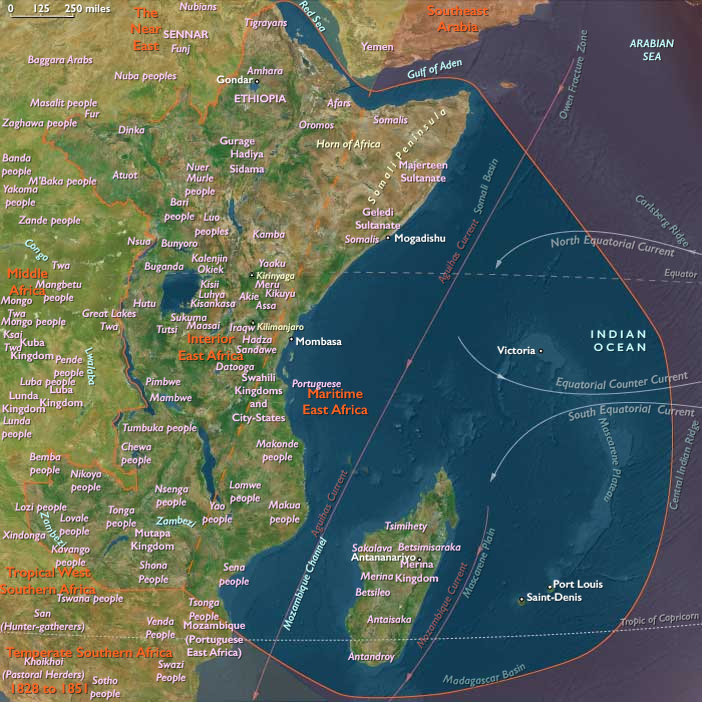
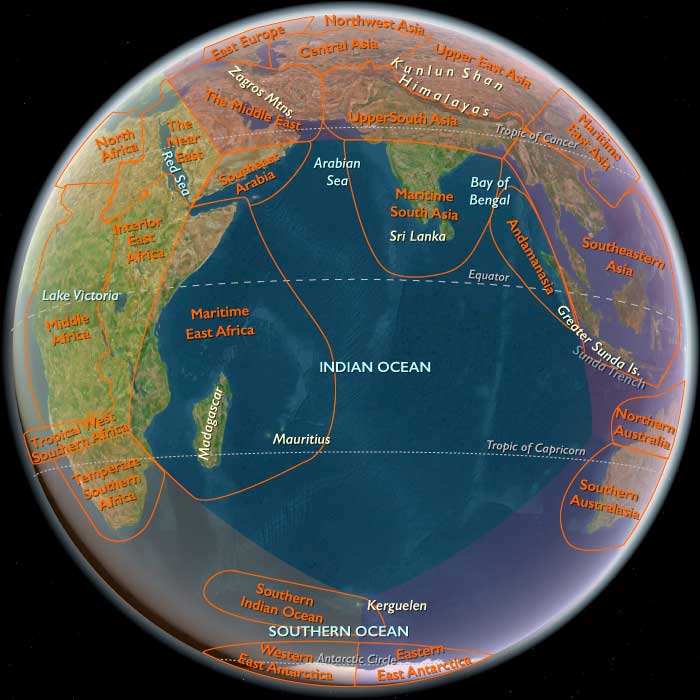
From 1840 to 1851 CE, Maritime East Africa—including Madagascar, the Seychelles, Mauritius, and the Comoros Islands—experiences intensified European territorial ambitions, significant economic and demographic transformations following the abolition of slavery, and continued religious persecutions under Madagascar’s conservative regime.
French Territorial Expansion in Madagascar and Comoros
In 1840, France expands its colonial presence in the region by acquiring the island of Nosy-Be, off the northwestern coast of Madagascar. Though strategically significant, the island’s potential as a major port remains limited. In 1841, Admiral de Hell, Governor of Réunion, negotiates the cession of Mayotte (Mahore) from Andriantsoly, known as the King of Mayotte and leader of the Sakalava in northwestern Madagascar. Mahore’s potential for port facilities makes it a strategically valuable acquisition. Admiral de Hell justifies the move by asserting that if France hesitates, Britain will seize the island first.
These territorial acquisitions underscore France's growing strategic interest in the region, intended both to bolster its Indian Ocean naval presence and counterbalance British colonial ambitions.
Seychelles: Post-Abolition Economic and Social Changes
In the Seychelles, abolition of slavery (1834) leads to profound economic and social shifts by this period. Formerly enslaved Seychellois, who once produced cotton, coconut oil, spices, coffee, and sugarcane, shift away from labor-intensive agriculture following emancipation. By 1840–1851, many become wage laborers, sharecroppers, fishers, artisans, or informal settlers on available land.
Plantation agriculture transitions toward less labor-intensive cash crops like copra, cinnamon, and vanilla. This shift dramatically alters the islands' economic landscape, leading to the decline of intensive farming and increasing dependency on imported basic necessities, including food and manufactured goods. The islands' population grows increasingly reliant on trade, and economic activity focuses primarily on processing cash crops and exploiting natural resources rather than extensive cultivation.
Malawi and Mozambique:
During this era, Portuguese-controlled central Mozambique expands its role as a critical nexus for trade routes penetrating the African interior, facilitating commerce between southern Malawi and coastal ports like
Quelimane and
Beira. Southern Malawi increasingly feels the impact of external contacts, notably via missionary expeditions and early European exploration, beginning to shift local economies toward export-oriented production. The emergence of
Blantyre as a mission and trading center marks the early stages of Malawi's integration into broader colonial networks.
Madagascar: Religious Persecution under Queen Ranavalona I
In Madagascar, the reign of Queen Ranavalona I (r. 1828–1861) is marked by intensifying persecution of Christian converts, particularly targeting converts influenced by British Protestant missionaries. Accurate numbers of executions are difficult to ascertain, but the British missionary W.E. Cummins (1878) estimates between sixty and eighty executions for religious reasons during Ranavalona's reign, with many more suffering severe punishment, imprisonment, loss of property, or death through forced labor and harsh ordeals.
Persecutions peak notably in 1840, 1849, and later in 1857. The year 1849 proves particularly severe, with nineteen individuals facing harsh punishment due to their adherence to Christianity, eighteen of whom are executed. These religious persecutions underscore Ranavalona's reactionary and isolationist policies, driven by her deep distrust of foreign influence and her determination to preserve traditional Merina culture and authority.
Legacy of the Era
The era from 1840 to 1851 CE shapes Maritime East Africa through territorial expansion by European colonial powers, marked socio-economic shifts following emancipation, and the reactionary religious persecutions in Madagascar. French territorial acquisitions presage greater colonial involvement, while economic transformations following abolition reshape the Seychelles’ social landscape. In Madagascar, the intensifying religious persecution further isolates the Merina kingdom, setting the stage for greater external intervention in subsequent decades.