Angelika Kauffmann
Swiss Neoclassical painter who has a successful career in London and Rome
Years: 1741 - 1807
Maria Anna Angelika Kauffmann RA (October 30, 1741 – November 5, 1807), usually known in English as Angelica Kauffman, is a Swiss Neoclassical painter who has a successful career in London and Rome.
Remembered primarily as a history painter, Kauffmann is a skilled portraitist, landscape and decoration painter.
She is one of the two female founding members of the Royal Academy in London in 1768.

Related Events
Filter results
Showing 7 events out of 7 total
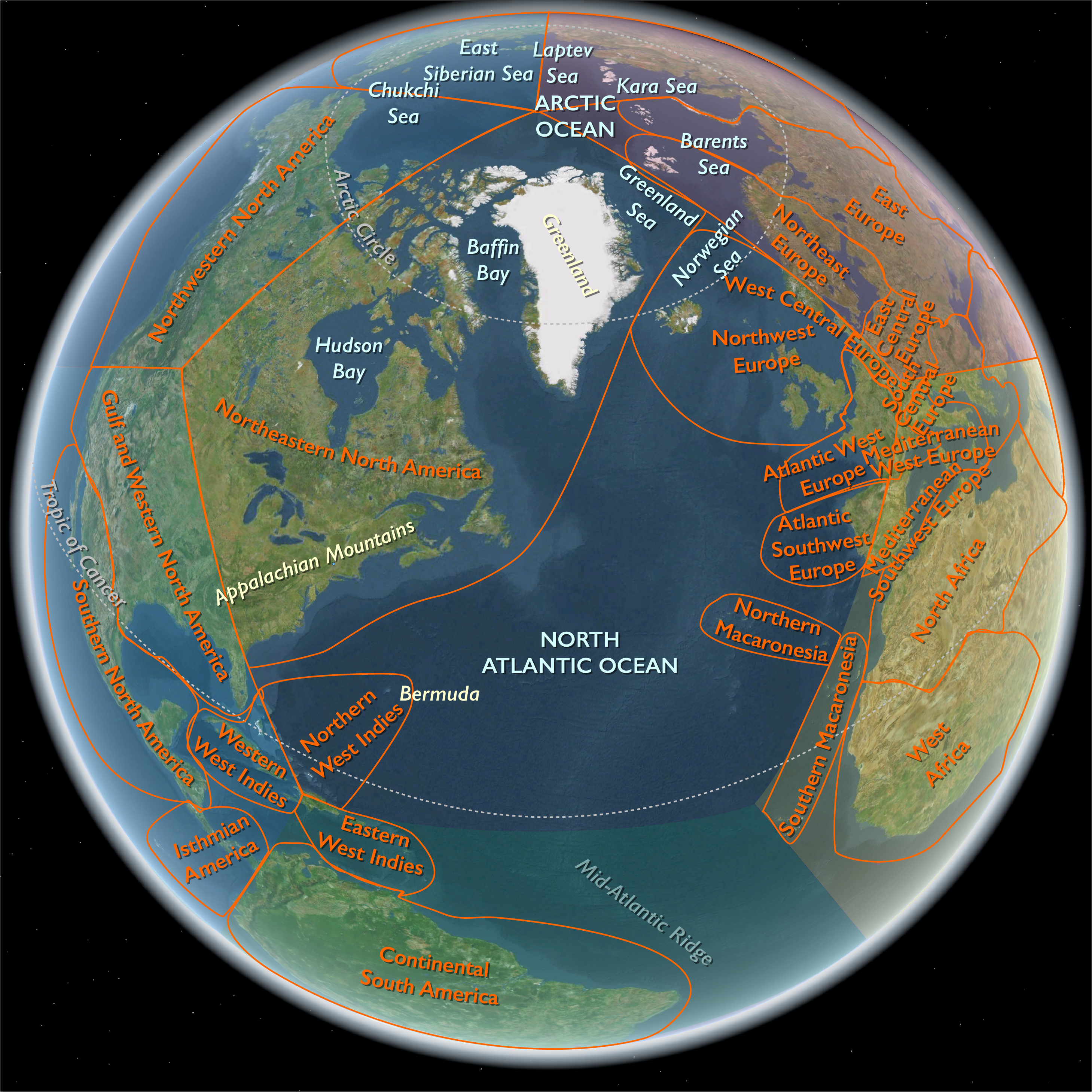
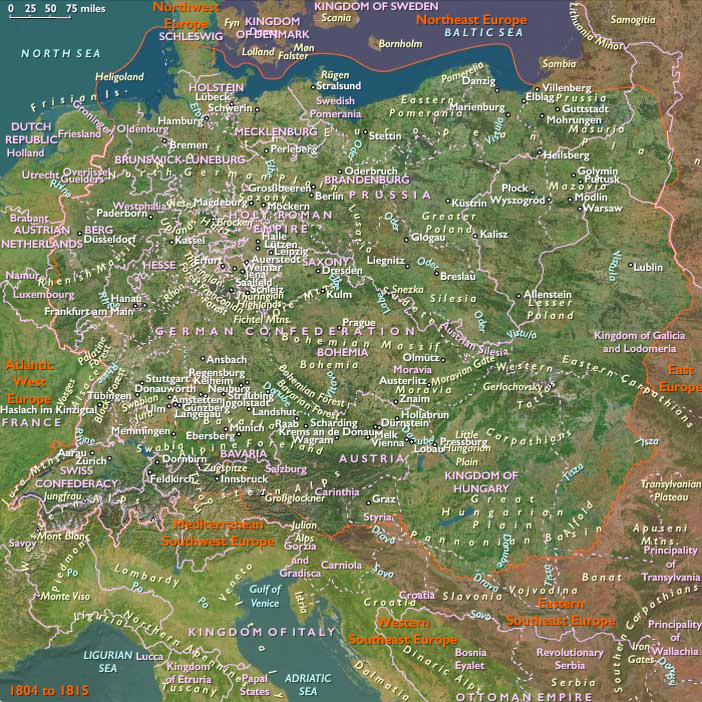
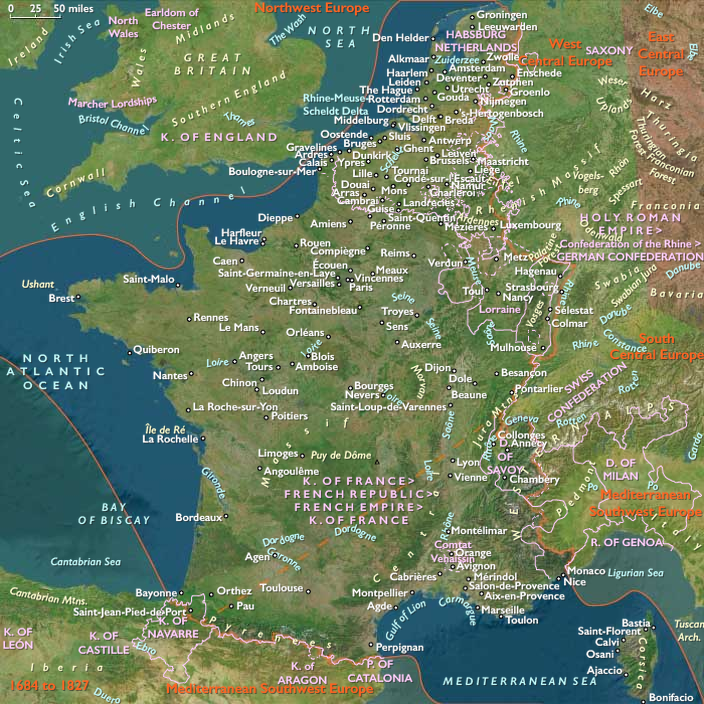
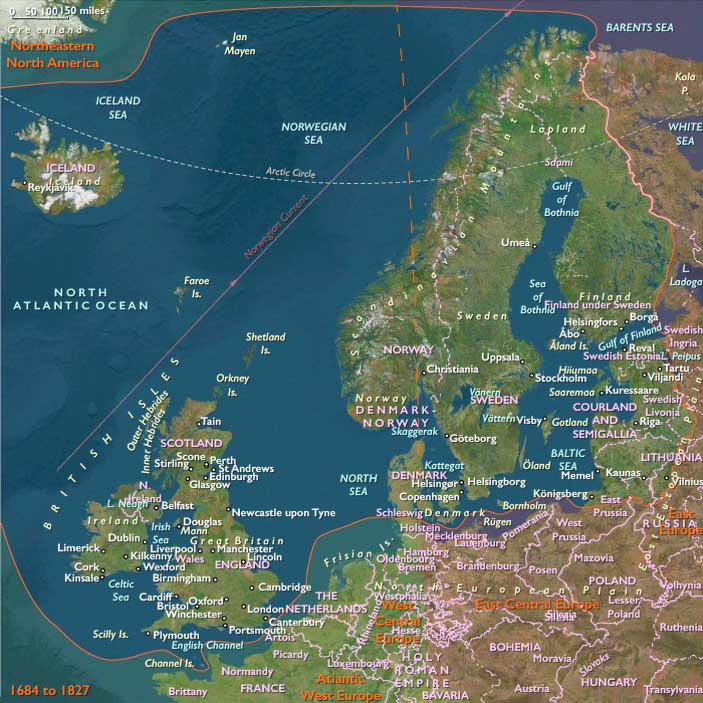
Northwest Europe (1756–1767): Global War, Economic Thought, and Societal Innovations
The Seven Years' War and British Dominance
From 1756 to 1763, Britain and France engaged in the Seven Years' War, a global conflict fought across Europe, North America, the Caribbean, India, and West Africa. Britain's decisive victory, cemented by key triumphs like the capture of Quebec (1759), culminated in the Treaty of Paris (1763). France lost most of its North American territories, solidifying Britain's global dominance. However, victory left Britain burdened with immense debts, prompting the introduction of controversial colonial taxes—sparking tensions destined to ignite the American Revolution.
Adam Smith and the Birth of Economic Liberalism
The intellectual environment of Northwest Europe was profoundly shaped by the rise of Enlightenment figures such as Adam Smith, born in Kirkcaldy, Scotland, in 1723. Educated at the University of Glasgow under moral philosopher Francis Hutcheson, Smith developed his commitment to liberty, reason, and free speech. After a difficult tenure at Oxford, which he criticized harshly for intellectual stagnation, Smith began delivering popular public lectures in Edinburgh in 1748, sponsored by the Philosophical Society of Edinburgh under Lord Kames.
Smith’s lectures covered rhetoric and belles-lettres, but notably introduced his emerging economic philosophy—what he termed the "obvious and simple system of natural liberty." Although not naturally gifted as an orator, Smith's clarity and innovative ideas garnered success. In 1759, Smith published The Theory of Moral Sentiments, laying the ethical and psychological groundwork for his later masterpiece, The Wealth of Nations (1776). Departing from his teacher Hutcheson’s notion of an inherent moral sense, Smith developed a pluralistic moral philosophy centered on sympathy—the imaginative capacity to understand others' experiences. His work significantly reshaped moral philosophy and established the foundations of modern economics.
John Harrison’s Triumph and Precision Navigation
Meanwhile, John Harrison finally resolved the critical maritime longitude problem with his revolutionary marine chronometer, H4, tested successfully on a voyage to Jamaica in 1761–1762. Despite resistance from proponents of astronomical methods, Harrison’s chronometer achieved near-perfect accuracy, leading the Board of Longitude to award him a significant portion of the Longitude Prize in 1765. His invention dramatically improved maritime safety and strengthened British naval and commercial power.
Gaol Fever and Public Health Crises
Public health remained a significant concern. In 1759, an English authority estimated that nearly one-quarter of prisoners died annually from gaol fever (typhus), a disease notorious for repeatedly spreading from overcrowded, unsanitary prisons like Newgate Prison into London's general population. These outbreaks highlighted urgent public health vulnerabilities and slowly galvanized support for improvements in sanitation and prison conditions.
Champion Brothers and Industrial Struggles
Industrial developments continued around Bristol and Swansea, spearheaded by metallurgist William Champion and his brother John Champion. In 1758, John patented an improved calcination process for converting zinc sulfide (zinc blende) into zinc oxide for use in retorts, further advancing zinc metallurgy. Despite this technical innovation, William Champion struggled financially by 1761, unsuccessfully seeking incorporation and new investors for his ambitious zinc works at Warmley. By 1765, Champion's financial difficulties escalated, culminating in bankruptcy in 1768 and his dismissal from the Warmley Company. The works were sold in 1769 to the Bristol Brass Company, which never fully utilized their potential.
The Emergence of Modern Life Insurance
Financial innovation also marked this era. Modern life insurance, rooted in Roman-era "burial clubs," was significantly refined. The Amicable Society for a Perpetual Assurance Office, founded in London in 1706, had initially offered basic life assurance. By the 1750s, mathematician James Dodson, building on Edmond Halley's pioneering mortality tables (1693), attempted to form a new company offering more scientifically-based long-term insurance but was rejected due to his age. His protégé, Edward Rowe Mores, successfully established the Society for Equitable Assurances on Lives and Survivorship in 1762—the world's first mutual life insurer. Mores introduced age-based premiums derived from mortality rates, revolutionizing insurance practices and introducing the business role of "actuary."
Culinary Innovations: The Sandwich
Cultural innovations also emerged in everyday life. The modern sandwich gained popularity around 1762, famously attributed to John Montagu, 4th Earl of Sandwich, who purportedly requested meat between bread slices for convenience at gaming tables or his busy naval office. This simple innovation, though long preceded by various forms of food-on-bread across cultures—from the unleavened wraps of ancient Jewish sage Hillel to the open-faced Dutch belegde broodje—entered English polite society, quickly spreading through Europe's social elites.
Leisure and the Bathing Machine
Leisure and health culture expanded at coastal resorts, aided by inventions like the bathing machine. Originating in the 1730s, with designs attributed to Benjamin Beale at Margate around 1750, bathing machines became increasingly common, reflecting changing cultural attitudes toward modesty, public leisure, and healthful recreation.
Rococo Portraiture and British Art
In visual arts, the Rococo era saw portraiture flourish. Britain produced influential artists, including the blunt realism of William Hogarth and the refined, Van Dyck-inspired elegance of Thomas Gainsborough, Joshua Reynolds, Francis Hayman, and the Swiss-born Angelica Kauffman. Their work embodied the period’s cultural complexities, capturing society's sophistication and contradictions through vivid, compelling portraiture.
Denmark-Norway’s Quiet Prosperity
Under Frederick V, Denmark-Norway quietly prospered, enhancing trade through Copenhagen, though overshadowed by Britain’s global dominance. Peripheral territories—Iceland, Faroe Islands, Shetland, and Orkney—remained economically modest, with limited integration into broader European markets.
Ireland’s Continued Struggles
Ireland suffered persistent economic hardship under restrictive Penal Laws, exacerbating rural poverty and fueling continued emigration to North America. Despite pockets of Enlightenment influence in Dublin and Belfast, most rural areas languished economically.
Between 1756 and 1767, Northwest Europe experienced critical shifts driven by global warfare, Adam Smith’s economic liberalism, innovations in maritime navigation by John Harrison, and significant advancements in public health awareness, industrial metallurgy, financial services, culinary practices, and leisure culture. These transformations, both profound and everyday, shaped the trajectory of Northwest Europe, positioning it at the forefront of global power and innovation on the eve of the Industrial Revolution.
Northwest Europe (1768–1779): Industrial Growth, Enlightenment Thought, and the American Crisis
Britain's American Crisis and Imperial Tensions
Between 1768 and 1779, Britain faced profound challenges within its empire, particularly escalating tensions with its North American colonies. Following expensive military engagements during the Seven Years’ War, Britain attempted to offset debts by enforcing unpopular taxes, including the Townshend Acts (1767–1768). American resistance culminated in the Boston Massacre (1770), deepening hostility. Parliament’s subsequent repeal of most Townshend duties did little to quell tensions, which escalated dramatically after the Boston Tea Party (1773), leading to punitive measures—the so-called Intolerable Acts (1774)—and ultimately igniting the American Revolutionary War (1775). By 1776, American colonies declared independence, fundamentally challenging Britain’s imperial dominance and reshaping global political dynamics.
Adam Smith and "The Wealth of Nations"
Amidst political and economic turmoil, Scottish Enlightenment philosopher and economist Adam Smith published his seminal work, An Inquiry into the Nature and Causes of the Wealth of Nations, in 1776. Building upon earlier lectures delivered in Edinburgh and his philosophical foundation outlined in The Theory of Moral Sentiments (1759), Smith’s masterpiece articulated principles of free trade, market-driven economics, and limited governmental intervention—what he termed the "system of natural liberty." Smith’s theories profoundly influenced economic policy, advocating that prosperity emerged through individuals pursuing rational self-interest guided by competition—the concept famously summarized as the "invisible hand." His critiques of colonialism, monopolies, and mercantilist policies resonated widely, reshaping economic thought and policy throughout Europe and North America.
Industrial Struggles and Zinc Production: The Champion Brothers
The zinc industry in Britain, initially pioneered by William Champion and advanced by his brother John Champion, experienced both innovation and financial distress during this era. Although John Champion's refined calcination process—patented earlier in 1758—advanced British metallurgy, by 1765 William faced severe economic troubles. By 1768, Champion was declared bankrupt, and the Warmley works near Bristol were acquired in 1769 by the older Bristol Brass Company, which unfortunately never fully utilized the site's production capacity. This event marked an early cautionary example of the precarious nature of industrial entrepreneurship.
Public Health and Prison Reform
Continuing public health concerns persisted, especially regarding the appalling conditions within British prisons. Following repeated outbreaks of gaol fever (typhus), notably in Newgate Prison—where poor sanitation regularly sparked epidemics reaching London’s broader population—pressure steadily grew for prison reform. Though major systemic reforms were not yet realized, heightened awareness steadily laid the groundwork for future humanitarian improvements in prison conditions.
Life Insurance and the Actuarial Revolution
The sophistication of financial services evolved significantly with the pioneering work of actuaries such as Edward Rowe Mores. The Society for Equitable Assurances on Lives and Survivorship, founded by Mores in 1762, continued to flourish, laying down foundational practices of modern insurance. Its innovative methods, calculating premiums based on accurate mortality rates and actuarial principles, increasingly influenced financial institutions throughout Britain and Europe, shaping the growth of modern insurance industries.
Cultural Innovations: The Sandwich and Bathing Machines
Cultural habits continued evolving during these years. The sandwich, named after the 4th Earl of Sandwich, John Montagu, who popularized it—reputedly while engrossed at gaming tables or working at his naval office—became widely accepted. This culinary innovation symbolized convenience, modernity, and changing social customs in British life.
Similarly, the popularity of seaside leisure expanded rapidly. Bathing machines, mobile wooden structures providing privacy for changing clothes before entering the sea, became increasingly common across coastal Britain. Initially appearing decades earlier, their adoption during this period symbolized changing attitudes toward recreation, modesty, and social customs, driving tourism to coastal resorts like Margate and Brighton.
Rococo Portraiture: A Flourishing British Art
Artistic innovation remained vibrant, particularly in the realm of Rococo portraiture. Notable artists such as Joshua Reynolds, Thomas Gainsborough, Francis Hayman, and the Swiss-born Angelica Kauffman produced portraits that captured the sophisticated elegance and cultural aspirations of British elites. These artists, influenced by the elegant compositions of Flemish master Anthony van Dyck, balanced realism and idealization, significantly shaping British visual culture.
Captain James Cook and Maritime Exploration
Between 1768 and 1779, Captain James Cook undertook his three major voyages, profoundly expanding European geographic knowledge. Sponsored by the Royal Society and the Admiralty, Cook’s first voyage (1768–1771) aboard HMS Endeavour famously included the observation of the Transit of Venus (1769) and extensive charting of New Zealand and Australia’s east coast. Subsequent expeditions (1772–1775; 1776–1779) further explored the Pacific Ocean, bringing new scientific, geographic, and ethnographic knowledge to Europe. Cook’s voyages symbolized Britain’s Enlightenment-driven exploration and maritime dominance.
Denmark-Norway Under Christian VII: Reform and Instability
In Denmark-Norway, King Christian VII (reigned 1766–1808) came to the throne. His reign was characterized by political instability, personal mental illness, and court intrigue. Nevertheless, under influential statesman and reformer Johann Friedrich Struensee (in power from 1770 to 1772), Denmark-Norway briefly experienced a flurry of Enlightenment-inspired reforms aimed at modernizing administration, promoting economic liberalism, and reducing censorship. Though Struensee’s tenure was short-lived—ending dramatically with his execution in 1772—these brief reforms left a lasting imprint on the kingdom’s future political evolution.
Ireland’s Continued Economic Struggle
In Ireland, economic hardship under restrictive Penal Laws persisted, exacerbating rural poverty and emigration. By the late 1760s and 1770s, increasingly vocal calls for reform and relief emerged, reflecting growing discontent. While urban areas like Dublin displayed signs of economic activity, Ireland’s countryside remained largely impoverished and politically disenfranchised, setting the stage for future unrest.
Scientific and Technological Progress
The late 1760s and 1770s continued to witness significant scientific and technological advancements in Northwest Europe. Building upon the navigational triumphs of John Harrison’s marine chronometer (H4), Britain’s naval and commercial fleets adopted chronometric navigation extensively, boosting maritime efficiency and safety. Concurrently, agricultural experimentation and improved manufacturing processes marked the early phases of Britain’s industrial transformation.
Between 1768 and 1779, Northwest Europe navigated complex changes characterized by imperial turmoil, revolutionary economic thought exemplified by Adam Smith, maritime exploration, scientific innovation, and the early industrial revolution. Cultural trends in art, leisure, and everyday life evolved rapidly alongside significant developments in public health, finance, and governance. Collectively, these transformations set the stage for Europe's continued global dominance, industrialization, and future revolutionary upheavals.
The motive in founding the Academy is twofold: to raise the professional status of the artist by establishing a sound system of training and expert judgement in the arts, and to arrange the exhibition of contemporary works of art attaining an appropriate standard of excellence.
Supporters want to foster a national school of art and to encourage appreciation and interest in the public based on recognized canons of good taste.
It is Sir William Chambers, a prominent architect and head of the British government's architects' department, the Office of Works, who has used his connections with George III to gain royal patronage and financial support of the Academy in 1768.
The painter Joshua Reynolds is made its first president, and Francis Milner Newton is elected the first secretary, a post he will hold for two decades until his resignation in 1788.
The instrument of foundation, signed by George III on December 10, 1768, names thirty-four founder members and allows for a total membership of forty.
The founder members are Reynolds, John Baker, George Barret, Francesco Bartolozzi, Giovanni Battista Cipriani, Augustino Carlini, Charles Catton, Mason Chamberlin, William Chambers, Francis Cotes, George Dance, Nathaniel Dance, Thomas Gainsborough, John Gwynn, Francis Hayman, Nathaniel Hone the Elder, Angelica Kauffman, Jeremiah Meyer, George Michael Moser, Francis Milner Newton, Mary Moser, Edward Penny, John Inigo Richards, Thomas Sandby, Paul Sandby, Dominic Serres, Peter Toms, William Tyler, Samuel Wale, Benjamin West, Richard Wilson, Joseph Wilton, Richard Yeo, and Francesco Zuccarelli.
William Hoare and Johann Zoffany will be added to this list later by the King and are known as nominated members.
Among the founder members are two women, a father and daughter, and two sets of brothers.
Northwest Europe (1780–1791): Imperial Shifts, Industrial Revolution, and Revolutionary Ideas
Britain’s Defeat and American Independence
From 1780 to 1783, Britain faced the costly final phases of the American Revolutionary War. Although the British Empire was engaged in a worldwide struggle against a coalition that included Russia, France, Holland, French Canadians, Spain, Sweden, Denmark, and Prussia—collectively known as the League of Armed Neutrality—it offered only seemingly token resistance to the American colonists’ revolt. Britain’s defeat culminated in General Charles Cornwallis’s surrender at Yorktown (1781) and the Treaty of Paris (1783), officially recognizing American independence. While the loss fundamentally reshaped British imperial strategy, Britain managed to retain critical territories in Canada and the Caribbean.
The Advent and Impact of the Industrial Revolution
Despite this imperial setback, Britain surged decisively ahead of its European rivals through the dramatic unfolding of the Industrial Revolution. The foundations of this transformation were facilitated partly by the century-long influx of Brazilian gold, providing vital capital to stimulate early industrial enterprises. Britain's burgeoning industries rapidly expanded, substantially increasing national prosperity and living standards. This spiraling cycle of rising demand, production, and prosperity reshaped domestic markets and significantly boosted overseas trade. The East India Company, benefiting enormously from heightened British demand for raw materials, particularly commodities from India, became the single largest player in Britain's increasingly globalized economy. This expansion was further amplified by wartime necessity, as Indian commodities were essential to sustain British troops and industries.
James Watt and the Steam Engine Revolution
Crucial to Britain’s industrial ascendancy were the advances made by James Watt, whose enhanced steam engine transformed manufacturing, mining, and industry. Watt’s earliest commercial steam engines, installed beginning in 1776, initially powered pumps to remove water from mines, notably in Cornwall. These massive early engines featured large cylinders—typically fifty inches in diameter, standing around twenty-four feet tall—necessitating dedicated engine houses for their operation. Initially, Watt did not manufacture these engines himself; rather, he acted as a consulting engineer, overseeing installations according to his designs, while others undertook their construction. Watt’s firm, Boulton & Watt, charged clients an annual royalty calculated at one-third of the coal savings compared to older Newcomen engines.
Encouraged by Matthew Boulton, Watt broadened the applications of steam power beyond pumping by converting the reciprocating piston motion into rotational motion suitable for driving industrial machinery, including grinding mills, weaving looms, and milling devices. Although a crank seemed the natural choice for this conversion, Watt and Boulton were impeded by an existing patent held by James Pickard. Instead of accepting a restrictive cross-license arrangement, Watt ingeniously devised the sun and planet gear mechanism in 1781 to circumvent Pickard’s patent.
From 1781 to 1788, Watt introduced a series of major improvements: a double-acting engine (steam acting alternately on both sides of the piston), the application of "expansive" steam operation at pressures above atmospheric, and the development of compound engines, wherein two or more engines were linked for greater efficiency. In 1784, Watt patented his celebrated parallel motion mechanism, enabling a piston rod to move in a straight line—essential for the double-acting engine—despite being attached to a rocking beam with a circular arc. Watt also developed crucial control devices, such as the throttle valve and, in 1788, the centrifugal governor to prevent engines from dangerously accelerating ("running away"). Together, these innovations produced an engine five times more fuel-efficient than its predecessors. Despite these advances, Watt cautiously restricted steam pressures to near atmospheric levels, wary of boiler explosions caused by primitive boiler designs prone to leaks and structural failures.
Adam Smith’s Influence and Economic Liberalism
Amidst industrial and imperial transformations, Enlightenment economic ideas, epitomized by Adam Smith’s influential Wealth of Nations (1776), guided Britain’s policy debates. Smith’s advocacy of free trade, competitive markets, and limited governmental intervention—his system of “natural liberty”—resonated profoundly. His work supported liberalized trade policies and provided intellectual justification for Britain’s expanding industrial capitalism. Concurrently, Smith’s earlier moral philosophy in The Theory of Moral Sentiments (1759) continued informing social reformers and policymakers addressing humanitarian concerns, including public health and penal reform.
The Gordon Riots and Penal Reforms
Internally, Britain faced severe unrest during the violent Gordon Riots of 1780, sparked by anti-Catholic sentiment and opposition to the Catholic Relief Act (1778). The ensuing destruction highlighted deep social tensions and the need for stronger governance. Meanwhile, prison conditions, spotlighted by recurring epidemics of gaol fever (typhus), became targets of growing public condemnation. Reformers like John Howard, whose influential work The State of the Prisons gained prominence throughout the 1780s, began reshaping public attitudes toward sanitation, dietary improvements, and more humane prison practices.
Innovations in Life Insurance and Financial Practices
Britain’s financial services sector also advanced significantly, driven by the actuarial innovations introduced earlier by figures like Edward Rowe Mores and institutions such as the Society for Equitable Assurances on Lives and Survivorship. Throughout the 1780s, life insurance practices evolved dramatically, employing sophisticated mortality tables and actuarial calculations to secure public confidence. These methods supported the burgeoning middle class’s investment culture, bolstering economic stability.
Cultural Developments: Leisure, Culinary, and Artistic Flourishing
Cultural innovation was evident in daily life as well. The popularization of the sandwich, associated famously with the busy Earl of Sandwich, became emblematic of changing eating habits driven by convenience and modernity. Leisure culture at coastal resorts flourished, aided by increasing use of bathing machines, reflecting new social conventions around recreation and modesty.
Simultaneously, artistic life thrived through Rococo-inspired portraiture by leading artists such as Joshua Reynolds, Thomas Gainsborough, Angelica Kauffman, and George Romney, who captured the elegance and sophistication of British elites during this period.
Exploration: James Cook’s Final Voyages
Britain’s global scientific explorations continued, notably through the voyages of Captain James Cook. Cook’s third and final voyage (1776–1780), although ending tragically with his death in Hawaii (1779), vastly expanded European geographic knowledge of the Pacific Northwest, the Hawaiian Islands, and the Australian continent, reinforcing Britain’s global maritime dominance.
Denmark-Norway and Irish Reforms
Under Crown Prince Frederick’s regency from 1784, Denmark-Norway embraced Enlightenment reforms in agriculture, trade liberalization, and education, stabilizing governance and promoting prosperity. Ireland, meanwhile, secured legislative autonomy in 1782 after vigorous nationalist advocacy led by figures like Henry Grattan, despite continued economic distress under restrictive British trade and penal laws.
Between 1780 and 1791, Northwest Europe navigated profound shifts in global power and industrial capacity. Britain’s burgeoning industrial economy, propelled by revolutionary steam-engine technologies developed by James Watt and energized by global commerce through the East India Company, set it decisively ahead of its European rivals. Concurrently, Enlightenment philosophies influenced economics, humanitarian reforms reshaped social conditions, and cultural transformations enriched everyday life. Collectively, these pivotal developments defined the trajectory toward Britain’s global dominance, intensified industrialization, and the revolutionary upheavals approaching the nineteenth century.
Goethe visits Cagliostro's family in Palermo in 1787.
Goethe's journey to the Italian peninsula and Sicily from 1786 to 1788 is of great significance in his aesthetic and philosophical development.
His father had made a similar journey during his own youth, and his example was a major motivating factor for Goethe to make the trip.
More importantly, however, the work of Johann Joachim Winckelmann has provoked a general renewed interest in the classical art of ancient Greece and Rome.
Thus Goethe's journey has something of the nature of a pilgrimage to it.
During the course of his trip Goethe meets and befriended the artists Angelica Kauffman and Johann Heinrich Wilhelm Tischbein, as well as encountering such notable characters as Lady Hamilton and Alessandro Cagliostro.
He also journeys to Sicily during this time, and writes intriguingly that "To have seen Italy without having seen Sicily is to not have seen Italy at all, for Sicily is the clue to everything."
While in Southern Italy and Sicily, Goethe encounters, for the first time, genuine Greek (as opposed to Roman) architecture, and is quite startled by its relative simplicity.
Winckelmann had not recognized the distinctness of the two styles.
Goethe's diaries of this period form the basis of the non-fiction Italian Journey.
Italian Journey only covers the first year of Goethe's visit.
The remaining year is largely undocumented, aside from the fact that he spent much of it in Venice. This "gap in the record" has been the source of much speculation over the years.
In the decades which immediately follow its publication in 1816, Italian Journey will inspire countless German youths to follow Goethe's example.
This is pictured, somewhat satirically, in George Eliot's Middlemarch.