Andrew Johnson
17th President of the United States
Years: 1808 - 1875
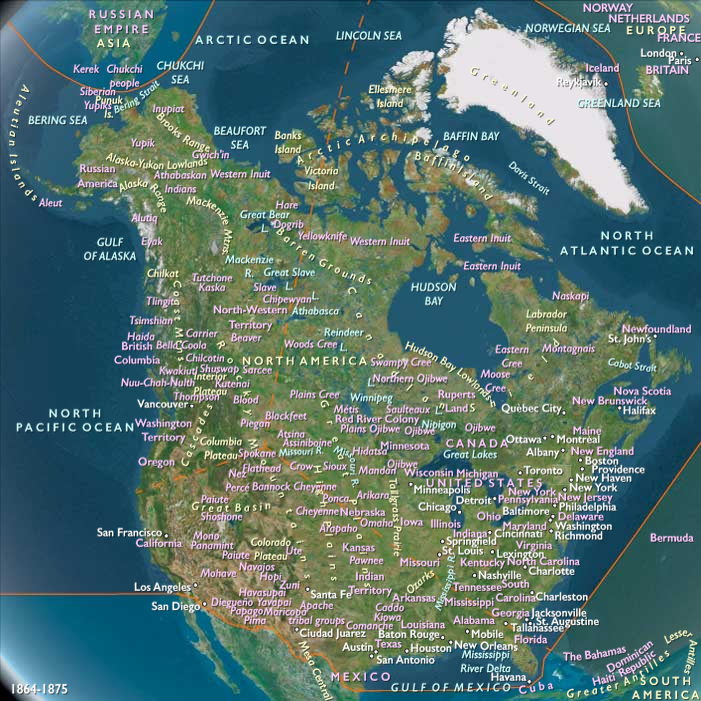
Andrew Johnson (December 29, 1808 – July 31, 1875) is the 17th President of the United States (1865–1869).
As Vice President of the United States in 1865, he succeeds Abraham Lincoln following his assassination.
Johnson then presides over the initial and contentious Reconstruction era of the United States following the American Civil War.
Johnson's reconstruction policies fails to promote the rights of the Freedmen (newly freed slaves), and he comes under vigorous political attack from Republicans, ending in his impeachment by the U.S. House of Representatives; he is acquitted by the U.S. Senate.
Johnson, of Irish and Scottish descent and born in poverty, becomes a master tailor.
He is self-educated; he marries and had five children.
He is elected as an alderman and as Mayor of Greeneville, Tennessee before being elected to the state assembly.
Later he is elected to the state senate.
He is elected to the U.S. House of Representatives, where he serves a total of five terms.
He is elected as Governor of Tennessee for two terms; all these offices are gained as a member of the Democratic Party.
His signature legislative endeavor in the state and federal arenas is passage of the Homestead Act.
When Tennessee secedes from the Union in 1861, Johnson is a Democratic U.S.
Senator from Tennessee and is dedicated to Jacksonian Democracy, nationalism and limited government.
A Unionist, he is a slaveholder and is pro-slavery.
Johnson is the only Southern senator who does not resign his seat during the Civil War; he becomes the most prominent War Democrat from the South and supports Lincoln's military policies.
In 1862, Lincoln appoints Johnson military governor of occupied Tennessee, where he is effective in fighting and ending the rebellion; he implements Reconstruction policies in the state and transitions for a time to a pro-emancipation policy.
Johnson is nominated as the vice presidential candidate in 1864 on the National Union Party ticket.
He and Lincoln are elected in 1864, inaugurated in early 1865 and a month later Johnson assumes the presidency upon Lincoln's assassination.
As president, he implements his own form of Presidential Reconstruction – a series of proclamations directing the seceded states to hold conventions and elections to re-form their civil governments.
These proclamations embody Johnson's conciliatory policies towards the South, as well as his rush to reincorporate the former Confederate states into the union without due regard for freedmen's rights; these positions and his vetoes of civil rights bills embroil him in a bitter dispute with Radical Republicans who demand harsher measures.
The Radicals are infuriated with Johnson's lenient policies.
The Radicals in the House of Representatives impeach him in 1868 (a first for a U.S. president), charging him with violating the Tenure of Office Act, when he seeks to remove his Secretary of War without Senate approval; his trial in the Senate ends in an acquittal by a single vote.
As a Jeffersonian and Jacksonian, Johnson refuses to toe any party line throughout his political career – though he primarily runs as a Democrat, with the exception of his vice-presidency.
While president, he attempts to build a party of loyalists under the National Union label.
His failure to make the National Union brand a genuine party makes Johnson an independent during his presidency, though he is supported by Democrats and later rejoins the party briefly as a Democratic Senator from Tennessee in 1875 until his death that year.
Johnson's administration has received very poor historical rankings amongst scholars, typically among the bottom three.