Andrew Jackson
seventh President of the United States
Years: 1767 - 1845
Andrew Jackson (March 15, 1767 – June 8, 1845) is the seventh President of the United States (1829–1837).
Based in frontier Tennessee, Jackson is a politician and army general who defeats the Creek Indians at the Battle of Horseshoe Bend (1814), and the British at the Battle of New Orleans (1815).
A polarizing figure who dominates the Second Party System in the 1820s and 1830s, as president he destroys the national bank and relocates most Indian tribes from the Southeast to west of the Mississippi River.
His enthusiastic followers create the modern Democratic Party.
The 1830–1850 period later becomes known as the era of Jacksonian democracy.
Jackson is nicknamed "Old Hickory" because of his toughness and aggressive personality; he fights in duels, some fatal to his opponents.
He is a rich slaveholder, who appeals to the common men of the United States, and fights politically against what he denounces as a closed, undemocratic aristocracy.
He expands the spoils system during his presidency to strengthen his political base.
Elected president in 1828, Jackson supports a small and limited federal government.
He strengthens the power of the presidency, which he sees as a spokesman for the entire population, as opposed to Congressmen from a specific small district.
He is supportive of states' rights, but during the Nullification Crisis, declares that states do not have the right to nullify federal laws.
Strongly against the national bank, he vetoes the renewal of its charter and ensures its collapse.
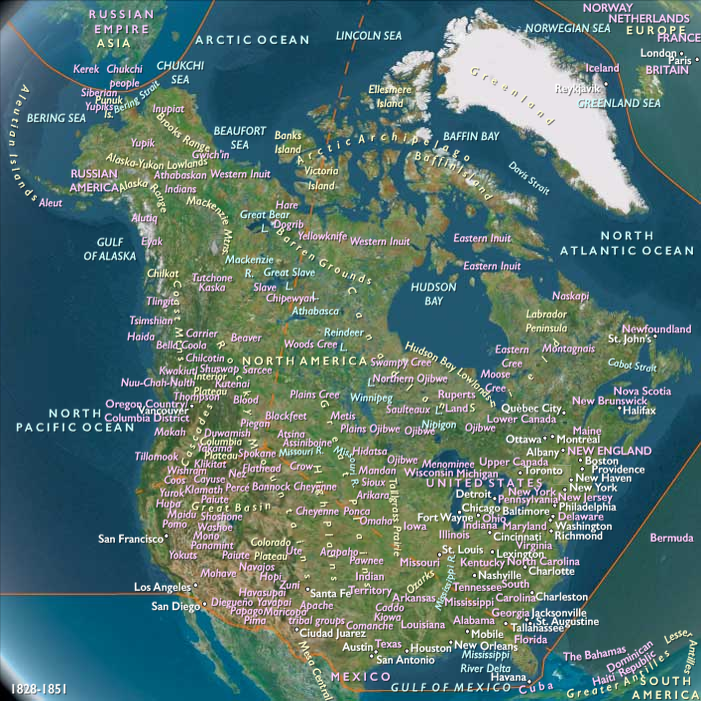
Whigs and moralists denounce his aggressive enforcement of the Indian Removal Act, which results in the forced relocation of thousands of Native Americans to Indian Territory (now Oklahoma).
Historians acknowledge his protection of popular democracy and individual liberty for United States citizens, and criticize him for his support for slavery and for his role in Indian removal.