Ambrogio Spinola
1st Marquis of the Balbases; Spanish aristocrat and general
Years: 1569 - 1630
Don Ambrogio Spinola Doria, 1st Marquis of the Balbases (1569 – September 25, 1630) is an Italian aristocrat, who, as a Spanish general, wins a number of important battles in the Eighty Years’ War between Spain and the Dutch Republic.
He is often called "Ambrosio", especially in Spanish-speaking countries.
Related Events
Filter results
Showing 10 events out of 16 total
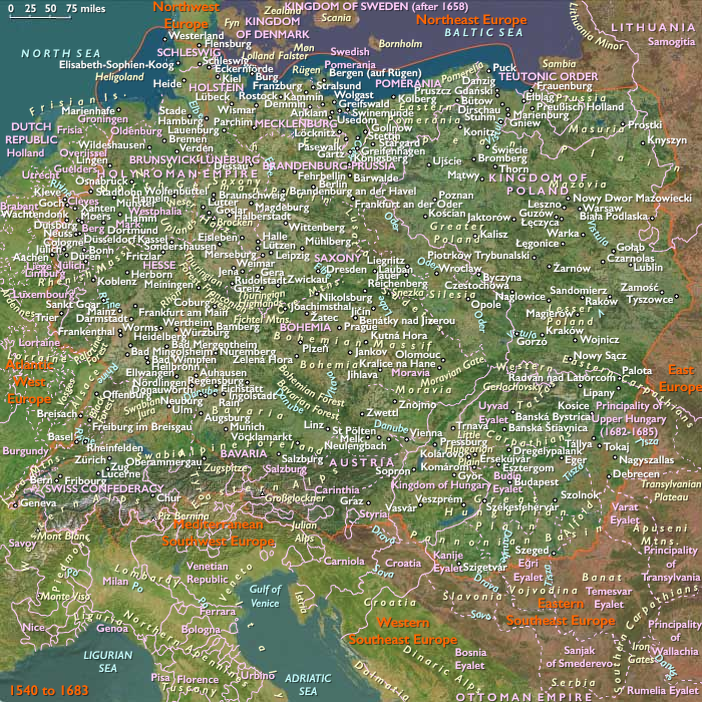
The family of Spinola is one of great antiquity, wealth and power in Genoa.
Ambrogio Spinola is the eldest son of Filippo Spinola, marquis of Sesto and Benafro, and his wife Polissena, daughter of the prince of Salerno.
Don Ambrogio's sister Donna Lelia is married to Don Giulio Cesare Squarciafico, 2nd Marquess of Galatone, from whom descend the Princes of Belmonte.
The Italian Republic of Genoa is in practical terms a protected state of the Spanish Empire; the Genoese are the bankers of the Spanish monarchy and have control of its finances.
Several of the younger brothers of Ambrogio Spinola have sought their fortune in Spain, and one of them, Federico, has distinguished himself greatly as a soldier in the Army of Flanders.
The eldest brother, who had remained at home to marry and continue the family, was in 1592 married to Giovanna Baciadonna, daughter of the count of Galerata.
The houses of Spinola and Doria are rivals for authority within the republic.
Ambrogio Spinola has continued the rivalry with the count of Tursi, the chief of the Dorias.
Unsuccessful in tghis, and having lost a lawsuit into which he had entered to enforce a right of preemption of a palace belonging to the Salerno family which the Doria wished to purchase, he had decided to withdraw from the city and advance the fortunes of his house by serving the Spanish monarchy in Flanders.
He and his brother Federico enter into a contract with the Spanish government—a condotta on the old Italian model—in 1602.
It is a speculation on which Spinola has risked the whole of the great fortune of his house.
Ambrogio Spinola undertakes to raise one thousand men for land service, and Federico to form a squadron of galleys for service on the coast.

Several of Federico Spinola’s galleys had been destroyed by English warships on his way up the Channel; he himself had been slain in an action with the Dutch on May 24, 1603.
Ambrogio Spinola had meanwhile marched overland to Flanders in 1602 with the men he had raised at his own expense.
During the first months of his stay in Flanders the Spanish government had played with schemes for employing him on an invasion of England, which had come to nothing.
At the close of the year he had returned to Italy for more men.
His experience as a soldier does not begin until, as general, and at the age of thirty-four, he undertakes to continue the siege of Ostend on September 29, 1603.
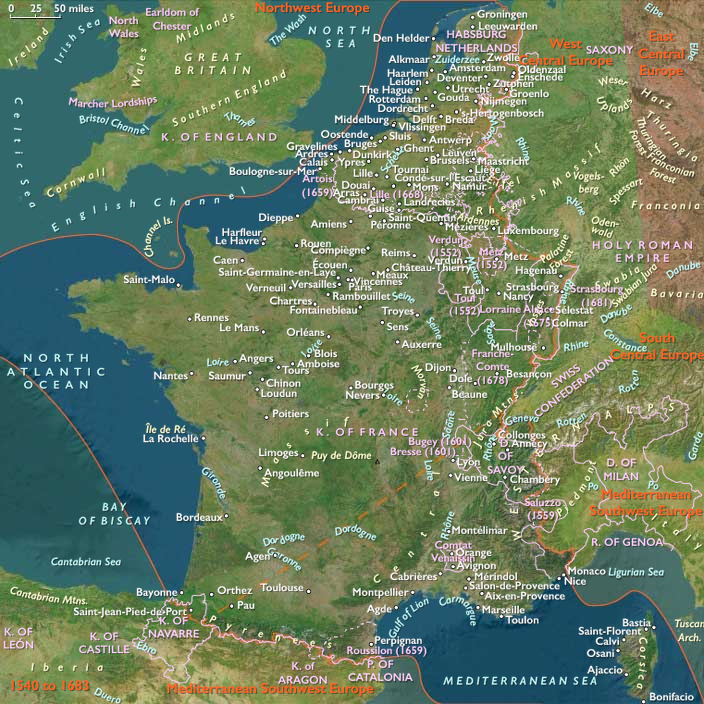
Ostend’s strategic position on the North Sea coast has major advantages for the Flemish city as a harbor but has also proved to be a source of trouble.
The city has been frequently taken, ravaged, ransacked and destroyed by conquering armies.
The most important of these events is the three-year Siege of Ostend that had begun in 1601.
In their fight against the Spanish Empire during the Eighty Years' War, the Dutch rebels, the Geuzen, had occupied the city.
The Archdukes had decided that before taking on the Republic, it was important to subdue the last Protestant enclave on the Flemish coast, the port of Ostend.
The Spanish, under Spinola’s able leadership, have torn Ostend's outer defenses from the exhausted Dutch and put what remains of the city under the muzzles of their guns, compelling the Dutch to surrender on September 22, 1604.
By this point the Spanish have lost almost sixty thousand men in the blasted trenches and dugouts surrounding the ruined city.
The siege has taken three years and eighty days.
Described as a "long carnival of death", with on both sides combined more than eighty thousand dead or wounded, the ruin and devastation of the siege leads to negotiations that are to produce a Twelve-Year Truce (1609-1621) between Spain and the United Provinces.
The years since the Battle of Nieuwpoort have shown an apparent stalemate.
Meanwhile the stadtholders have mopped up some more Spanish fortresses, like Grave in Brabant and Sluys and Aardenburg in what is to become States Flanders.
Though these victories have deprived the Archdukes of much of the propaganda value of their own victory at Ostend, the loss of the city is a severe blow to the Republic, and it brings about another Protestant exodus to the North.
The supreme command of the Army of Flanders has now been transferred to Spinola, who proves to be a worthy opponent of Maurice.
In a brilliant campaign in 1605, he first outwits Maurice by feigning an attack on Sluys, but when Maurice comes down to block that, ...
Spinola leaves Maurice far in his rear while he makes a surprise attack on the eastern Netherlands by way of Münsterland in Germany.
He soon appears before Oldenzaal (only recently captured by Maurice) and this preponderantly Catholic city opens its gates to him without firing a shot.
After taking Oldenzaal, Spinola captures Lingen.
With both towns in Spanish hands, the Dutch have to evacuate Twente, the most urbanized and easterly part of the province of Overijssel, and retire to the IJssel river.
Spinola's Spanish troops occupy Wachtendonk on October 27, 1605.
The archduke Albert and the infanta Clara Eugenia, who had had set their hearts on taking Ostend, had been delighted at Spinola’s success, which has won him a high reputation among the soldiers of the time.
On the close of the campaign he had gone to Spain to arrange with the court, which is at this time at Valladolid, for the continuance of the war.
At Valladolid he had insisted on being appointed commander-in-chief in Flanders.
He was back at Brussels by April and entered on his first campaign.
The wars of the Low Countries consist at this time almost wholly of sieges, and Spinola makes himself famous by the number of places he takes in spite of the efforts of Maurice of Nassau to save them.
Spinola returns in 1606 and causes a panic in the Republic when he invades the Zutphen quarter of Gelderland, showing that the interior of the Republic is still vulnerable to Spanish attack.
However, Spinola is satisfied with the psychological effect of his incursion and does not press the attack.
Maurice, thoroughly disturbed by all of this, decides on a rare autumn campaign in an attempt to close the apparent gap in the Republic's eastern defenses.
He retakes Lochem, but ...
...his siege of Oldenzaal fails in November, 1606.
This is the last major campaign on both sides before the Truce that will be concluded in 1609.
The strategic result of the Spanish gains of 1605-6 is that the Twenthe and Zutphen quarters are to remain a kind of No Man's Land right down to 1633, during which the residents will be forced to pay tribute to the Spanish forces that often roam there at will.