Atlantic Southwest Europe: Maritime Expansion and Internal Tensions (1432–1443)
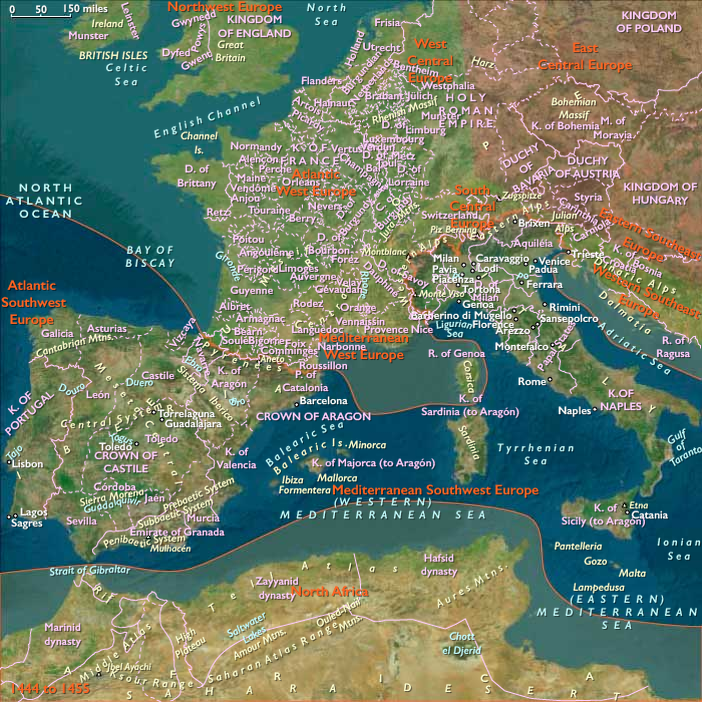
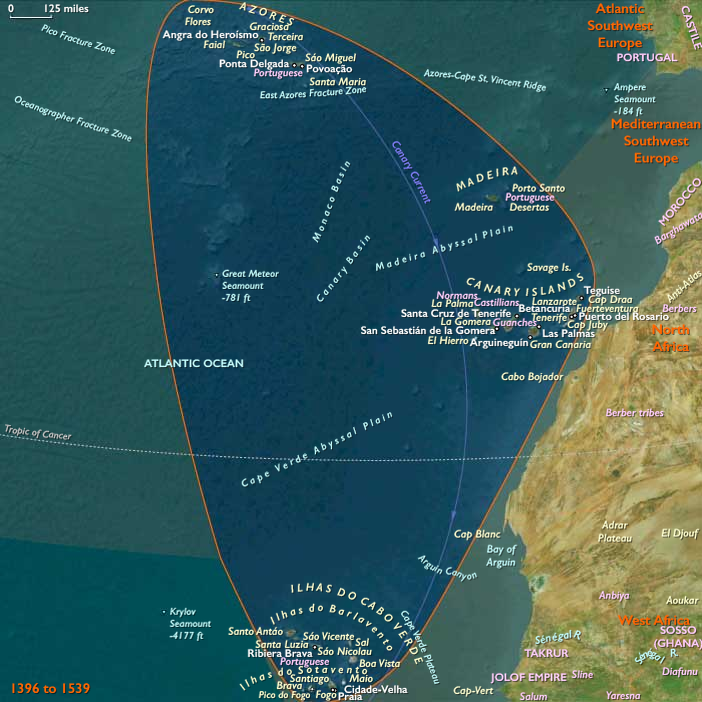
Between 1432 and 1443, Atlantic Southwest Europe entered a transformative period, marked by intensified Portuguese maritime exploration, internal political struggles in Castile, and efforts by regional entities such as Navarre and the Basque territories to assert autonomy. Economic growth accelerated due to overseas discoveries, yet internal tensions and localized conflicts tested regional stability and influenced the cultural landscape.
Political and Military Developments
Economic and Maritime Expansion
Cultural and Social Developments
Significance and Legacy
The era of 1432–1443 proved critical in consolidating Portugal's maritime supremacy, significantly altering Europe's global position through its burgeoning Atlantic empire. Simultaneously, internal conflicts in Castile contrasted sharply with growing regional stability and cultural confidence in Basque, Navarrese, and Galician territories. These years set the foundation for further maritime expansion and shaped enduring patterns of autonomy, identity, and economic prosperity that would influence Atlantic Southwest Europe profoundly in subsequent decades.