Ali
4th Muslim Caliph
Years: 601 - 661
Alī ibn Abī Ṭālib (September 20, 601 or July 17, 607 or 600 – January 27, 661) is the cousin and son-in-law of Islamic prophet Muhammad, ruling over the Islamic Caliphate from 656 to 661.
A son of Abu Talib, Ali is also the first male who accepts Islam.
Sunnis consider Ali the fourth and final of the Rashidun (rightly guided Caliphs), while Shias regard Ali as the first Imam and consider him and his descendants the rightful successors to Muhammad, all of whom are members of the Ahl al-Bayt, the household of Muhammad.
This disagreement splits the Ummah (Muslim community) into the Sunni and Shia branches.
Muslim sources, especially Shia ones, state that Ali was the only person born in the Kaaba sanctuary in Mecca, the holiest place in Islam.
His father was Abu Talib and his mother was Fatima bint Asad, but he was raised in the household of Muhammad, who himself was raised by Abu Talib, Muhammad's uncle and Ali's father.
When Muhammad reports receiving a divine revelation, Ali is the first male to accept his message, dedicating his life to the cause of Islam.
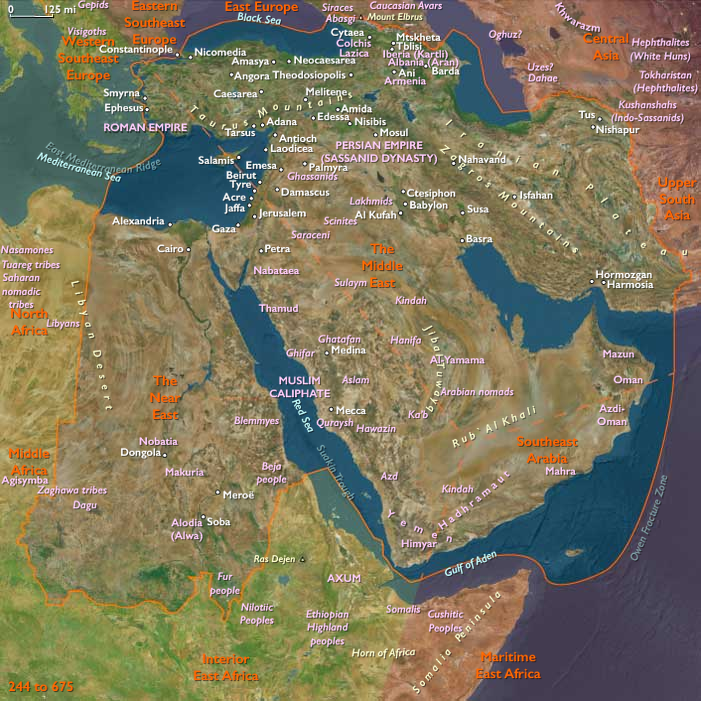
Ali migrates to Medina shortly after Muhammad did.
Once there Muhammad told Ali that God has ordered Muhammad to give his daughter, Fatimah, to Ali in marriage.
For the ten years that Muhammad leads the community in Medina, Ali is extremely active in his service, leading parties of warriors in battles, and carrying messages and orders.
Ali takes part in the early caravan raids from Mecca and later in almost all the battles fought by the nascent Muslim community.
Ali is appointed Caliph by the Companions of Muhammad (the Sahaba) in Medina after the assassination of the third caliph, Uthman ibn Affan.
He encounters defiance and civil war during his reign.
In 661, Ali is attacked one morning while praying in the mosque of Kufa, and dies two days later.
In Muslim culture, Ali is respected for his courage, knowledge, belief, honesty, unbending devotion to Islam, deep loyalty to Muhammad, equal treatment of all Muslims and generosity in forgiving his defeated enemies, and therefore is central to mystical traditions in Islam such as Sufism.
Ali retains his stature as an authority on Quranic exegesis, Islamic jurisprudence and religious thought.
Ali holds a high position in almost all Sufi orders which trace their lineage through him to Muhammad.
Ali's influence has been important throughout Islamic history.