Alhazen
Arab scientist, polymath, mathematician, astronomer and philosopher
Years: 965 - 1040
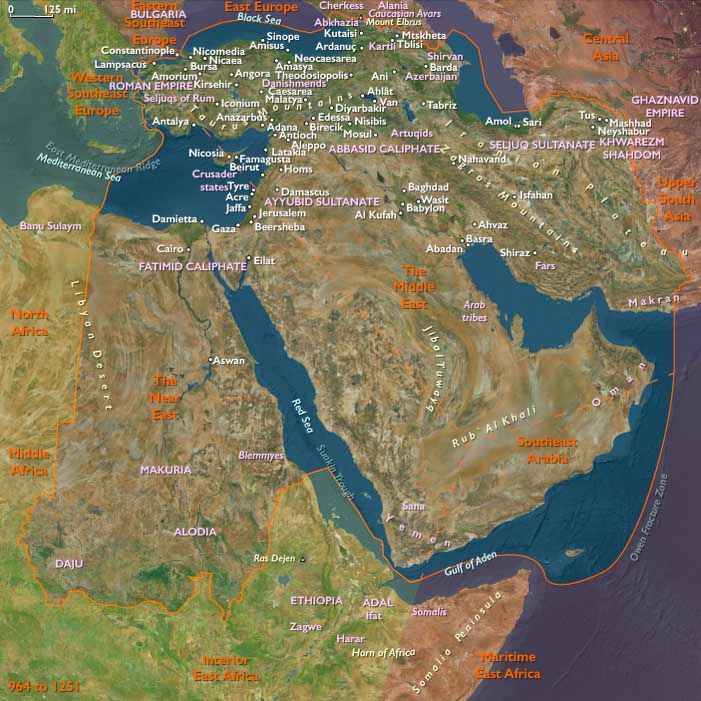
Abū ʿAlī al-Ḥasan ibn al-Ḥasan ibn al-Haytham (c. 965 – c. 1040) is an Arab scientist, polymath, mathematician, astronomer and philosopher.
He makes significant contributions to the principles of optics, as well as to astronomy, mathematics, visual perception, and to the scientific method.
He also writes insightful commentaries on works by Aristotle, Ptolemy, and the Greek mathematician Euclid.
He is frequently referred to as Ibn al-Haytham, and sometimes as al-Basri, after his birthplace in the city of Basra.
He is also nicknamed Ptolemaeus Secundus ("Ptolemy the Second") or simply "The Physicist" in medieval Europe.
According to one version of his biography, overconfident about practical application of his mathematical knowledge, he assumed that he could regulate the floods of the Nile.
After being ordered by Al-Hakim bi-Amr Allah, the sixth ruler of the Fatimid caliphate, to carry out this operation, he quickly perceived the impossibility of what he was attempting to do.
Fearing for his life, he feigned madness[ and was placed under house arrest, during which he undertook scientific work.
After the death of Al-Hakim he was able to prove that he was not mad, and for the rest of his life he made money copying texts while writing mathematical works and teaching.
He has been said to be the father of modern optics, experimental physics and scientific methodology" and could be regarded as the first theoretical physicist.