Alexander William Doniphan
American attorney, soldier and politician
Years: 1808 - 1887
Alexander William Doniphan (July 9, 1808 – August 8, 1887) is a 19th-century American attorney, soldier and politician from Missouri who is best known today as the man who prevented the summary execution of Mormon founder Joseph Smith, Jr. at the close of the 1838 Mormon War in that state.
He also achieved renown as a leader of American troops during the Mexican–American War, as the author of a legal code that still forms the basis of New Mexico's Bill of Rights, and as a successful defense attorney in the Missouri towns of Liberty, Richmond and Independence.
Related Events
Filter results
Showing 10 events out of 10 total
U.S. Brigadier General Stephen Watts Kearney, having departed in July 1846 immediately upon receiving news of the war with Mexico, leads the seventeen hundred Missouri volunteers of the grandly titled Army of the West from Fort Leavenworth, Kansas, down the Santa Fe Trail into New Mexico.
Kearny's orders are to secure the territories Nuevo México and Alta California.
In Santa Fe, Governor Manuel Armijo wants to avoid battle, but on August 9, Catholic priests, Diego Archuleta (the young regular-army commander), and the young militia officers Manuel Chaves and Miguel Pino force him to muster a defense.
However, on August 14, before the American army was even in view, he had decided not to fight.
When Pino, Chaves, and some of the militiamen insisted on fighting, Armijo had ordered the cannon pointed at them.
The New Mexican army had retreated to Santa Fe, and Armijo had fled to Chihuahua.
Kearny and his troops encountered no Mexican forces when they arrived on August 15.
Kearny and his force enter Santa Fe and claim the New Mexico Territory for the United States without a shot being fired.
Establishing a civil government under ex-Missourian Santa Fe trader Charles Bent, Kearney divides his command into three forces: one, commanded by Colonel Sterling Price, to occupy New Mexico; a second, under Alexander William Doniphan, to capture Chihuahua; and the third, his own, to occupy California.
American officers with a background in law draw up a temporary legal system for the territory called the Kearny Code.
The Navajo continue to raid despite the arrival of the U.S. Military in 1846.
General Stephen W. Kearny orders the Navajo to attend a council in Santa Fe in September 1846.
The Navajo do not show up.
Kearny sends a note to Col. Alexander William Doniphan, his second-in-command in Santa Fe, on October 2, to take all prisoners held by the Navajo and property which may have been stole from the inhabitants" of New Mexico.
On October 5, while on his way to California, Kearny stops in Socorro, New Mexico.
He writes a proclamation here that authorizes "all the inhabitants (Mexican & Pueblos) ...to form war parties, march into the country of their enemies, the Navajoes, to recover their property, to make reprisals and obtain redress for the many insults received from them. The old, the women and the children of the Navajoes must not be injured."
Kearny orders Doniphan to send a regiment of soldiers into Navajo country and secure a peace treaty with them.
A detachment of thirty men makes contact with the Navajo and speak to the Navajo Chief Narbona in mid-October.
Doniphan informs the Navajo that all their land now belongs to the United States, and the Navajo and New Mexicans are the "children of the United States".
The Navajo sign a treaty, known as the Bear Spring Treaty, on November 21, 1846.
Given that the Navajos cannot read or write, it is unlikely that they completely understand the Treaty they signed.
The "Memorandum of a treaty entered into between Colonel A. W. Doniphan, commanding the United States' forces in the Navajo country, and the chiefs of the Navajo Nation of Indians", declares in Article I: "A firm and lasting peace and amity shall henceforth exist between the American people and the Navajo tribe of Indians".
Article 2 notes the definition includes New Mexicans and Pueblo peoples as being Americans, that Article 3 says free trade is guaranteed by both sides, with protection of any molestation and Articles 4 and 5 say the prisoners and property taken by both sides are to be restored.
After the treaty was signed, gifts are exchanged as an expression of good will, according to John Hughes from 1847.
The treaty will do little to end the conflict between the Navajo, the New Mexicans and recently arrived Anglos.
The Navajo warriors will continue to raid the New Mexicans and take their livestock.
Likewise, New Mexican militia will continue to raid the Navajo for livestock and slaves.
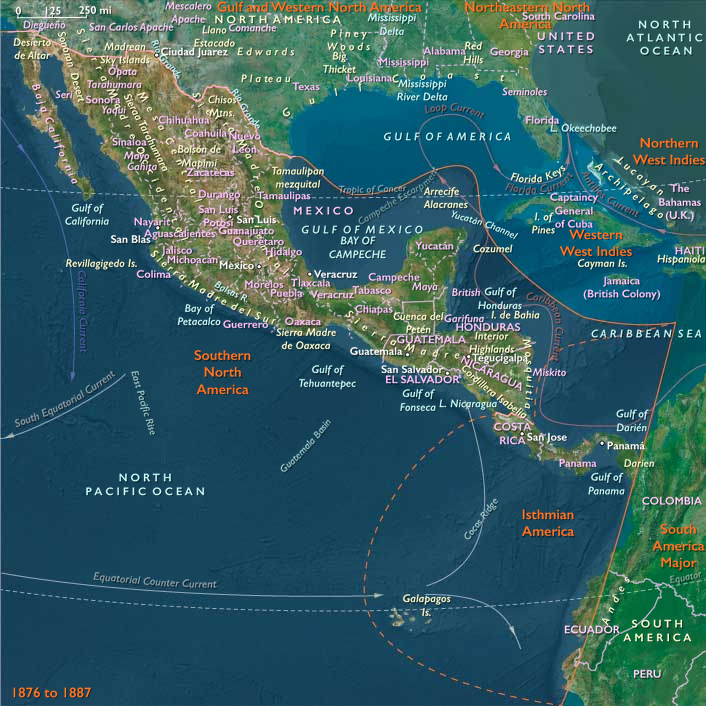
Alexander Doniphan and six hundred or so Missouri Volunteers, after much difficulty, reach the Rio Grande in the vicinity of present-day El Paso in late December 1846, repulsing an attack by a small detachment of Mexicans at El Brazito on December 25.
Doniphan’s exhausted force rests at Paso del Norte (present-day Ciudad Juarez).
Price has suppressed the Taos Revolt by mid-February.
Alexander Doniphan’s now-rested Missouri Volunteers had meanwhile set off for Chihuahua City on February 8.
The Bear Springs Treaty had quelled a large scale insurrection by the Ute, Zuni, Hopi, and Navajo tribes.
After the successful conquest of New Mexico, American troops move into modern-day northwest Mexico.
Alexander Doniphan’s force decimates a Mexican detachment about twenty-five miles north of Chihuahua at the Sacramento River crossing on February 28, 1847.
Colonel William Alexander Doniphan had occupied Chihuahua City on March 1, 1847.
British consul John Potts had not wanted to let Doniphan search Governor Trias's mansion, and had unsuccessfully asserted it was under British protection.
American merchants in Chihuahua want the American force to stay in order to protect their business.
Major William Gilpin advocates a march on Mexico City and persuades a majority of officers, but Doniphan subverts this plan.
Then in late April, Taylor orders the First Missouri Mounted Volunteers to leave Chihuahua and join him at Saltillo.
The American merchants either follow or return to Santa Fe.
The civilian population of northern Mexico offers little resistance to the American invasion, possibly because the country has already been devastated by Comanche and Apache raids.