Alexander Selkirk
Scottish sailor
Years: 1676 - 1721
Alexander Selkirk (1676 – 13 December 1721) is a Scottish sailor who spends four years as a castaway after being marooned on an uninhabited island.
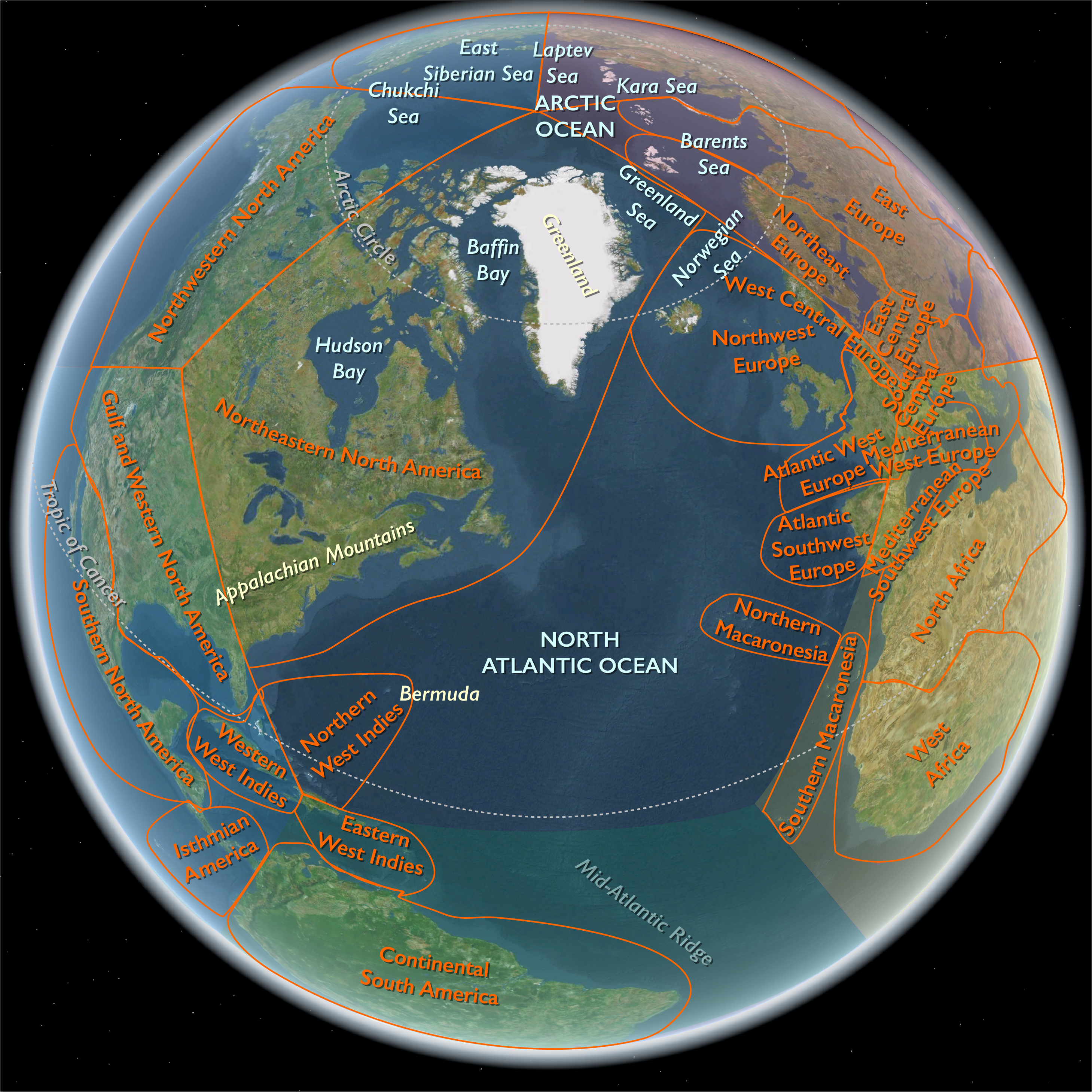
An unruly youth, Selkirk joins several buccaneering expeditions to the South Seas, including one commanded by William Dampier, which calls in for provisions at the Juan Fernández Islands off Chile.
Selkirk, judging correctly that his craft, the Cinque Ports, is unseaworthy, isg iven the choice of being left ashore on his own.
He is eventually rescued by Dampier after four years, in which he has developed hunting and woodcraft skills to a high degree.
Selkirk's story arouses great interest at home, and Daniel Defoe's fictional character Robinson Crusoe is almost certainly based in part on him.
Related Events
Filter results
Showing 10 events out of 10 total
South America Minor (1684–1827 CE): Indigenous Independence and Imperial Peripheries
Geographic & Environmental Context
The subregion of South America Minor includes southern Chile (including the Central Valley), southern Argentina (Patagonia south of the Río Negro and Río Grande), Tierra del Fuego, the Falkland Islands (Islas Malvinas), and the Juan Fernández Islands. Anchors included the Bio-Bío frontier, the Araucanian Andes, the Patagonian steppe, the Strait of Magellan, and the offshore Falklands and Juan Fernández Islands. The region remained on the margins of empire, contested by Indigenous autonomy, sparse colonial settlements, and growing imperial interest in strategic waters.
Climate & Environmental Shifts
The later Little Ice Age deepened cold and stormy conditions in Patagonia and Tierra del Fuego. Snow cover lingered longer in the Araucanian Andes, affecting harvests. The Central Valley of Chile alternated between droughts and floods. Hurricanes did not reach this far south, but fierce subpolar storms lashed the Falklands and the Strait of Magellan, while the Juan Fernández Islands enjoyed milder maritime climates.
Subsistence & Settlement
-
Mapuche and Spanish Chile: The Mapuche preserved autonomy south of the Bio-Bío River. Farming of maize, beans, and potatoes continued alongside livestock captured from Spanish herds. Spaniards in Santiago and Concepción consolidated haciendas and wheat exports, but attempts to conquer Araucanía failed.
-
Patagonia: The Tehuelche adopted horses (by the 18th century) and expanded hunting, raiding, and mobility across the steppe. Their networks reached into Pampas trade circuits.
-
Tierra del Fuego: The Yaghan and Kawésqar sustained maritime hunting with canoes and harpoons. The Selk’nam continued guanaco hunting and ritual hain initiations, remaining inland and largely insulated from outsiders.
-
Falkland Islands: Visited by European sailors; France established Port Louis (1764), followed by Britain (1765) and Spain (1767). Settlements shifted but whaling and sealing stations increased by the late 18th century.
-
Juan Fernández Islands: Used as a provisioning stop by Spanish and foreign ships; goats and invasive species transformed the ecology. Castaway Alexander Selkirk’s marooning (1704–1709) later inspired Robinson Crusoe.
Technology & Material Culture
-
Mapuche developed cavalry warfare, lances, and iron tools through trade and capture.
-
Tehuelche combined bolas with horseback raiding.
-
Fuegian canoe peoples retained bark craft, harpoons, and bone tools adapted to icy seas.
-
Spanish towns in central Chile displayed adobe churches, plazas, and hacienda complexes.
-
European forts and harbors appeared intermittently in the Falklands and Juan Fernández.
Movement & Interaction Corridors
-
Bio-Bío frontier remained the line of conflict and exchange between Spaniards and Mapuche.
-
Horse trade and raiding circuits linked Patagonia, the Pampas, and Araucanía.
-
Canoe routes continued in Tierra del Fuego’s channels.
-
Falklands and Juan Fernández became integral to global shipping, whaling, and piracy routes, linking South America to the Atlantic and Pacific.
Cultural & Symbolic Expressions
-
Mapuche rituals honored ngen spirits, with ngillatun feasts reinforcing community bonds and collective resistance.
-
Tehuelche oral traditions incorporated the horse as a new symbol of power.
-
Selk’nam hain ceremonies dramatized mythic order and kinship.
-
Spanish Catholic festivals persisted in Santiago and Concepción, but Indigenous cosmologies thrived independently beyond colonial reach.
-
Sailors’ lore attached symbolic weight to the Falklands and Juan Fernández as remote, perilous, and storied isles.
Environmental Adaptation & Resilience
Mapuche and Tehuelche resilience lay in mobility, cavalry, and crop diversification. Fuegians adapted to Little Ice Age chill through layered furs, canoe heating fires, and cooperative hunting. Colonists rebuilt haciendas after floods and earthquakes. Islanders of Juan Fernández coped with introduced goats and rats, altering diets and landscapes.
Transition
By 1827 CE, South America Minor remained largely Indigenous: Mapuche and Tehuelche independence endured; Fuegian peoples thrived in maritime niches. Central Chile was firmly Spanish until independence revolutions of the 1810s–1820s, when patriots like Bernardo O’Higgins secured Chile’s independence. The Falklands and Juan Fernández had become contested imperial outposts. This was still a frontier world—part Indigenous stronghold, part maritime crossroads—poised to enter the age of republican nation-states and intensified global interest.
Alexander Selkirk, engaged at an early period in buccaneer expeditions to the South Seas, had joined the expedition of famed privateer and explorer William Dampier in 1703.
Selkirk, the son of a shoemaker and tanner in Lower Largo, Fife, Scotland, was born in 1676, and displayed a quarrelsome and unruly disposition in his youth.
Dampier was captain of the St. George, while Selkirk served on the galley Cinque Ports, the St. George's companion, as a sailing master serving under Thomas Stradling.
The ships had parted ways because of a dispute between Stradling and Dampier, after which the Cinque Ports had been brought by Stradling in 1703 to an island that is today known as Robinson Crusoe Island in the uninhabited archipelago of Juan Fernández off the coast of Chile for a mid-expedition restocking of supplies and fresh water.
Selkirk by this time had grave concerns about the seaworthiness of this vessel and had tried to persuade some of his crewmates to desert with him, remaining on the island; he was counting on an impending visit by another ship.
No one else had agreed to come along with him.
Stradling declared that he would grant him his wish and leave him alone on Juan Fernández.
Selkirk promptly regretted his decision, chasing and calling after the boat, to no avail.
Selkirk was to live the next four years and four months without any human company.
The Cinque Ports had indeed later foundered off the coast of what is present-day Colombia.
Stradling and half a dozen of the crew had survived the loss of their ship, but were made prisoners by the Spanish, as the War of the Spanish Succession is going on, England and the Netherlands being in conflict with France and Spain over who was to be King of Spain.
Sent to Lima in Peru, they had endured a harsh imprisonment there.
Selkirk, hearing strange sounds from inland, which he feared were dangerous beasts, had remained at first along the shoreline, eating shellfish, scanning the ocean daily for rescue, and suffering all the while from loneliness, misery and remorse.
Hordes of raucous sea lions, gathering on the beach for the mating season, had eventually driven him to the island's interior.
Once there, his way of life had taken a turn for the better, as more foods were now available.
Feral goats—introduced by earlier sailors—provide him with meat and milk and wild turnips, cabbage, and black pepper berries offer him variety and spice.
Although rats attack him at night, he is able, by domesticating and living near feral cats, to sleep soundly and in safety.
Selkirk has proved resourceful in using equipment from the ship as well as materials that are native to the island.
He has built two huts out of pimento trees.
He uses his musket to hunt goats and his knife to clean their carcasses.
As his gunpowder dwindles, he has to chase prey on foot.
During one such chase he had been badly injured when he tumbled from a cliff, lying unconscious for about a day. (His prey had cushioned his fall, sparing him a broken back.)
He reads from the Bible frequently, finding it a comfort to him in his condition and a mainstay for his English.
When Selkirk's clothes wear out, he makes new garments from goatskin using a nail for sewing.
The lessons he had learned as a child from his father, a tanner, help him greatly during his stay on the island.
When his shoes became unusable, he had no need to make new ones, since his toughened, callused feet make protection unnecessary.
He forges a new knife out of barrel rings left on the beach.
Two vessels had arrived and departed, but both were Spanish.
As a Scotsman and privateer, he risked a terrible fate if captured and therefore he hid himself.
At one point, his Spanish pursuers had urinated at the bottom of a tree he was hiding in, but did not discover him.
Rogers has stocked his ships with limes to fend off scurvy, a practice not universally accepted at this time.
The ships' provisions of limes are exhausted after reaching the Pacific Ocean, and seven men die of the vitamin deficiency disease.
Dampier is able to guide the ships to little-known Juan Fernandez Island to replenish supplies of fresh produce.
As they near the island on January 31, 1709, the sailors spot a fire ashore and fear that it might be a shore party from a Spanish vessel.
Rogers sends a party ashore the next morning and discovers that the fire is from Scottish sailor Alexander Selkirk, who had been stranded there four years previously.
Almost incoherent in his joy, the agile Selkirk, catching two or three goats a day, helps restore the health of Rogers' scurvy-ravaged men.
According to Rogers' journal, Rogers found Selkirk to be "wild-looking" and "wearing goatskins", noting, "He had with him his clothes and bedding, with a firelock, some powder, bullets and tobacco, a hatchet, a knife, a kettle, a Bible and books." (The Daily Telegraph, January 5, 2009.)
Selkirk, who had been part of the ship's crew that abandoned Dampier after losing confidence in his leadership, is at first reluctant to join the expedition because of the presence of his old commodore, but eventually does so.
Serving initially as a mate aboard the Duke, he will later be given command of a small ship captured by the expedition., and will conclude the voyage as master of the Duke.
Rogers' A cruising voyage round the world: first to the South-Sea, thence to the East-Indies, and homewards by the Cape of Good Hope will be published in 1712 and include an account of Selkirk's ordeal.
He is to become the inspiration for the classic novel Robinson Crusoe, written by Rogers' friend, Daniel Defoe.
The Rogers expedition, after leaving Juan Fernandez on February 14, 1709, captures and loots a number of small vessels, and launches an attack on the town of Guayaquil, today located in Ecuador.
When Rogers attempts to negotiate with the governor, the townsfolk secrete their valuables.
Rogers is able to get a modest ransom for the town, but some crew members are so dissatisfied that they dig up the recently dead, hoping to find items of value.
This leads to sickness on board ship, of which six men die.
The expedition loses contact with one of the captured ships, which is under the command of Simon Hatley.
The other vessels search for Hatley's ship, but to no avail—Hatley and his men are captured by the Spanish. (On a subsequent voyage to the Pacific, Hatley will emulate Selkirk by becoming the center of an event that will be immortalized in literature.
His ship beset by storms, Hatley will shoot an albatross in the hope of better winds, an episode memorialized by Samuel Taylor Coleridge in The Rime of The Ancient Mariner.)
The crew of the vessels of the Rogers expedition become increasingly discontented, and Rogers and his officers fear another mutiny.
This tension is dispelled by the expedition's capture of a rich prize off the coast of Mexico: the Spanish vessel Nuestra Señora de la Incarnación Disenganio.
Rogers sustains a wound to the face in the battle.
While the Duke and Duchess are successful in capturing this vessel, they fail to capture the Incarnación's companion, a well-armed galleon named the Begoña, which makes its escape after damaging both vessels.
The two privateers of the Woodes Rogers expedition limp across the Pacific Ocean, accompanied by their two prizes.
The expedition is able to resupply at Guam, which, though governed by the Spanish, extends a cordial welcome to the privateers.
The British ships now sail to the neutral Dutch port of Batavia in what is now Indonesia, where Rogers undergoes surgery to remove a musket ball from the roof of his mouth, and the expedition disposes of the less seaworthy of the two Spanish prizes.
Dealing with the Dutch here constitutes a violation of the British East India Company's monopoly.
A legal battle ensues when the ships of the Rogers expedition finally drop anchor in the Thames River on October 14, 1711, with the investors paying the East India Company six thousand pounds (about six hund4red and sixty-six thousand pounds at 2009 values) as settlement for their claim for breach of monopoly, about four percent of what Rogers has brought back.
The investors have approximately doubled their money, while Rogers has gained sixteen hundred pounds (today perhaps one hundred and seventy-six thousand pounds) from a voyage which has disfigured him and cost him his brother, who had been killed in a battle in the Pacific.
The money is probably less than he could have made at home, and is entirely absorbed by the debts his family has incurred in his absence.
However, the long voyage and the capture of the Spanish ship make Rogers a national hero.
Rogers is the first Englishman, in circumnavigating the globe, to have his original ships and most of his crew survive.
Woodes Rogers writes an account of his journey, titled A Cruising Voyage Round the World.
While Edward Cooke, an officer aboard the Duchess, also writes a book, and beats Rogers to print by several months, Rogers' book is much more successful, with many readers fascinated by the account of Selkirk's rescue, which Cooke had slighted.
Among those interested in Selkirk's adventure is Daniel Defoe, who seeks out Selkirk, and fictionalizes the story as Robinson Crusoe.
While Rogers' book enjoys financial success, it has a practical purpose—to aid British navigators and possible colonists.
Much of Rogers' introduction is devoted to advocacy for the South Seas trade.
Rogers notes that had there been a British colony in the South Seas, he would not have had to worry about food supplies for his crew.
A third of Rogers' book is devoted to detailed descriptions of the places that he had explored, with special emphasis on "such [places] as may be of most use for enlarging our trade". (Little, Brian (1960). Crusoe's Captain. Odhams Press.)
He describes the area of the River Plate in detail because it lies "within the limits of the South Sea Company", whose schemes have not yet burst into financial scandal.
Rogers' book will be carried by such South Pacific navigators as Admiral George Anson and privateering captains John Clipperton and George Shelvocke.
Rogers has encountered financial problems on his return.
Sir William Whetstone has died, and Rogers, having failed to recoup his business losses through privateering, is forced to sell his Bristol home to support his family.
He is successfully sued by a group of over two hundred of his crew, who stated that they had not received their fair share of the expedition profits.
The profits from his book are not enough to overcome these setbacks, and he is forced into bankruptcy.
His wife gives birth to their fourth child a year after his return—a boy who dies in infancy—and Sarah and Woodes Rogers soon permanently separate.