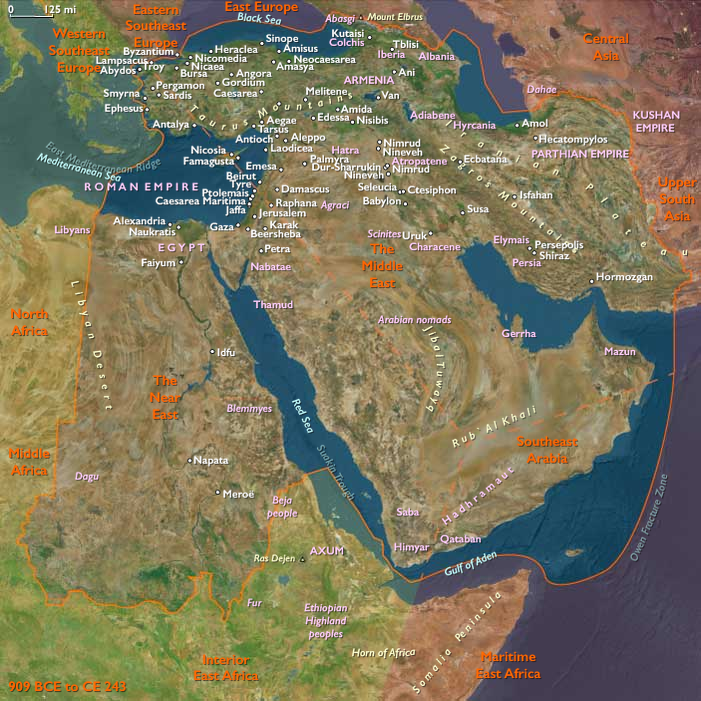
Cleopatra Thea has ruled Syria from 125 BCE, sharing the throne with her son, Antiochus VIII Grypus, to legitimize her reign.
Either he or his half brother Antiochus IX Cyzicenus is probably identical with the ephemeral child ruler Antiochus Epiphanes, who was crowned by Cleopatra Thea after the death of Antiochus VII but before Demetrius II returned to Antioch.
Epiphanes, who is known from coins, was deposed—but not killed—when Demetrius II was restored in 129 BCE.
Since the demise of Demetrius, Alexander II Zabinas has ruled parts of Syria, but had soon run out of Egyptian support and is in his turn defeated by Grypus.
Zabinas flees to the Seleucid capital Antiochia, where he plunders several temples.
He is said to have joked about melting down a statuette of the goddess of victory Nike which was held in the hand of a Zeus statue, saying "Zeus has given me Victory".
Enraged by his impiety, the Antiochenes cast Zabinas out of the city.
He soon falls into the hands of robbers, who deliver him up to Antiochus, by whom he is put to death, in 122 BCE.