Northeast Europe (1492–1503 CE): Union Fragmentation, Rising Regional Powers, and Shifting Alliances
Between 1492 and 1503 CE, Northeast Europe faced transformative geopolitical developments, characterized by increasing instability within the Kalmar Union, continued weakening of the Teutonic Order, and the rising assertiveness of regional powers. Strategic diplomatic shifts, territorial realignments, and sustained economic prosperity defined this crucial era.
Deepening Instability within the Kalmar Union
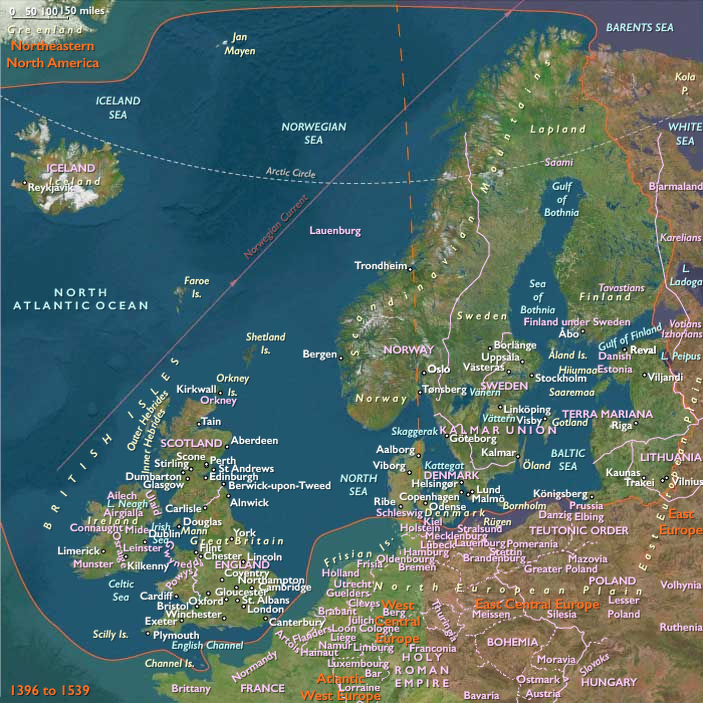
Internal fractures intensified within the Kalmar Union, particularly following the ascension of John (Hans) as King of Denmark, Norway, and Sweden in 1481. Despite his efforts to consolidate authority, persistent Swedish resistance and internal discontent hindered effective governance, weakening union cohesion and fueling regional tensions. The instability that defined this era laid critical groundwork for the Union’s later fragmentation.
Teutonic Order’s Continuing Decline
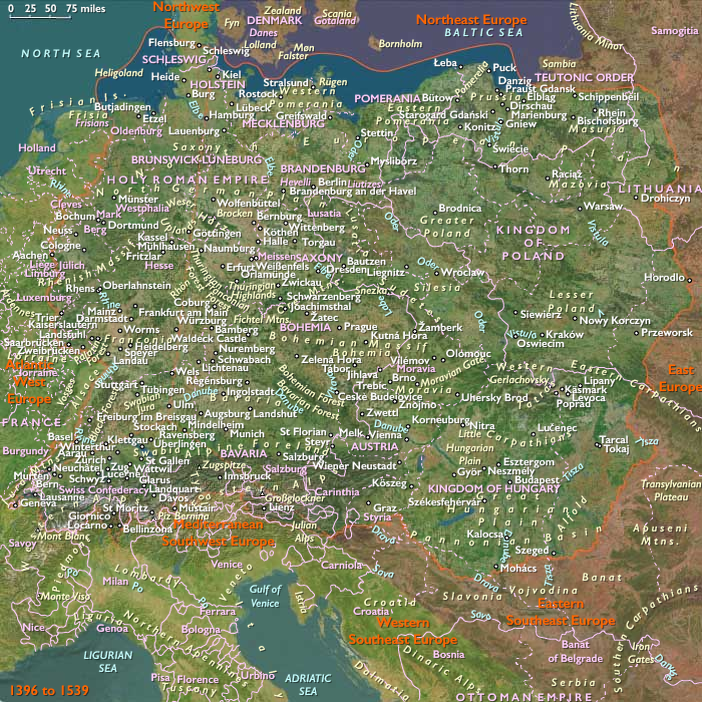
The Teutonic Order persisted in its steady decline due to ongoing internal divisions, financial hardships, and diplomatic isolation. Pressured heavily by the increasingly dominant Polish–Lithuanian Union, the Order faced territorial vulnerability in Prussia and struggled to maintain effective administration in regions such as Estonia. Efforts to stabilize major urban centers, including Königsberg and Reval (Tallinn), provided only limited relief, leaving the Order exposed to further external challenges.
Polish–Lithuanian Union’s Geopolitical Expansion
Under John I Albert, and subsequently Alexander Jagiellon, the Polish–Lithuanian Union continued to assert strong regional leadership. With diplomatic skill, military effectiveness, and internal administrative strength, the Union expanded its territorial influence and solidified control over contested borderlands. These actions firmly established Poland-Lithuania as a major geopolitical force, significantly altering regional balances of power.
Strategic Stability in the Livonian Confederation
The Livonian Confederation, governed from its economic and diplomatic hub at Riga, maintained political autonomy and economic resilience through strategic governance, fortified urban defenses, and effective diplomatic outreach. These actions allowed the Confederation to navigate complex regional dynamics successfully, preserving its stability and relevance amid shifting alliances and political pressures.
Continued Swedish Integration and Stability in Finland
Despite escalating tensions within the Kalmar Union, Sweden continued to strengthen governance in southern Finland. Reinforced fortifications, efficient administrative frameworks, and enhanced ecclesiastical institutions promoted political stability and cultural cohesion, ensuring Finland’s secure integration and strategic significance within Sweden’s domain.
Prosperity and Economic Resilience in Major Urban Centers
Urban centers such as Reval (Tallinn), Riga, Königsberg, and Visby on Gotland sustained significant economic growth and urban resilience. Expanded maritime trade networks, strong commercial activity, and stable urban governance facilitated economic prosperity, bolstering regional stability despite ongoing political upheavals.
Ecclesiastical Influence and Cultural Cohesion
Influential ecclesiastical institutions, particularly regional bishoprics and the Teutonic Order, continued their essential roles in social governance, educational support, and cultural continuity. Their sustained promotion of Latin Christian traditions provided regional stability, reinforcing social cohesion amid shifting political landscapes.
Strategic Diplomacy Amid Rising Tensions
Diplomatic interactions and strategic negotiations intensified amid shifting geopolitical alignments involving the Kalmar Union, Teutonic Order, Polish–Lithuanian Union, and Livonian Confederation. Diplomatic maneuvers aimed at mitigating conflict, stabilizing territorial boundaries, and managing regional rivalries highlighted the complexity of Northeast Europe's geopolitical climate during this era.
Legacy of the Era
The era from 1492 to 1503 CE was pivotal in reshaping Northeast Europe’s geopolitical landscape, defined by intensifying union instability, continued decline of traditional regional powers, and assertive expansion by emerging powers. These transformative dynamics significantly influenced territorial alignments, diplomatic strategies, and regional identities, profoundly shaping Northeast Europe's subsequent historical trajectory.