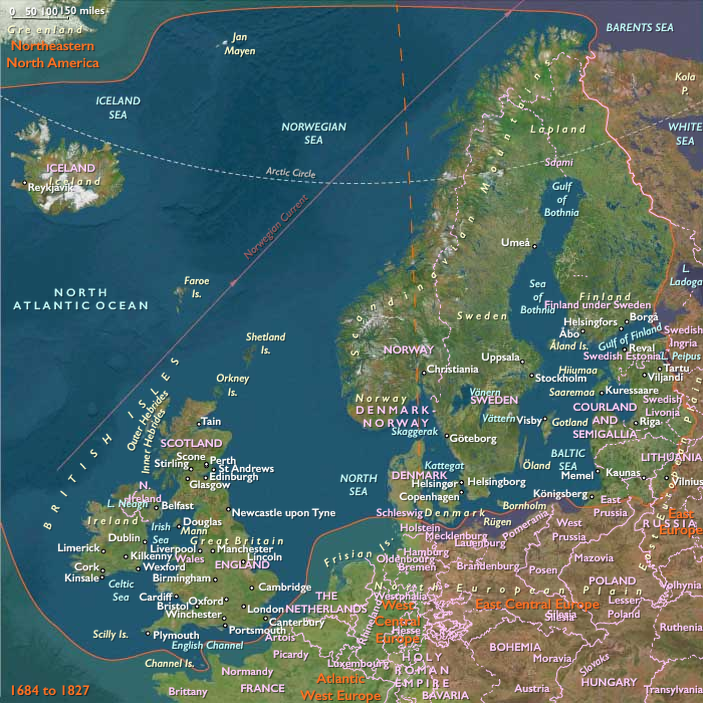
John Robison, the son of John Robison, a Glasgow merchant, was born in Boghall, Baldernock, Stirlingshire (now East Dunbartonshire) and attended Glasgow Grammar School and the University of Glasgow (MA 1756).
After a brief stay in London in 1758, Robison had joined the Royal Navy as a midshipman, and accompanied Thomas Wolfe on his expedition to Quebec and Portugal (1756-62), where his mathematical skills were employed in navigation and surveying.
Returning to England in 1762, he had joined the Board of Longitude—a team of scientists who had tested John Harrison’s marine chronometer on a voyage to Jamaica.
On his return, he had settled in Glasgow engaging in the practical science of James Watt and Joseph Black in opposition to the systematic continental European chemistry of Antoine Lavoisier and its adherents such as Joseph Priestly.
In 1766, he had succeeded Black as Professor of Chemistry at the University of Glasgow.
In 1769, he announced that balls with like electrical charges repel each other with a force that varies as the inverse-squared of the distance between them, anticipating Coulomb's law of 1785.
In 1770, he had traveled to Saint Petersburg as the Secretary of Admiral Charles Knowles, where he taught mathematics to the cadets at the Naval Academy at Cronstadt, obtaining a double salary and the rank of Lieutenant Colonel.
Returned to Scotland in 1773, Robison had taken up the post of Professor of Natural Philosophy at the University of Edinburgh, lecturing on mechanics, hydrostatics, astronomy, optics, electricity and magnetism.
His conception of mechanical philosophy has become influential in nineteenth-century British physics.
His name appears in the 1776 "Minute Book of The Poker Club", a crucible of the Scottish Enlightenment.
In 1783, he had become General Secretary of the Royal Society of Edinburgh and in 1797 his articles for the Encyclopædia Britannica give a good account of the scientific, mathematical and technological knowledge of the day.
He has also prepared for publication (which will occur in 1799) the chemical lectures of his friend and mentor, Joseph Black.
Robison had worked with James Watt on an early steam car, but this project had come to nothing and has no direct connection to Watt's later improvement of the Newcomen steam engine.
He, along with Joseph Black and others, give evidence about Watt's originality and their own lack of connection to his key idea of the Separate Condenser.
Robison does, however invent the siren some time before 1799, though it is Charles Cagniard de la Tour who will name it after producing an improved model.
Robison’s sirens are used as musical instruments; specifically, they power some of the pipes in an organ.
Robison’s siren consists of a stopcock that opens and closes a pneumatic tube.
The stopcock is apparently driven by the rotation of a wheel.
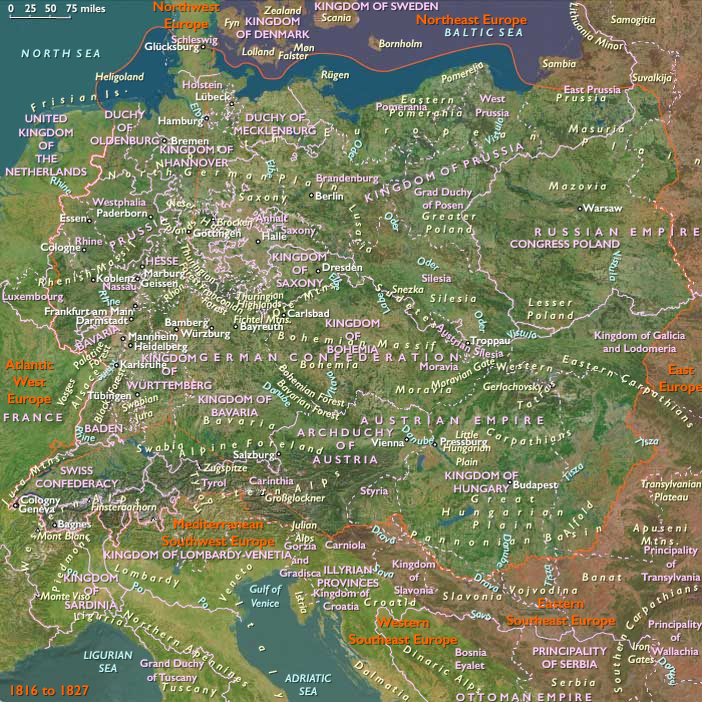
Towards the end of his life, Robison has become an enthusiastic conspiracy theorist, publishing Proofs of a Conspiracy ... in 1797, alleging clandestine intrigue by the Illuminati and Freemasons (the work's full title is Proofs of a Conspiracy against all the Religions and Governments of Europe, carried on in the secret meetings of Freemasons, Illuminati and Reading Societies).
The secret agent monk, Alexander Horn, has provided much of the material for Robison's allegations.
Robison describes eighty-four German Masonic lodges and states that the outlawed Illuminati still operate covertly.
French priest Abbé Barruel independently develops similar views that the Illuminati had infiltrated Continental Freemasonry, leading to the excesses of the French Revolution.