Alexander Hamilton
1st United States Secretary of the Treasury
Years: 1755 - 1804
Alexander Hamilton (January 11, 1755 or 1757 – July 12, 1804) is a Founding Father, soldier, economist, political philosopher, one of America's first constitutional lawyers and the first United States Secretary of the Treasury.
As Secretary of the Treasury, Hamilton is the primary author of the economic policies of the George Washington Administration, especially the funding of the state debts by the Federal government, the establishment of a national bank, a system of tariffs, and friendly trade relations with Britain.
He becomed the leader of the Federalist Party, created largely in support of his views, and is opposed by the Democratic-Republican Party, led by Thomas Jefferson and James Madison.
Hamilton served in the American Revolutionary War.
At the start of the war, he organized an artillery company and is chosen as its captain.
He later becomes the senior aide-de-camp and confidant to General George Washington, the American commander-in-chief.
He serves again under Washington in the army raised to defeat the Whiskey Rebellion, a tax revolt of western farmers in 1794.
In 1798, Hamilton calls for mobilization against France after the XYZ Affair, and secures an appointment as commander of a new army, which he trains for a war.
However, the Quasi-War, although hard-fought at sea, is never officially declared.
In the end, President John Adams finds a diplomatic solution that avoids war.
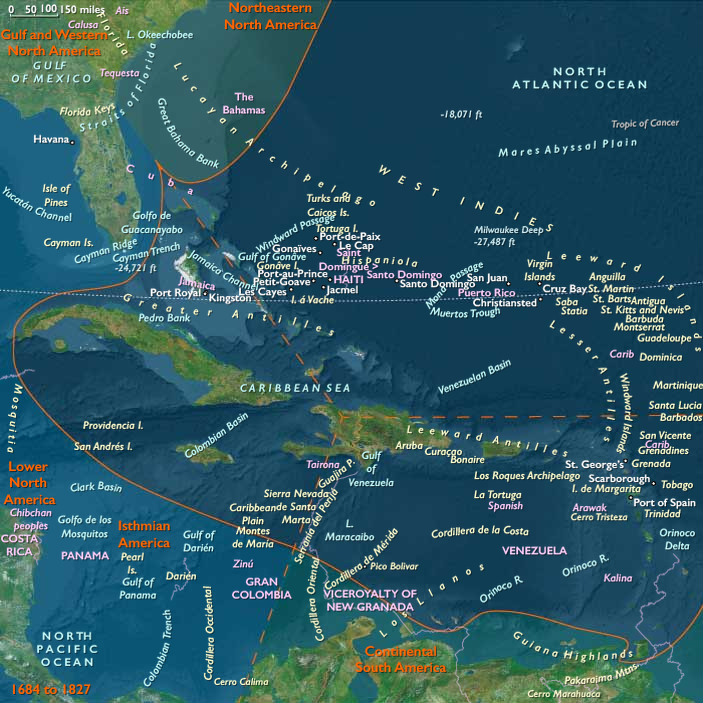
Of illegitimate birth and raised in the West Indies, Hamilton is effectively orphaned at about the age of 11.
Recognized for his abilities and talent, he is sponsored by people from his community to go to North America for his education.
He attends King's College (now Columbia University).
After the American Revolutionary War, Hamilton is elected to the Continental Congress from New York.
He resigns to practice law, and founds the Bank of New York.
Hamilton is among those dissatisfied with the first national constitution the Articles of Confederation, because it lacks a president, courts, and taxing powers.
He leads the Annapolis Convention, which successfully calls on Congress to issue a call for the Philadelphia Convention to create a new constitution.
He is an active participant and helps achieve ratification by writing half of the Federalist Papers, which supports the new constitution and to this day is the single most important source for Constitutional interpretation.
In the new government under President George Washington, Hamilton is appointed the Secretary of the Treasury.
An admirer of British political systems, Hamilton i a nationalist who emphasizes strong central government, and successfully argues that the implied powers of the Constitution can be used to fund the national debt, assume state debts, and create the government-owned Bank of the United States.
These programs are funded primarily by a tariff on imports and later also by a highly controversial excise tax on whiskey.
Embarrassed when an extramarital affair with Maria Reynolds becomes public, Hamilton resigns from office in 1795 and returns to the practice of law in New York.
He keeps his hand in politics and is a powerful influence on the cabinet of President Adams (1797–1801).
Hamilton's opposition to John Adams helps cause Adams' defeat in the 1800 elections.
When Thomas Jefferson and Aaron Burr tie in the electoral college, Hamilton helps defeat Burr, whom he fins unprincipled, and elect Jefferson as president despite philosophical differences.
After opposing Adams, the candidate of his own party, Hamilton loses some prominence within his own party.
Vice President Burr runs for governor in New York State, but Hamilton's influence in his home state is strong enough to prevent a Burr victory.
Taking offense at some of Hamilton's comments, Burr challenges him to a duel and mortally wounds Hamilton, who dies within days.