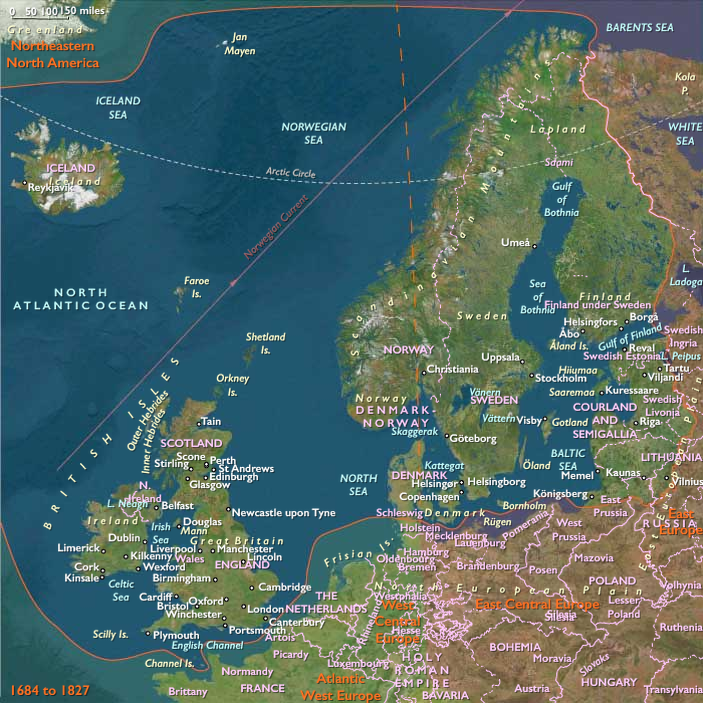
Douglas, a blank verse tragedy by John Home, is first performed in 1756 in Edinburgh.
The theme had been suggested to him by hearing a lady sing the ballad of Gil Morrice or Child Maurice (FJ Child, Popular Ballads, ii. 263).
The ballad had supplied him with the outline of a simple and striking plot.
It is Home's second verse drama, after Agis.
Completing his play after five years, he had taken it to London for David Garrick's opinion.
It was rejected, like Agis, but on his return to Edinburgh his friends resolved that it should be produced here.
It is performed on December 14, 1756 with overwhelming success, in spite of the opposition of the presbytery, who summon Alexander Carlyle to answer for having attended its representation.
The play will be a big success in both Scotland and England for decades, attracting many notable actors of the period, such as Edmund Kean, who will make his debut in it.
It fails, however, in its early promise to set up a new Scottish dramatic tradition.