Albert of Prussia
Duke of Prussia
Years: 1490 - 1568
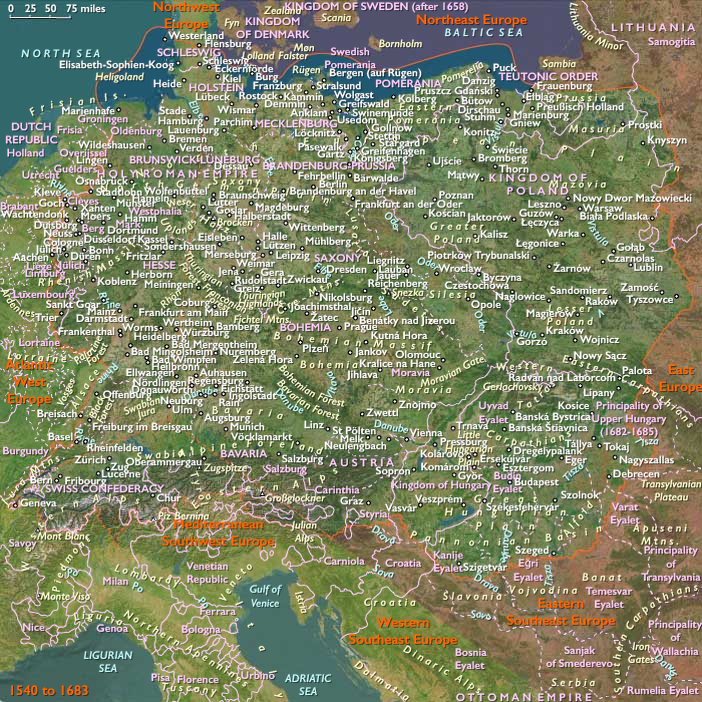
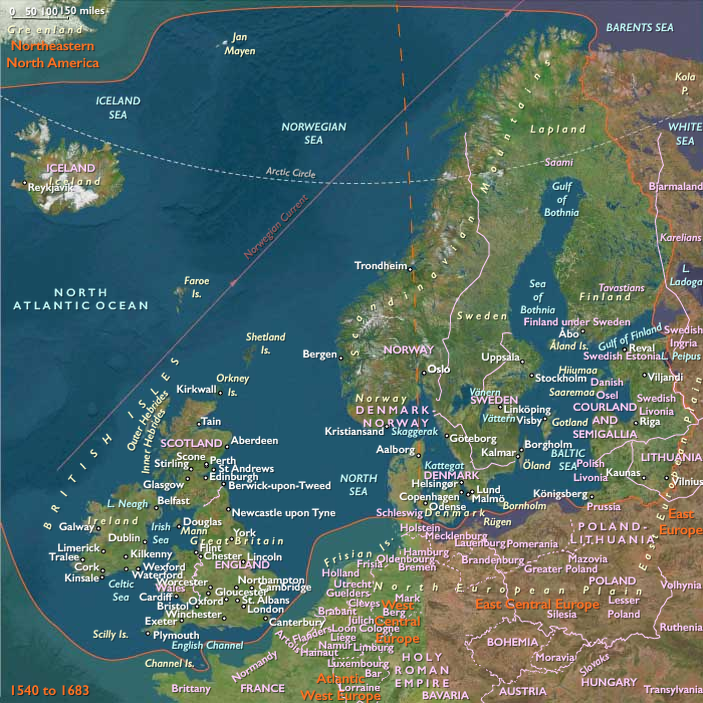
Albert of Prussia (May 17, 1490 – March 20, 1568) is the last Grand Master of the Teutonic Knights, who after converting to Lutheranism, becomes the first monarch of the Duchy of Prussia, the secularized state that emerges from the former Monastic State of the Teutonic Knights.
Albert is the first European ruler to establish Lutheranism, and thus Protestantism, as the official state religion of his lands.
He proves instrumental in the political spread of Protestantism in its early stage, ruling the Prussian lands for nearly six decades (1510–1568).
A member of the Brandenburg-Ansbach branch of the House of Hohenzollern, Albert's election as Grand Master brings about hopes of a reversal of the declining fortune of the Teutonic Knights.
He is a skilled political administrator and leader, and does indeed reverse the decline of the Teutonic Order.
However, Albert, who is sympathetic to the demands of Martin Luther, rebels against the Catholic church and the Holy Roman Empire by converting the Teutonic state into a Protestant and hereditary realm, the Duchy of Prussia, for which he does homage to his uncle, the King of Poland.
The arrangement is confirmed by the Treaty of Kraków in 1525.
Albert pledges a personal oath to the King and in return is invested with the duchy for himself and his heirs.
Albert's rule in Prussia is fairly prosperous.
Although he has some trouble with the peasantry, the confiscation of the lands and treasures of the Catholic church enables him to propitiate the nobles and provide for the expenses of the newly established Prussian court.
He is active in imperial politics, joining the League of Torgau in 1526, and acts in unison with the Protestants in plotting to overthrow Emperor Charles V after the issue of the Augsburg Interim in May 1548.
Albert establishes schools in every town and founds Königsberg University in 1544.
He promotes culture and arts, patronizing the works of Erasmus Reinhold and Caspar Hennenberger.
Albert's final years are clouded by peasant resentment of heavy taxes, a step he feels compelled to take due to there no longer being any church land available to confiscate in Prussia.
The intrigues of court favorites Johann Funck and Paul Skalić also cause various religious and political disputes.
Albert spends his final years virtually deprived of power, and dies at Tapiau on 20 March 1568.
His son Albert Frederick succeeds him as Duke of Prussia.