Alaungpaya
King of Burma
Years: 1714 - 1760
Alaungpaya (also spelled Alaunghpaya or Alaung Phra; August 24 [O.S. August 13] 1714 – May 11, 1760) is the founder of the Konbaung Dynasty of Burma (Myanmar).
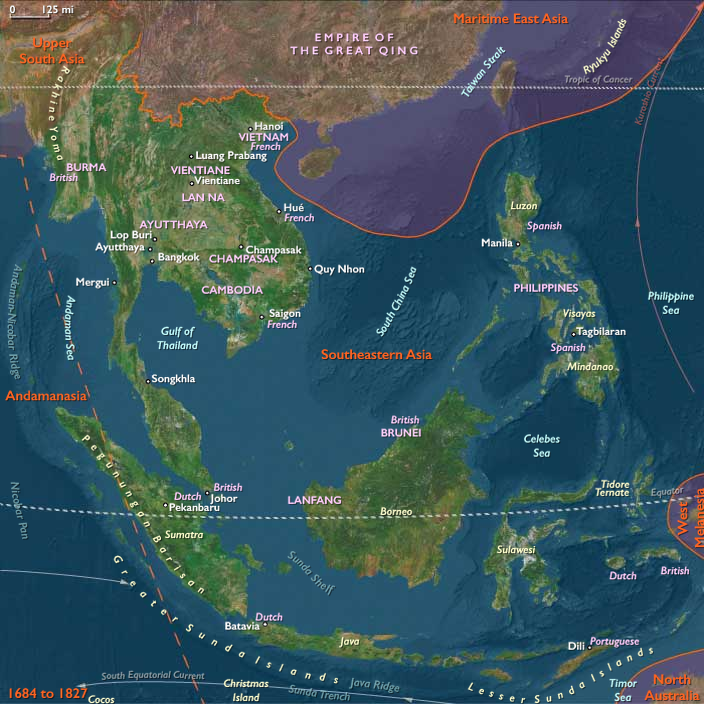
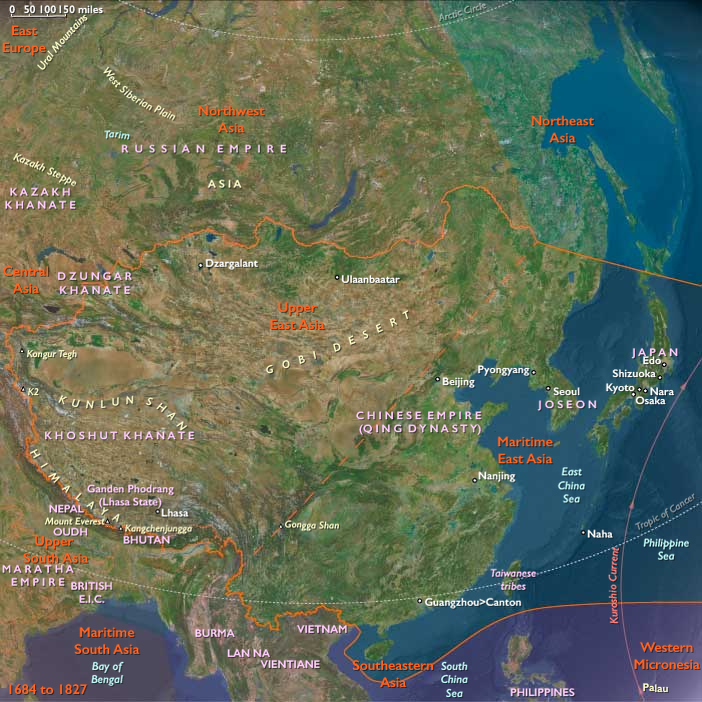
By the time of his death from illness during his campaign in Siam, this former chief of a small village in Upper Burma has unified Burma, subdued Manipur, conquered Lan Na and driven out the French and the British who had given help to the Mon Restored Hanthawaddy Kingdom.
He also founds Yangon in 1755.
He is considered one of the three greatest monarchs of Burma alongside Anawrahta and Bayinnaung for unifying Burma for the third time in Burmese history.
Related Events
Filter results
Showing 10 events out of 18 total
Alaungpaya, the future king of a Burma united for the third time, was born Aung Zeya ("Victorious Victory") at Moksobo, a village of a few hundred households in the Mu River Valley about sixty miles northwest of Ava on August 24, 1714 to Min Nyo San and his wife Saw Nyein Oo.
He was the second son of a lineage of gentry families that had administered the Mu Valley for generations.
His father was a hereditary chief of Moksobo and his uncle, Kyawswa Htin, better known as Sitha Mingyi, was the lord of the Mu Valley District.
Alaungpaya sclaim descent from kings Narapati I and Thihathura and ultimately the Pagan royal line.
He comes from a large family, and is related by blood and by marriage to many others among the gentry throughout the valley.
In 1730, Alaungpaya married his first cousin Yun San, daughter of chief of a neighboring village, Siboktara.
They have six sons and three surviving daughters; a fourth daughter died young.
Aung Zeya had grown up during a period in which the authority of the Taungoo Dynasty was in rapid decline.
The "palace kings" at Ava had been unable to defend against the Manipuri raids that had been ransacking increasingly deeper parts of Upper Burma since 1724.
Ava had failed to recover southern Lanna (Chiang Mai), which had revolted in 1727, and in the 1730s did nothing to prevent the annexation of the northern Shan States by the Qing dynasty.
The Mu Valley is directly on the path of Manipuri raids year after year.
Although Burma is far larger than Manipur, Ava had been unable to defeat the raids or organize a punitive expedition to Manipur itself.
The people watched helplessly as the raiders torched villages, ransacked pagodas, and carried away captives.
Aung Zeya assumed his father's responsibilities as chief of his village in his early twenties. A tall man for the times, at five-feet eleven inches [one point eight meters] as described by an English envoy), Aung Zeya was a leader among the gentry in organizing the defenses of the valley.
The declining regime at Ava was wary of any potential rivals.
Taungoo Yaza, commander-in-chief of the army of Ava in 1736, summoned Aung Zeya to Ava to determine whether the village headman was a potential threat to the regime.
Satisfied that the twenty-two-year-old had no designs on the throne, Taungoo Yaza on behalf of the king bestowed on Aung Zeya the title Bala Nanda Kyaw.
Aung Zeya became deputy to his uncle the lord of Mu Valley, and the administrative officer kyegaing, responsible for tax collection and for the preservation of order.
The authority of Ava continued to decline in the following years.
The Mon of Lower Burma had broken away in 1740 and founded the Restored Hanthawaddy Kingdom with the capital at Bago.
Ava's feeble attempts to recover the south had failed to make a dent.
Low-grade warfare between Ava and Bago had continued until late in 1751, when Bago launched its final assault, invading Upper Burma in full force.

The heir-apparent of Hanthawaddy, Upayaza, summons all administrative officers in Upper Burma to submit.
Some chose to cooperate, but others, like Aung Zeya, choose to resist.
Aung Zeya persuades forty-six villages in the Mu Valley to join him in resistance.
On February 29,1752 (the Full moon of Tabaung 1113 ME), as the Hanthawaddy forces are about to breach the outer walls of Ava, Aung Zeya proclaims himself king with the royal style of Alaungpaya ("One Who Is the Future Buddha", Maitreya), and founds the Konbaung Dynasty.
His full royal style is Thiri Pawara Wizaya Nanda Zahta Maha Dhamma Yazadiyaza Alaung Mintayagy.
After Ava fell on March 23, 1752, Alaungpaya's own father, Nyo San, urges him to submit.
He points out that although Alaungpaya has scores of enthusiastic men, they have only a few muskets, and that their little stockade does not stand a chance against a well-equipped Hanthawaddy army that has just sacked a heavily fortified Ava.
Alaungpaya, undeterred, prepares the defenses by stockading his village, now renamed Shwebo, and building a moat around it.
He had the jungle outside the stockade cleared, the ponds destroyed and the wells filled.
Fortunately for the resistance forces, the Hanthawaddy command had mistakenly equated their capture of Ava with the victory over Upper Burma, and had withdrawn two-thirds of the invasion force back to Bago, leaving just a third (less than ten thousand men) for what they consider a mop-up operation.
At first, the strategy seems to work. Hanthawaddy forces established outposts as far north as present day northern Sagaing Region and ...
They next survived the month-long siege by the Hanthawaddy army of several thousand led by General Talaban himself and repulsed the invaders in a rout.
The news spread, and Alaungpaya was soon mustering a proper army from across the Mu Valley and beyond, using his family connections and appointing his fellow gentry leaders as his key lieutenants.
Success drew fresh recruits everyday from many regions across Upper Burma.
Most other resistance forces as well as officers from the disbanded Palace Guards had joined him with such arms as they retained.
Alaungpaya has emerged by October 1752 as the primary challenger to Hanthawaddy and driven out all Hanthawaddy outposts north of Ava as well as their allies, the Gwe Shan.
Konbaung forces retake Ava on January 3, 1754.
Alaungpaya now receives homage from the nearer Shan States ...
The Hanthawaddy leadership escalates persecution against southern Bamars.
They also execute the captive king of Taungoo in October 1754.
Alaungpaya exploits the situation, encouraging remaining Bamar troops to come over to him; many do.