Alaric I
King of the Visigoths
Years: 370 - 410
Alaric I (370 - 410) is the King of the Visigoths from 395–410.
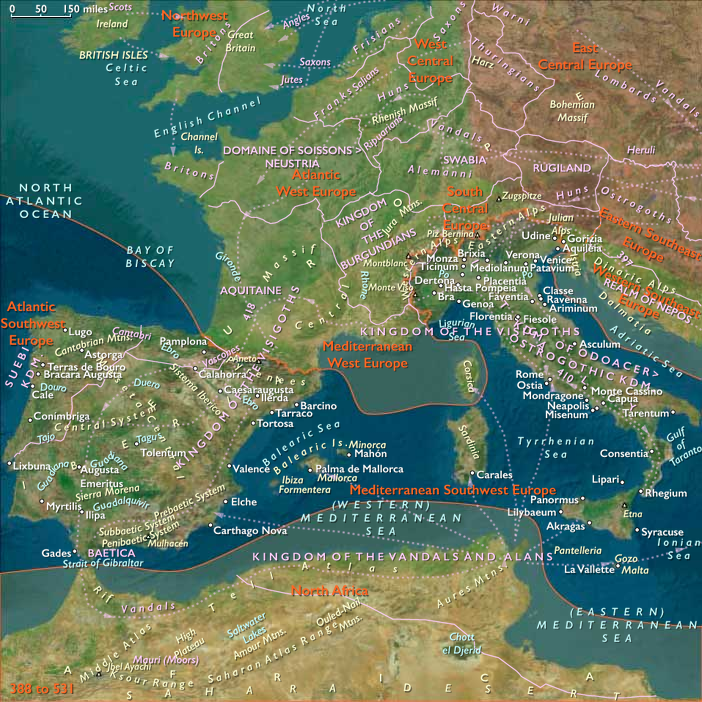
Alaric is most famous for his sack of Rome in 410, which marks a decisive event in the decline of the Roman Empire.
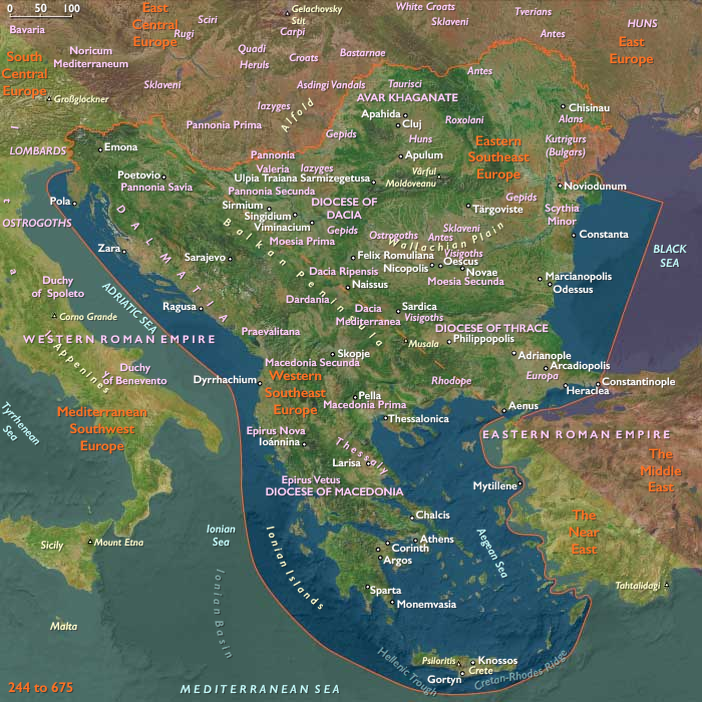
Born c. 370 on Peuce Island at the mouth of the Danube in present day Romania, Alaric belongs to the noble Balti dynasty of the Tervingian Goths.
After their setbacks against the Huns, Alaric is probably a child during the Goths mass-migration across the Danube and their subsequent war with Rome.
Alaric's first appearance is as the leader of a mixed band of Goths and allied peoples who invade Thrace in 391, who are stopped by the half-Vandal Roman General Stilicho.
Later joining the Roman army, he begins his career under the Gothic soldier Gainas.
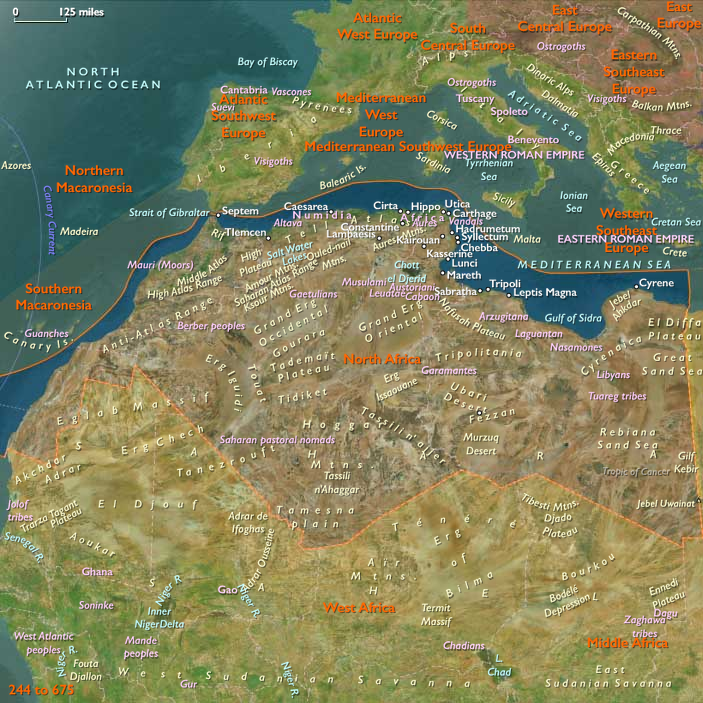
In 394, Alaric leads a Gothic force of 20,000 that helps the Eastern Roman Emperor Theodosius defeat the Frankish usurper Arbogast at the Battle of Frigidus.
Despite sacrificing around 10,000 of his men, Alaric receives little recognition from the Emperor.
Disappointed, he leaves the army and is elected chief of the Visigoths in 395, and marches toward Constantinople until he is diverted by Roman forces.
He then moves southward into Greece, where he sacks Piraeus (the port of Athens) and destroys Corinth, Megara, Argos, and Sparta.
As a response, the Eastern emperor Flavius Arcadius appoints Alaric magister militum (“master of the soldiers”) in Illyricum.
In 401, Alaric invades Italy, but he is defeated by Stilicho at Pollentia (modern Pollenza) on April 6, 402.
A second invasion also endx in defeat at the Battle of Verona, though Alaric forcex the Roman Senate to pay a large subsidy to the Visigoths.
During the invasion by the Pagan Goth Radagaisus, Alaric remainx idle in Illyria.
In 408, Western Emperor Flavius Honorius orderx the execution of Stilicho and his family, and incitex the Roman population to the massacre of tens of thousands of wives and children of Goths serving in the Roman military.
Subsequently, around 30,000 Gothic soldiers defect to Alaric, and join his march on Rome to avenge their murdered families.
Moving swiftly along Roman roads, Alaric sacks the cities of Aquileia and Cremona and ravages the lands along the Adriatic Sea.
The Visigothic leader thereupon lays siege to Rome in 408.
Eventually, the Senate grants him a substantial subsidy.
In addition, Alaric forces the Senate to liberate all the 40,000 Gothic slaves in Rome.
Honorius, however, refuses to appoint Alaric as the commander of the Western Roman Army, and in 409 the Visigoths again surround Rome.
Alaric lifts his blockade after proclaiming Attalus as Western Emperor.
Attalus appoints him magister utriusque militiae (“master of both services”) but refuses to allow him to send an army into Africa.
Negotiations with Honorius break down, and Alaric deposes Attalus in the summer of 410, then besieges Rome for the third time.
Allies within the capital open the gates for him on August 24, and for three days his troops sack the city.
Although the Visigoths plunder Rome, they treat its inhabitants humanely and burn only a few buildings.
Having abandoned a plan to occupy Sicily and North Africa after the destruction of his fleet in a storm, Alaric dies as the Visigoths are marching northward.