Ajtony
independent ruler of the Banat region
Years: 965 - 1030
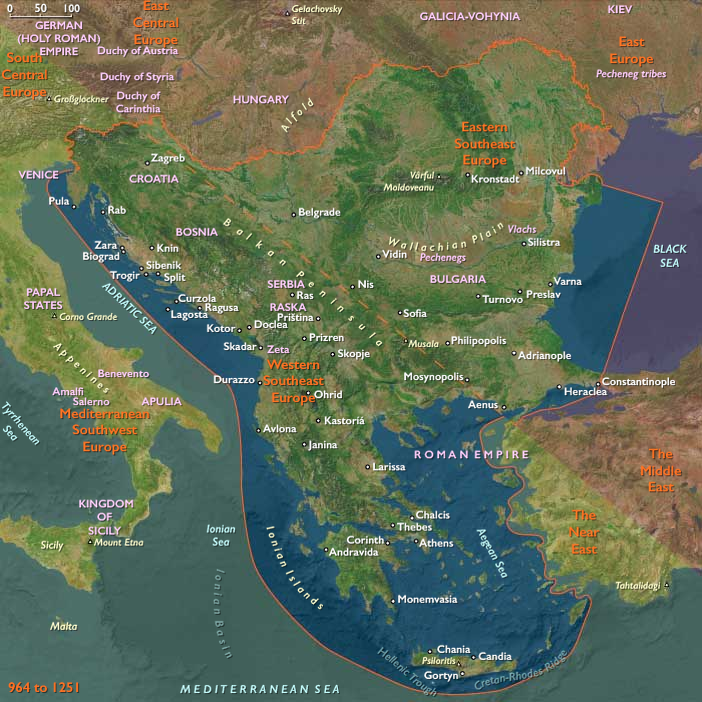
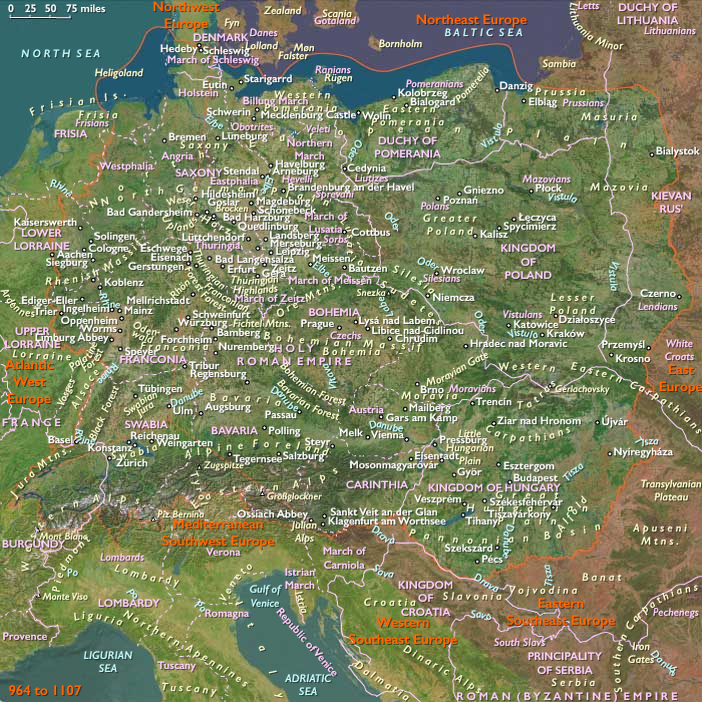
Ajtony, Ahtum or Achtum is an early-eleventh-century ruler in the territory now known as Banat in present Romania and Serbia.
His primary source is the Long Life of Saint Gerard, a fourteenth-century hagiography.
Ajtony is a powerful ruler who owns many horses, cattle and sheep and is baptized according to the Orthodox rite in Vidin.
He taxes salt that is transferred to King Stephen I of Hungary on the Mureș River.
The king sends Csanád, Ajtony's former commander-in-chief, against him at the head of a large army.
Csanád defeats and kills Ajtony, occupying his realm.
In the territory, at least one county and a Roman Catholic diocese are established.
Historians disagree on the year of Ajtony's defeat; it may have occurred in 1002, 1008 or between 1027 and 1030.
His ethnicity is also a subject of historical debate; he may have been Hungarian, Kabar, Pecheneg or Romanian.
In Romanian historiography Ajtony is viewed as the last member of a Romanian ruling family founded by Glad, lord of Banat around 900 according to the Gesta Hungarorum.