Afonso VI Bragança
King of Portugal and the Algarves
Years: 1643 - 1683
Afonso VI (Portuguese pronunciation: [ɐˈfõsu]; English Alphonzo or Alphonse), or Affonso (Old Portuguese), (21 August 1643 – 12 September 1683) is the twenty-second (or twenty-third according to some historians) king of Portugal and the Algarves, the second of the House of Braganza, known as "the Victorious" (Portuguese o Vitorioso).

Related Events
Filter results
Showing 4 events out of 4 total
João's queen, Luísa de Gusmão, becomes regent on her husband's death because the royal couple's oldest son, Teodosio, had died three years before his father and their youngest son, Afonso, is only ten years old.
Although a disease in infancy had left Afonso partially paralyzed and had impaired his intelligence, his mother succeeds in having him proclaimed king.
Afonso VI (r. 1662-67) grows into a degenerate who prefers riding, coursing bulls, and watching cockfights.
His marriage to Marie-Francoise Isabelle of Savoy is annulled, and, in 1667, aware of the need for a successor, Afonso consents to his own abdication in favor of his brother, Pedro.
During this period, the Portuguese manage to fight off the last attempt by Spain to reincorporate them into the Iberian Union by defeating the Spanish invaders at Ameixial near Estremos.
In 1666, three years after this victory, Spain at last makes peace and recognizes Portugal's independence.
During his regency, Pedro had given the task of producing a coherent economic policy to Luis de Menenses, count of Ericeira, who had been appointed head of the treasury.
Known as the "Portuguese Colbert," Ericeira has implemented mercantilist policies in Portugal similar to those of France.
These policies seek to protect Portuguese industries against foreign competition.
He publishes laws to enforce sobriety and criticizes luxury.
Ericeira organizes the textile industry and imports looms from England.
He stimulates the national production of wool and silk by decreeing that only Portuguese woolens and silks can be worn.
Portugal at Its Height: Military Triumphs, Cultural Patronage, and the Death of João IV (1648–1656)
During the final years of King João IV’s reign (1640–1656), Portugal achieved major military victories, recovering Luanda (1648) and Brazil (1654) from Dutch control, while at the same time losing Ceylon (1656) to the Dutch East India Company. Despite its challenges, Portugal’s empire reached its greatest territorial extent, spanning nearly three billion acres across Europe, Africa, Asia, and the Americas.
Portugal’s Military Victories and Defeats (1648–1656)
Portuguese Victories Against the Dutch
- 1648 – The Portuguese recaptured Luanda (Angola), reestablishing dominance in West Africa and the Atlantic slave trade.
- 1654 – After years of conflict, the Portuguese fully expelled the Dutch from Brazil, effectively ending Dutch ambitions in South America.
Portuguese Losses to the Dutch
- 1656 – Portugal lost Ceylon (Sri Lanka) to the Dutch, as Colombo fell to the Dutch East India Company, marking the end of Portuguese rule in the region.
These conflicts underscored Portugal’s global military overstretch, as it fought to defend Europe, Africa, and the Americas simultaneously.
João IV: A Patron of Music and Learning
- Known as "The Restorer" (O Restaurador) for liberating Portugal from Spanish rule (1640), João IV was also a sophisticated patron of the arts and music.
- He collected one of the largest libraries in the world, later destroyed in the Lisbon earthquake of 1755.
- His writings on music included:
- A defense of Renaissance composer Palestrina.
- Defense of Modern Music (Lisbon, 1649), advocating for contemporary musical styles.
- His most famous musical composition, Crux fidelis, remains widely performed during Lenten church services.
The Death of João IV and the Regency of Luisa de Guzmán (1656–1662)
- João IV died on November 6, 1656, leaving the throne to his 13-year-old son, Afonso VI.
- Afonso VI had suffered a childhood illness that left him partially paralyzed and mentally unstable, making him unfit to rule.
- His mother, Luisa de Guzmán, assumed the regency from 1656 to 1662, navigating Portugal’s continued conflicts with Spain and the Dutch.
Diplomatic Gains and Securing England as an Ally (1654)
- Despite internal struggles, Portugal improved its diplomatic and financial position by signing a treaty with England in 1654.
- This agreement:
- Strengthened Portugal’s naval defenses, ensuring protection against Spanish or Dutch attacks on Lisbon.
- Expanded English access to Portuguese colonial trade, securing mutual economic benefits.
Conclusion: A Peak Before the Challenges to Come
João IV’s reign marked the peak of Portugal’s military and imperial power, despite the growing pressure of defending a global empire. His death in 1656 left Portugal in a precarious position, as the young and incapacitated Afonso VI assumed the throne, setting the stage for political instability and continued conflicts with Spain and the Netherlands. However, Portugal’s military victories and alliances ensured its survival as an independent nation, paving the way for the final phase of the Portuguese Restoration War (1668).
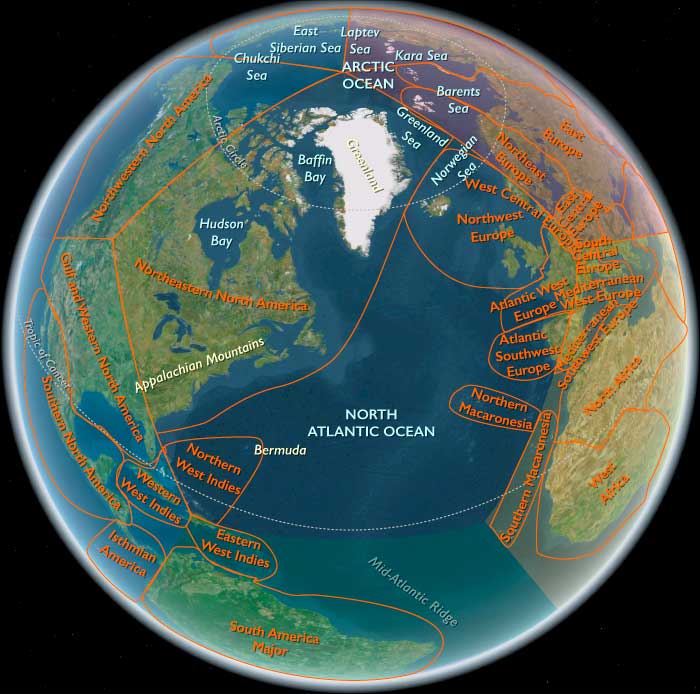
Atlantic Southwest Europe (1660–1671 CE): Stability, Economic Renewal, and Cultural Flourishing
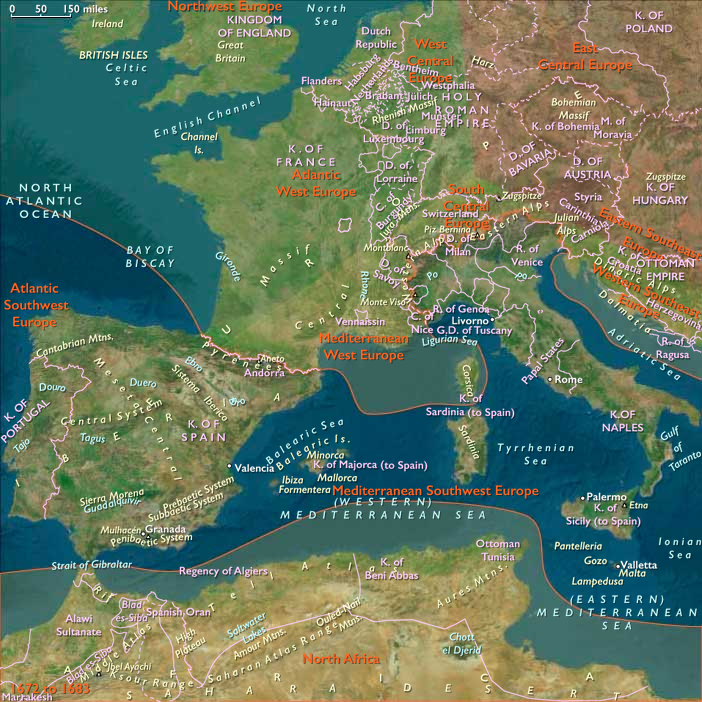
Between 1660 and 1671, Atlantic Southwest Europe—encompassing northern and central Portugal (including Lisbon), Galicia, Asturias, Cantabria, northern León and Castile, northern Navarre, northern Rioja, and the Basque Country—entered a transformative period of relative peace, economic revitalization, and notable cultural advancement. Following the Treaty of the Pyrenees (1659) and the firm establishment of Portuguese independence, the region experienced internal consolidation, renewed commercial growth, and intensified cultural expressions rooted in regional identities and Baroque aesthetics.
Political and Military Developments
Portugal’s Political Stabilization under Afonso VI and Pedro II
Under King Afonso VI (1656–1667) and subsequently his brother, regent (and later King) Pedro II, Portugal secured political stability and diplomatic recognition, successfully preserving independence following decades of Spanish threats. Northern and central Portugal—particularly the influential cities of Lisbon, Porto, and Viana do Castelo—benefited significantly from this stable environment, reinforcing local governance structures and promoting economic prosperity.
Spanish Consolidation and Regional Autonomy
Following the Treaty of the Pyrenees, the Spanish monarchy under Philip IV (until 1665) and Charles II (from 1665)turned toward internal stabilization, allowing northern Spanish regions greater regional autonomy within a royal framework. Territories such as Galicia, Asturias, Cantabria, the Basque provinces, northern Navarre, and northern Rioja reaffirmed their treasured fueros (traditional privileges), enabling stronger local governance and fostering political stability.
Reduced Military and Fiscal Pressures
The cessation of prolonged international conflicts after 1659 notably diminished military and fiscal burdens on northern Spanish territories. Galicia, Asturias, Cantabria, and the Basque provinces benefited from reduced taxation and fewer conscription demands, facilitating economic recovery, social stability, and improved relations with central authority.
Economic Developments: Maritime Prosperity and Industrial Revival
Portuguese Maritime and Commercial Expansion
Portugal experienced marked economic revival, particularly through flourishing maritime commerce in the Atlantic. Lisbon thrived as an essential commercial and imperial hub, while Porto consolidated its status as a leading exporter of port wine, significantly bolstered by strengthened trading partnerships with Britain. Northern ports such as Viana do Castelo likewise prospered through shipbuilding and transatlantic commerce.
Revival of Northern Spanish Maritime Trade
Northern Spanish coastal cities, including Vigo, Santander, and Bilbao, saw renewed maritime prosperity through enhanced trading relationships with England, France, and the Netherlands. Improved security in Atlantic waters facilitated growth in fisheries, shipbuilding, and regional trade networks, contributing to economic stability.
Strengthening Local Industries
In northern Spain, regional industries—particularly shipbuilding, wool production, fishing, and iron manufacturing—experienced renewed vitality, notably in the Basque Country. This industrial revival bolstered regional economic independence and lessened reliance on Madrid, further solidifying local autonomy and prosperity.
Religious and Cultural Developments
Sustained Counter-Reformation Influence
Throughout Atlantic Southwest Europe, the Counter-Reformation retained considerable cultural and social influence. Catholic orthodoxy, reinforced by monastic institutions, universities, and inquisitorial tribunals, continued to shape local religious and intellectual life, particularly prominent in Lisbon, Braga, Valladolid, and Pamplona.
Regional Cultural Flourishing and Baroque Influence
Cultural activities surged across the region, notably reflecting Baroque artistic and architectural ideals. In northern and central Portugal, significant architectural projects flourished in Lisbon, Porto, and Braga, symbolizing national pride and renewed confidence in Portuguese identity. Literary, poetic, and musical expressions flourished, reinforcing distinct Portuguese cultural heritage.
In northern Spain, similar cultural flourishing occurred, with Baroque architecture prominently featured in cathedrals and public buildings in Santiago de Compostela, Burgos, and Santander. Galician, Basque, and Navarrese traditions were celebrated, reinforcing regional identity alongside broader Iberian cultural currents.
Social and Urban Developments
Urban Expansion and Enhanced Social Mobility
Major urban centers—Lisbon, Porto, Bilbao, Santander, and Santiago de Compostela—experienced significant population growth, driven by rural-to-urban migration and increased commercial activity. Merchant and artisan classes expanded notably, promoting greater social mobility and reshaping urban landscapes with improved infrastructure and vibrant civic life.
Reinforced Regional Identities and Autonomy
Across northern Spain, traditional fueros empowered local authorities in Galicia, the Basque provinces, and northern Navarre. Regional governance thrived, balancing loyalty to central monarchy with local interests and cultural distinctiveness. These strengthened regional identities laid enduring foundations for local governance and future autonomy movements.
Persistent Rural Challenges
While urban centers prospered, rural regions in Galicia, Asturias, and northern León continued experiencing hardships. Persistent agricultural stagnation, taxation pressures, and demographic changes prompted rural populations to migrate to burgeoning urban centers or emigrate to overseas colonies in the Americas, reshaping demographic structures.
Notable Regional Groups and Settlements
-
Portuguese (Northern and Central): Benefited from political stability, maritime prosperity, and cultural flourishing, particularly in Lisbon, Porto, and Braga.
-
Galicians and Asturians: Enjoyed modest economic recovery but continued facing rural challenges, maintaining strong cultural traditions.
-
Cantabrians and Northern Castilians: Experienced economic revitalization through maritime trade and local industries but remained cautious of central authority.
-
Basques and Navarrese: Successfully reinforced local autonomy, vigorously defending fueros and regional governance structures, ensuring long-term cultural and political resilience.
Long-Term Significance and Legacy
Between 1660 and 1671, Atlantic Southwest Europe:
-
Achieved crucial political stability, allowing economic revitalization and regional consolidation after prolonged warfare.
-
Experienced notable maritime prosperity, particularly in central and northern Portuguese cities, laying critical foundations for sustained economic growth.
-
Intensified cultural expressions, significantly shaped by the Baroque aesthetic, profoundly reinforcing national and regional identities.
-
Strengthened regional autonomy through renewed affirmation of fueros, deeply influencing the region’s governance structures and long-term political stability.
This era marked a decisive shift toward internal prosperity, cultural vitality, and regional autonomy in Atlantic Southwest Europe, significantly shaping the region’s historical trajectory and laying enduring foundations for future developments.