Afonso IV of Portugal
King of Portugal and the Algarves
Years: 1291 - 1357
Afonso IV (February 8 , 1291 – May 28, 1357), called the Brave (Portuguese: o Bravo), is King of Portugal and the Algarves from 1325 until his death.
He is the only legitimate son of King Denis of Portugal by his wife Elizabeth of Aragon.

Related Events
Filter results
Showing 10 events out of 11 total
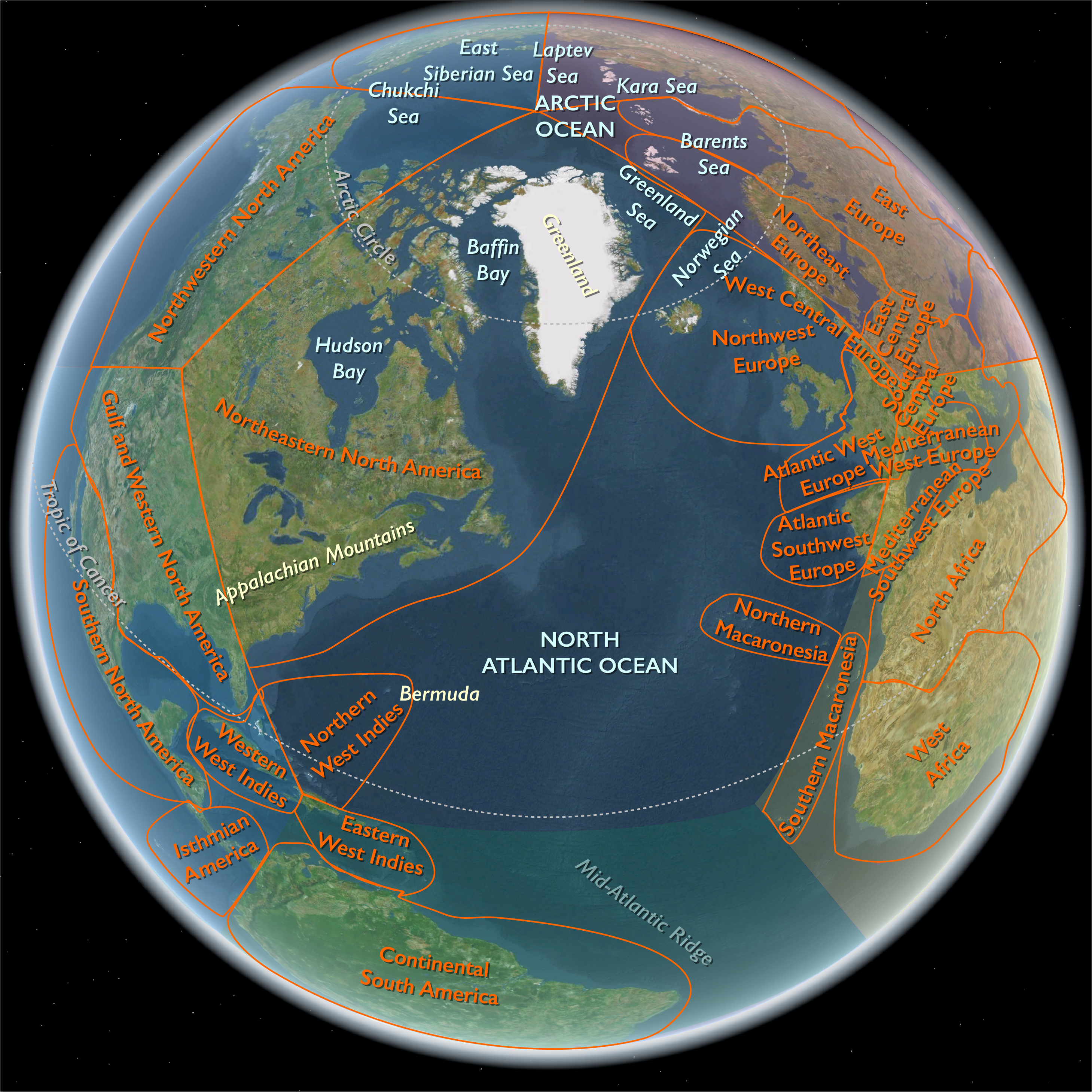
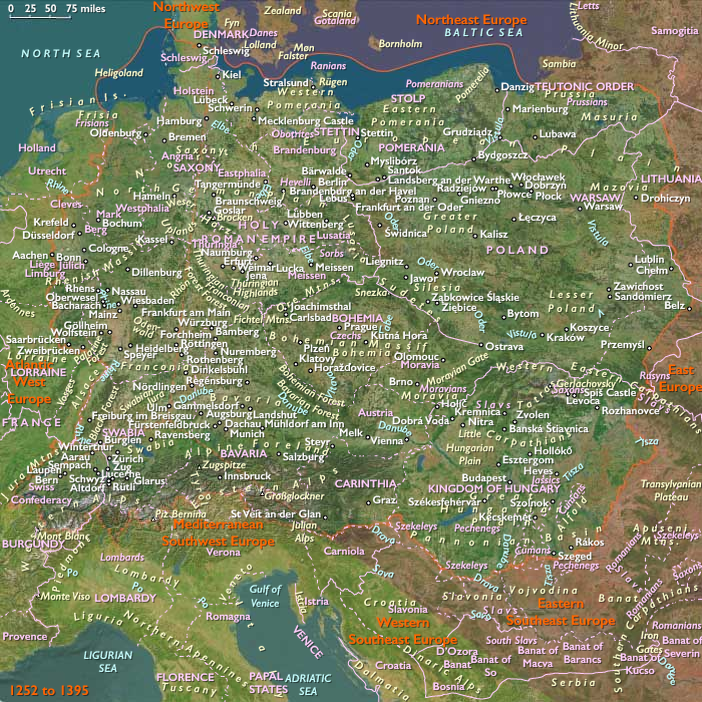
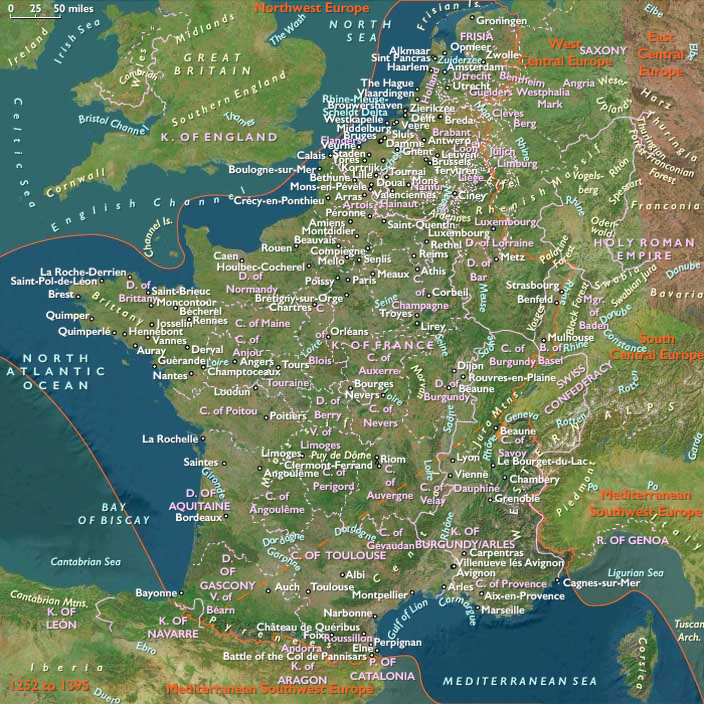
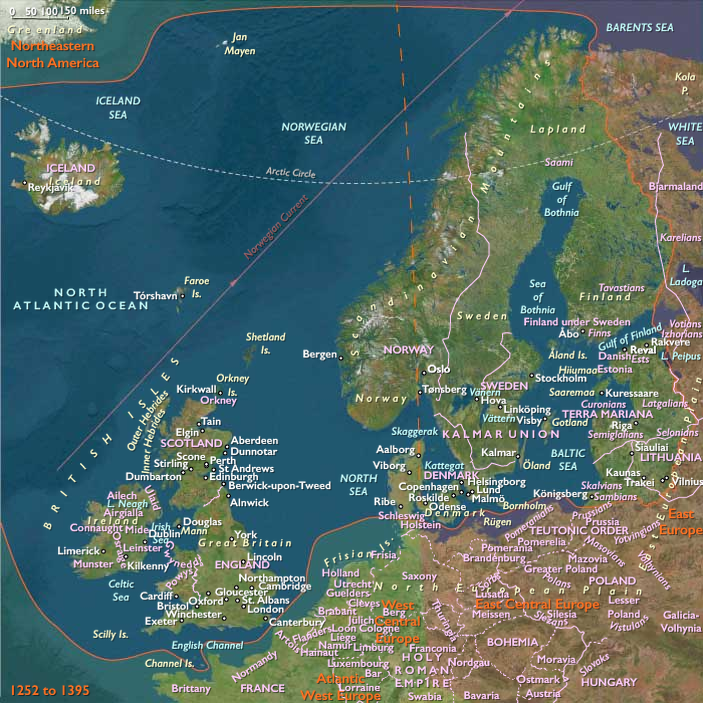
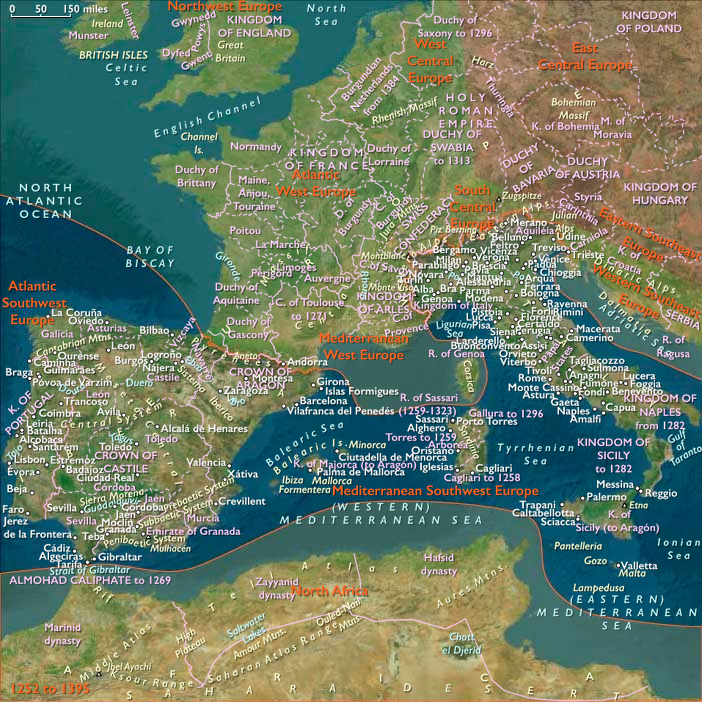
Atlantic Southwest Europe (1252 – 1395 CE): Wool, Iron, Wine, and the Atlantic Turn
Geographic and Environmental Context
Atlantic Southwest Europe includes Portugal’s Lisbon, Beira, Minho, Trás-os-Montes, and Spain’s Galicia, Asturias, Cantabria, Basque Country, Castile and León, northern Rioja, and northern Navarra.
-
Anchors: the Cantabrian coast (A Coruña–Gijón–Santander–Bilbao–San Sebastián), the Douro/Minho estuaries, and the Meseta–Cantabrian passes binding the plateau to Atlantic ports.
Climate and Environmental Shifts
-
Little Ice Age onset (~1300) brought cooler, wetter weather; stormier Bay of Biscay; good fisheries persisted.
-
Black Death (1348–1352) hit towns hard; ports recovered quickest via maritime trade.
Societies and Political Developments
-
Castile and León unified under Alfonso X (r. 1252–1284), then fractured and reconsolidated amid the Trastámara coup (Pedro I vs Enrique II, 1366–1369).
-
Portugal strengthened under Afonso III and Dinis (reforestation of Leiria for ship timber; University of Coimbra 1290), then defended independence in the Crisis of 1383–1385; João I and Aljubarrota (1385) sealed the Anglo-Portuguese alliance (Treaty of Windsor, 1386).
-
Navarre navigated between France and Castile; Basque towns (Bilbao, charter 1300; San Sebastián) grew as maritime communes.
Economy and Trade
-
Wool complex: Castilian wool—organized by the Mesta (founded 1273)—flowed through Burgos, León, and Cantabrian ports to Flanders and England.
-
Basque iron & shipbuilding: forges supplied anchors, nails, artillery shot; yards built cogs and naos for Atlantic service and whaling.
-
Wine & salt fish: Douro/Minho wines, Galician/Portuguese salt fish (cod, sardine) and tuna moved north; Lisbon/Porto emerged as major entrepôts.
-
Finance & law: municipal fueros, urban consulates, and English–Portuguese treaties stabilized credit, convoys, and tariffs.
Subsistence and Technology
-
Mixed Atlantic polyculture (rye/wheat, vines, chestnuts, cattle); stern-rudder hulls, improved rigging, magnetic compass and portolan practice diffused into Iberian waters.
Movement and Interaction Corridors
-
Sea: Lisbon ⇄ London/Bristol; Cantabria ⇄ Flanders; Galicia ⇄ Brittany; pilgrim sailings to Santiago.
-
Land: Meseta passes fed Burgos, León, Salamanca; Douro road/river linked Castile to Porto.
Belief and Symbolism
-
Cathedrals and monasteries in Santiago, León, Burgos, Salamanca; confraternities of sailors and merchants venerating St. James and St. Nicholas kept social cohesion in plague decades.
Adaptation and Resilience
-
Route redundancy (many ports, multiple passes), portfolio exports (wool–iron–wine–fish–salt), and crown–town compacts hedged risk from war, weather, and plague.
Long-Term Significance
By 1395, the Atlantic façade from Lisbon to San Sebastián had become a maritime-industrial platform: wool, iron, wine, and shipbuilding—backed by Portugal’s English alliance—set the stage for the 15th-century Atlantic turn and overseas exploration.
Afonso IV of Portugal: Reforms and the Victory at Río Salado (1325–1357)
Afonso IV of Portugal continued the development policies of his father, King Denis, while also taking significant steps to strengthen royal justice and defend the Iberian Christian kingdoms against external threats.
Judicial Reforms and Governance
One of Afonso IV’s key domestic policies was his reform of the judicial system:
- He dismissed corrupt local judges and replaced them with royally appointed magistrates, ensuring a more centralized and fair system of justice.
- These judicial reforms strengthened royal authority over local governance, reducing the influence of powerful noble factions and corrupt officials.
The Battle of Río Salado (1340): A Christian Victory
In 1340, a large Muslim army—comprising Marinid forces from North Africa and troops from the Emirate of Granada—landed in the Iberian Peninsula, posing a significant threat to Christian rule. Recognizing the danger, Afonso IV allied himself with Alfonso XI of Castile and Pedro IV of Aragon to confront the invasion.
- Afonso IV sent a Portuguese fleet under Admiral Manuel Pessanha to blockade Cádiz, cutting off Muslim reinforcements.
- Meanwhile, he personally led an army overland to join Alfonso XI’s Castilian forces.
- On October 30, 1340, the combined Christian armies decisively defeated the Marinid and Granadan forces at the Battle of Río Salado, marking one of the most significant victories of the Reconquista.
Afonso IV’s Legacy
Afonso IV’s reign reinforced Portugal’s internal stability through his judicial reforms and strengthened Christian Iberia’s defense against external threats. His participation in the Battle of Río Salado solidified Portugal’s military reputation and strengthened its ties with Castile, securing the kingdom’s place in the ongoing Reconquista
Atlantic Southwest Europe (1324–1335 CE): Portuguese Transition and Stability, Castilian Centralization under Alfonso XI, and Navarrese Diplomatic Resilience
Between 1324 and 1335 CE, Atlantic Southwest Europe—including Galicia, northern and central Portugal, Asturias, Cantabria, and northern Spain south of the Franco-Spanish border (43.05548° N, 1.22924° W)—underwent significant political transitions, economic continuity, and cultural vitality. Portugal saw a smooth transition from the long and prosperous reign of King Dinis (1279–1325 CE) to his successor, King Afonso IV (1325–1357 CE), who decisively continued stable governance and territorial security. Castile, under the now mature and effective King Alfonso XI (1312–1350 CE), achieved renewed political centralization, internal stability, and frontier consolidation after years of aristocratic rivalry. Navarre, under Charles I (1322–1328 CE) and subsequently Joan II (1328–1349 CE), maintained diplomatic neutrality, regional autonomy, and stable governance amid shifting Iberian alliances.
Political and Military Developments
Portuguese Governance Transition and Territorial Stability
Portugal experienced a stable transition following the death of King Dinis in 1325, with his son Afonso IV decisively continuing strong royal governance, territorial administration, and frontier security. Afonso IV solidified his father’s legacy by implementing further legal and administrative reforms, ensuring territorial coherence and Portuguese national stability during his early reign.
Castilian Political Consolidation under Alfonso XI
Castile significantly restored internal governance coherence and centralized royal authority under the mature reign of King Alfonso XI. Alfonso decisively resolved aristocratic tensions and regional conflicts, reinforcing frontier defenses against southern threats. His effective leadership stabilized internal governance, enhanced territorial integrity, and clarified Castilian regional identity, laying durable foundations for Iberian political stability.
Navarre’s Diplomatic Continuity and Governance Resilience
Navarre underwent smooth dynastic transition from Charles I to Joan II in 1328, decisively maintaining diplomatic neutrality, regional autonomy, and stable internal governance. Joan II skillfully navigated diplomatic relationships with Castile, Aragón, and southern Iberian powers, preserving territorial integrity, internal coherence, and northern Iberian geopolitical stability.
Economic Developments
Continued Agricultural Prosperity and Territorial Development
Regional agriculture remained robust, decisively supported by sustained land reclamation projects, agricultural settlements, and irrigation improvements established in previous decades. Diverse cultivation practices (grains, olives, vineyards, citrus, almonds), livestock husbandry, artisanal crafts, and significant mining operations (gold and silver, notably in Galicia and Asturias) reinforced regional economic resilience and demographic stability.
Maritime Commerce and Expanded Trade Networks
Portuguese coastal ports, particularly Lisbon, Porto, Braga, and Coimbra, continued robust maritime commerce, significantly enhancing commercial connections with northern Europe (England, Flanders, Normandy, Brittany). Galicia, notably through A Coruña, maintained active maritime trade, reinforcing regional economic autonomy and prosperity.
Pilgrimage-Driven Economic Continuity
Pilgrimage to Santiago de Compostela continued supporting regional economic vitality, significantly sustaining hospitality industries, artisanal commerce, infrastructure development, and cultural exchanges. Continued pilgrimage significantly reinforced Galicia’s economic resilience, cultural prominence, and regional identity.
Cultural and Religious Developments
Portuguese Cultural Continuity and Intellectual Patronage
Under Afonso IV, Portuguese cultural vitality continued flourishing, decisively supported by continued patronage of education, literature, and scholarly traditions. Intellectual and cultural institutions established by King Dinis remained vibrant, significantly shaping Portuguese linguistic standardization, cultural identity, and intellectual heritage, profoundly influencing Portugal’s medieval historical legacy.
Galician Cultural Resilience and Ecclesiastical Patronage
Galicia maintained vibrant cultural continuity, decisively supported by Santiago de Compostela’s international pilgrimage prominence. Ecclesiastical patronage significantly supported scholarly initiatives, architectural projects, manuscript preservation, and educational institutions, profoundly shaping Galician cultural identity and international recognition.
Monastic Intellectual Contributions and Ecclesiastical Influence
Monastic communities sustained vibrant scholarly traditions, manuscript preservation, agricultural innovations, and educational reforms. Ecclesiastical authorities decisively influenced Iberian religious identity, liturgical uniformity, ecclesiastical discipline, and regional cultural coherence.
Persistent Cultural Syncretism and Local Traditions
Orthodox Christianity continued integrating indigenous Iberian and Celtic traditions, notably in rural Galicia and northern Portugal. Persistent cultural syncretism significantly reinforced distinctive regional identities, social cohesion, and cultural resilience amid broader political transformations.
Civic Identity and Governance
Portuguese Territorial Governance and Civic Stability
Under Afonso IV, Portugal decisively maintained territorial governance stability, administrative coherence, and civic identity. His effective governance significantly solidified Portuguese national identity, territorial integrity, and internal stability, establishing enduring foundations for Portugal’s medieval prosperity and historical trajectory.
Castilian Political Centralization and Regional Identity
Under Alfonso XI, Castile decisively restored internal governance coherence, centralized royal authority, and regional identity clarity following prolonged instability. His effective leadership significantly reinforced Castilian territorial governance, civic coherence, and Iberian geopolitical stability, laying critical foundations for future governance developments.
Navarrese Regional Autonomy and Diplomatic Stability
Navarre carefully preserved regional autonomy, diplomatic neutrality, and stable governance through dynastic transitions under Charles I and Joan II. Navarre’s effective diplomacy significantly preserved territorial integrity, internal governance stability, and northern Iberian geopolitical coherence.
Notable Regional Groups and Settlements
-
Portuguese: Experienced stable governance transition, territorial stability, and cultural vitality under Afonso IV, significantly shaping Portuguese national identity and enduring medieval trajectory.
-
Castilians: Achieved decisive internal governance centralization, territorial integrity, and clearly defined regional identity under Alfonso XI, significantly influencing Iberian geopolitical stability and regional coherence.
-
Galicians: Sustained vibrant cultural prominence and economic resilience, significantly reinforced by pilgrimage traditions, maritime trade, and ecclesiastical patronage.
-
Basques (Navarre): Maintained regional autonomy, diplomatic neutrality, and stable governance through careful dynastic transitions, significantly shaping northern Iberian geopolitical coherence.
Long-Term Significance and Legacy
Between 1324 and 1335 CE, Atlantic Southwest Europe:
-
Achieved continued Portuguese administrative stability, territorial governance, and cultural continuity under Afonso IV, significantly shaping Portugal’s medieval identity and historical trajectory.
-
Experienced decisive Castilian political centralization, internal governance stability, and regional identity coherence under Alfonso XI, decisively influencing Iberian geopolitical stability.
-
Preserved Navarre’s regional autonomy, diplomatic neutrality, and governance resilience through careful dynastic transitions under Charles I and Joan II, significantly shaping northern Iberian political dynamics.
-
Sustained robust economic prosperity, pilgrimage-driven cultural prominence, maritime commerce, and resilient local governance, decisively influencing Atlantic Southwest Europe’s enduring medieval historical legacy.
This pivotal era decisively influenced regional identities, territorial governance stability, diplomatic alignments, and cultural resilience, profoundly shaping Atlantic Southwest Europe’s medieval historical trajectory.
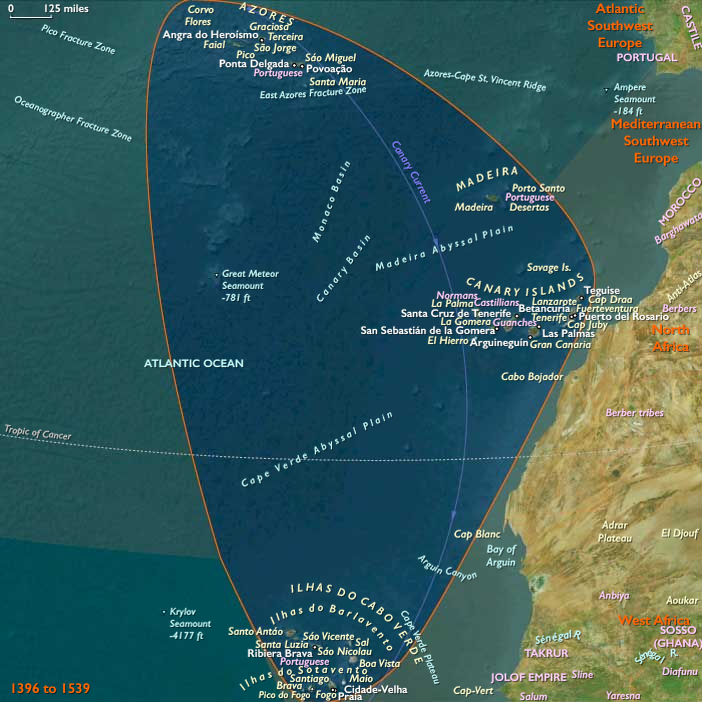
It was in the year 1339 that Majorcan cartographer Angelino Dulcert etched the first map of the Canaries, unravelling the mysteries of these distant lands.
Drawing from the whispers that had reached him, Dulcert brought to life the islands of Lanzarote, known as "Insula de Lanzarotus Marocelus," adorned with a Genoese shield.
He also revealed the existence of Forte Vetura, now known as Fuerteventura, and Vegi Mari, which we recognize today as Lobos.
Dulcert's map weaved a tapestry of both reality and fiction, including the fantastical Saint Brendan's Island and three islands bearing the names Primaria, Capraria, and Canaria.
In 1341, under the patronage of King Afonso IV of Portugal, a grand expedition set sail from Lisbon, commanded by Florentine captain Angiolino del Tegghia de Corbizzi and Genoese captain Nicoloso da Recco.
A diverse crew of Italians, Portuguese, and Castilians embarked on a voyage that spanned five months, mapping thirteen islands, both major and minor, and studying the indigenous Guanches.
Four Guanche natives were brought back to Lisbon, marking the encounters that would later fuel Portuguese claims of priority in these islands.
Atlantic Southwest Europe (1336–1347 CE): Portuguese Political Stability, Castilian Consolidation and Military Strength, and Navarrese Diplomatic Prudence
Between 1336 and 1347 CE, Atlantic Southwest Europe—including Galicia, northern and central Portugal, Asturias, Cantabria, and northern Spain south of the Franco-Spanish border (43.05548° N, 1.22924° W)—experienced continued political stability, cultural resilience, and dynamic economic developments. Portugal, under King Afonso IV (1325–1357 CE), maintained strong governance, stable administration, and territorial security. Castile, under the decisive reign of King Alfonso XI (1312–1350 CE), consolidated royal authority, achieving significant military victories and reinforcing internal coherence. Navarre, governed by Joan II (1328–1349 CE), skillfully preserved diplomatic neutrality, regional autonomy, and governance stability amidst complex Iberian alliances.
Political and Military Developments
Portuguese Governance and Territorial Stability under Afonso IV
Under King Afonso IV, Portugal continued robust administrative centralization, frontier security, and territorial coherence. Afonso IV’s effective governance, marked by legislative and territorial reforms, maintained internal stability, civic identity, and national cohesion. His leadership decisively supported Portuguese regional autonomy and governance continuity throughout the era.
Castilian Military and Political Consolidation under Alfonso XI
Castile decisively reinforced internal governance stability and military strength under King Alfonso XI, significantly strengthening royal authority and frontier defenses. His pivotal victory at the Battle of Río Salado (1340 CE)decisively halted Moorish incursions from Granada and North Africa, dramatically stabilizing Castilian territorial security and bolstering regional confidence. Alfonso XI’s effective military and administrative strategies firmly consolidated Castilian territorial integrity and governance stability.
Navarre’s Diplomatic Stability under Joan II
Navarre, under Joan II, carefully maintained regional autonomy, diplomatic neutrality, and internal governance coherence. Skillful diplomacy with neighboring Castile, Aragón, and France decisively preserved Navarrese territorial integrity, governance stability, and northern Iberian geopolitical resilience.
Economic Developments
Sustained Agricultural Productivity and Territorial Development
The region sustained robust agricultural productivity, decisively supported by improved irrigation, land reclamation, and expanded rural settlements. Diverse crop cultivation (grains, olives, vineyards, citrus fruits, almonds), livestock husbandry, artisanal crafts, and significant mining operations (gold and silver, notably from Galicia and Asturias) reinforced regional economic resilience and demographic stability.
Maritime Commerce and Expansion of Trade Networks
Portuguese coastal ports, particularly Lisbon, Porto, Braga, and Coimbra, continued robust maritime commerce, significantly enhancing commercial connections with northern Europe (England, Flanders, Normandy, Brittany). Galicia, notably through A Coruña, maintained active maritime trade, reinforcing regional economic autonomy and prosperity.
Pilgrimage-Driven Economic Continuity
Pilgrimage to Santiago de Compostela continued to bolster regional economic vitality, significantly supporting hospitality industries, artisanal commerce, infrastructure investments, and cultural exchanges. Continued pilgrimage significantly reinforced Galicia’s economic resilience, cultural prominence, and regional identity.
Cultural and Religious Developments
Portuguese Cultural Continuity and Intellectual Vitality
Portugal maintained vibrant cultural vitality under Afonso IV, significantly supported by continued patronage of education, literature, and scholarly traditions. Cultural and intellectual institutions established earlier under King Dinis remained influential, significantly shaping Portuguese linguistic standardization, cultural identity, and intellectual heritage.
Galician Cultural Resilience and Ecclesiastical Patronage
Galicia maintained dynamic cultural continuity, decisively supported by Santiago de Compostela’s international pilgrimage prominence. Ecclesiastical patronage significantly supported scholarly initiatives, architectural projects, manuscript preservation, and educational institutions, profoundly shaping Galician cultural identity and international recognition.
Monastic Intellectual Contributions and Ecclesiastical Influence
Monastic communities sustained vibrant scholarly traditions, manuscript preservation, agricultural innovations, and educational reforms. Ecclesiastical authorities decisively influenced Iberian religious identity, liturgical uniformity, ecclesiastical discipline, and regional cultural coherence.
Persistent Cultural Syncretism and Local Traditions
Orthodox Christianity continued integrating indigenous Iberian and Celtic traditions, notably in rural Galicia and northern Portugal. Persistent cultural syncretism significantly reinforced distinctive regional identities, social cohesion, and cultural resilience amid broader political transformations.
Civic Identity and Governance
Portuguese Governance Stability and Civic Cohesion
Under Afonso IV, Portugal decisively maintained territorial governance stability, administrative coherence, and civic identity. His effective governance significantly solidified Portuguese national identity, territorial integrity, and internal stability, establishing enduring foundations for Portugal’s medieval prosperity and historical trajectory.
Castilian Military Strength and Governance Consolidation
Under Alfonso XI, Castile decisively reinforced military strength, governance stability, and territorial integrity through strategic victories and effective administration. His reign significantly reinforced Castilian territorial governance, civic coherence, and Iberian geopolitical stability, laying critical foundations for future governance developments.
Navarrese Regional Autonomy and Diplomatic Stability
Navarre carefully preserved regional autonomy, diplomatic neutrality, and stable governance under Joan II. Navarre’s effective diplomacy significantly preserved territorial integrity, internal governance stability, and northern Iberian geopolitical coherence.
Notable Regional Groups and Settlements
-
Portuguese: Experienced decisive governance stability, territorial security, and cultural vitality under Afonso IV, significantly shaping Portuguese national identity and enduring medieval trajectory.
-
Castilians: Achieved significant military strength, governance stability, and regional coherence under Alfonso XI, decisively influencing Iberian geopolitical stability.
-
Galicians: Maintained vibrant cultural prominence and economic resilience, significantly reinforced by pilgrimage traditions, maritime trade, and ecclesiastical patronage.
-
Basques (Navarre): Maintained regional autonomy, diplomatic neutrality, and stable governance under Joan II, significantly shaping northern Iberian geopolitical coherence.
Long-Term Significance and Legacy
Between 1336 and 1347 CE, Atlantic Southwest Europe:
-
Achieved continued Portuguese governance stability, territorial coherence, and cultural continuity under Afonso IV, significantly shaping Portugal’s medieval identity and historical trajectory.
-
Experienced Castilian military consolidation, governance stability, and territorial integrity under Alfonso XI, decisively influencing Iberian geopolitical stability.
-
Maintained Navarre’s regional autonomy, diplomatic neutrality, and governance resilience under Joan II, significantly shaping northern Iberian political dynamics.
-
Sustained robust economic prosperity, pilgrimage-driven cultural prominence, maritime commerce, and resilient local governance, decisively influencing Atlantic Southwest Europe’s enduring medieval historical legacy.
This pivotal era decisively influenced regional identities, territorial governance stability, diplomatic alignments, and cultural resilience, profoundly shaping Atlantic Southwest Europe’s medieval historical trajectory.
The Canary Islands were apparently known to the Carthaginians of Cadiz.
The Roman writer Pliny called them "the Fortunate Islands".
Genoese navigator Lancelotto Malocello is credited with the rediscovery in 1312 of the Canary Islands.
Malocello, according to some sources, led a return expedition to the Canaries, sponsored by King Afonso IV of Portugal, in 1336 shortly after his return to Europe.
The existence of this expedition has been dismissed by most modern historians, however, as being based on later forged documents.
Majorcan Angelino Dulcert in 1339 draws the first map of the Canaries, labeling one of the islands "Lanzarote" (named Insula de Lanzarotus Marocelus and marked by a Genoese shield).
Evidently drawing from the information provided by Malocello, Dulcert of Majorca also shows the island of Forte Vetura (Fuerteventura) and Vegi Mari (Lobos).
Although earlier maps had shown fantastical depictions of the "Fortunate Islands" (on the basis of their mention in Pliny), this is the first European map where the actual Canary islands make a solid appearance (although Dulcert also includes some fantastic islands himself, notably Saint Brendan's Island, and three islands he names Primaria, Capraria and Canaria).
A three-ship expedition sponsored by King Afonso IV of Portugal sets out from Lisbon for the Canary Islands in 1341, commanded by Florentine captain Angiolino del Tegghia de Corbizzi and Genoese captain Nicoloso da Recco, and employing a mixed crew of Italians, Portuguese and Castilians.
Cruising the archipelago for five months, the expedition maps thirteen islands (seven major, six minor) and surveys the primeval aboriginal inhabitants, the 'Guanches', bringing back four natives to Lisbon. (This expedition will become the basis of later Portuguese claims of priority on the islands.)
The pope follows Tu devonitis sinceritas with another bull, in January 1345, giving the projected Cerda-led conquest and conversion of the islands the character of a crusade, granting indulgences to its participants, and papal letters are dispatched to the Iberian monarchs urging them to provide material assistance to Cerda's expedition.
The Portuguese king Afonso IV immediately lodges a protest, claiming priority of discovery, but concedes to the authority of the pope.
Alfonso XI of Castile also protests, claiming that, by the ancient Visigothic dioceses and prior Reconquista treaties, the islands fall within the Castilian jurisdiction and 'sphere of conquest', but nonetheless recognizes Cerda's title.
Despite their formal concessions, preparations are stalled by the opposition of the Iberian monarchs, with the result that no expedition will be mounted before Cerda's death in 1348.
Atlantic Southwest Europe (1348–1359 CE): The Black Death, Castilian Governance Challenges, Portuguese Stability, and Navarrese Diplomatic Prudence
Between 1348 and 1359 CE, Atlantic Southwest Europe—including Galicia, northern and central Portugal, Asturias, Cantabria, and northern Spain south of the Franco-Spanish border (43.05548° N, 1.22924° W)—faced unprecedented challenges from the devastating impact of the Black Death, alongside complex political transitions. The region witnessed severe demographic decline, economic disruptions, and social changes. Portugal under King Afonso IV (1325–1357 CE) and subsequently his successor King Pedro I (1357–1367 CE) managed to maintain relative stability. Castile, following the death of King Alfonso XI (1350 CE) from plague, endured political turmoil during the minority of King Pedro I "the Cruel" (1350–1369 CE). Navarre, under Queen Joan II (1328–1349 CE) and her son Charles II "the Bad" (1349–1387 CE), carefully preserved diplomatic neutrality and regional autonomy despite internal and external pressures.
Political and Military Developments
Portuguese Political Stability under Afonso IV and Pedro I
Portugal managed effective governance through the catastrophic impact of the Black Death. Under the late reign of Afonso IV and the early years of his son Pedro I, Portugal maintained political coherence, territorial integrity, and stable administration despite significant demographic challenges and economic disruptions. Both kings emphasized judicial reforms and governance continuity, decisively preserving Portuguese national stability through the crisis.
Castilian Turmoil Following Alfonso XI’s Death
The sudden death of King Alfonso XI from plague in 1350 triggered severe political instability during the early reign of his son Pedro I. Castile endured internal aristocratic rivalries, weakened governance, and social unrest, intensified by the plague’s devastating effects. Despite these challenges, frontier defenses remained intact, and regional governance structures eventually adapted, preserving long-term Castilian stability and identity.
Navarre’s Diplomatic Stability amid Succession Challenges
Navarre skillfully navigated the transition following the death of Queen Joan II in 1349, with her son Charles II "the Bad" decisively maintaining diplomatic neutrality and regional autonomy. Charles II pursued careful diplomatic strategies, balancing complicated relationships with Castile, Aragón, and France, significantly preserving Navarre’s territorial integrity and internal stability through a difficult era.
Economic Developments
Devastating Impact of the Black Death
The Black Death (1348–1351 CE) profoundly disrupted the region, causing severe demographic losses, agricultural labor shortages, and economic disruption. Agricultural productivity sharply declined, temporarily weakening local economies, trade networks, and artisanal industries. However, gradual recovery occurred, reshaping labor dynamics, agrarian structures, and economic practices.
Slow Recovery of Maritime Commerce and Trade Networks
Despite initial disruptions from the plague, Portuguese ports (Lisbon, Porto, Braga, Coimbra) and Galician trade centers like A Coruña gradually resumed maritime commerce. Commercial exchanges with northern Europe (England, Flanders, Normandy, Brittany) slowly recovered, reinforcing regional economic resilience and providing foundations for subsequent revival.
Pilgrimage and Economic Adaptation
Pilgrimage to Santiago de Compostela significantly declined during the immediate aftermath of the plague but eventually recovered, decisively contributing to regional economic restoration. The pilgrimage industry adapted to changing conditions, reinforcing Galicia’s economic resilience and cultural identity despite demographic setbacks.
Cultural and Religious Developments
Portuguese Cultural Resilience and Continuity
Portugal sustained cultural continuity and intellectual traditions despite severe demographic challenges. Monastic communities, educational institutions, and royal patronage remained vibrant, preserving Portuguese linguistic standardization, cultural identity, and scholarly traditions throughout the difficult period.
Galician Cultural Resilience and Ecclesiastical Patronage
Galicia maintained cultural vitality despite demographic disruption from the plague. Ecclesiastical institutions, particularly at Santiago de Compostela, continued supporting scholarly endeavors, manuscript preservation, architectural projects, and educational initiatives, significantly reinforcing Galician cultural identity.
Ecclesiastical and Monastic Influence Amid Crisis
Monastic communities decisively contributed to regional recovery efforts through scholarly activity, manuscript preservation, agricultural innovations, and educational reforms. Ecclesiastical authorities decisively influenced Iberian religious identity, social cohesion, and cultural resilience amid the demographic crisis.
Persistent Cultural Syncretism and Local Traditions
Orthodox Christianity continued integrating indigenous Iberian and Celtic traditions, particularly in rural Galicia and northern Portugal. Persistent cultural syncretism reinforced regional identities and social cohesion, providing resilience amid demographic upheaval.
Civic Identity and Governance
Portuguese Governance Stability Amid Crisis
Portugal, under Afonso IV and Pedro I, decisively preserved governance stability, territorial coherence, and civic identity despite severe demographic and economic disruptions caused by the plague. Effective administration and governance continuity significantly solidified Portuguese national identity and internal stability during a challenging era.
Castilian Governance Challenges and Regional Adaptation
Castile faced severe governance challenges during the early reign of Pedro I following Alfonso XI’s death. Internal rivalries temporarily weakened centralized administration, but resilient governance structures, frontier stability, and regional identity eventually facilitated recovery and adaptation.
Navarrese Regional Autonomy and Diplomatic Stability
Navarre decisively maintained regional autonomy, diplomatic neutrality, and governance stability under Charles II amid complex political circumstances. Navarre’s diplomatic prudence significantly preserved territorial integrity, internal governance stability, and northern Iberian geopolitical coherence through challenging times.
Notable Regional Groups and Settlements
-
Portuguese: Maintained governance stability, territorial coherence, and cultural continuity under Afonso IV and Pedro I, significantly preserving Portuguese national identity and medieval historical trajectory despite demographic disruptions.
-
Castilians: Experienced severe political turmoil yet preserved regional coherence, frontier stability, and resilient governance structures during the early reign of Pedro I, laying groundwork for subsequent stabilization.
-
Galicians: Demonstrated remarkable cultural resilience and gradual economic recovery, significantly supported by pilgrimage adaptations, maritime trade recovery, and ecclesiastical patronage.
-
Basques (Navarre): Skillfully preserved regional autonomy, diplomatic neutrality, and stable governance under Charles II, significantly maintaining northern Iberian geopolitical stability.
Long-Term Significance and Legacy
Between 1348 and 1359 CE, Atlantic Southwest Europe:
-
Confronted severe demographic and economic disruptions from the Black Death yet decisively preserved Portuguese governance stability, territorial integrity, and cultural continuity under Afonso IV and Pedro I.
-
Endured Castilian political instability during Pedro I’s early reign yet maintained regional identity, territorial coherence, and resilient governance structures, facilitating subsequent stabilization.
-
Maintained Navarrese regional autonomy, diplomatic neutrality, and governance stability under Charles II despite complex political circumstances, significantly influencing northern Iberian geopolitical coherence.
-
Demonstrated resilient economic recovery, cultural adaptability, and persistent local governance structures, profoundly shaping the region’s historical trajectory beyond the demographic crisis.
This pivotal era decisively influenced regional identities, governance stability, economic adaptation, and cultural resilience, profoundly shaping Atlantic Southwest Europe’s late medieval historical legacy.
The Tragic Love Affair of Peter I and Inês de Castro (1339–1355)
The passionate and politically fraught love affair between Prince Peter (Pedro I) of Portugal and Inês de Castro—a noblewoman of Galician descent—became one of the most enduring and tragic romances in Iberian history.
Maria of Portugal and the Castilian Royal Scandal (1328–1335)
- King Afonso IV of Portugal had arranged for his eldest daughter, Maria, to marry Alfonso XI of Castile in 1328.
- The marriage produced a son in 1334, who would later become Peter of Castile.
- However, Alfonso XI soon abandoned Maria for the widowed Leonor de Guzmán, refusing to end the affair.
- Maria, humiliated and neglected, fled back to Portugal in 1335, sparking outrage in her father, Afonso IV.
Political Alliances: The Marriage of Peter and Constanza (1339)
- Seeking revenge on Castile, Afonso IV allied with Juan Manuel, Prince of Villena, a powerful Castilian noble who had been humiliated by Alfonso XI when his daughter's child marriage to the king was annulled in 1327.
- In a new alliance, Afonso IV arranged for his son, Peter, to marry Constanza Manuel, the daughter of Juan Manuel, in 1339.
- When Constanza arrived in Portugal, she was accompanied by her lady-in-waiting, Inês de Castro, a beautiful aristocrat of Galician origin, whose family had illegitimate links to both the Portuguese and Castilian royal families.
Peter and Inês: A Love That Defied the Throne
- Peter soon fell in love with Inês, and they conducted a secret affair that continued for years.
- Constanza died in 1345, shortly after giving birth to Fernando, who would later become King Fernando I of Portugal.
- After Constanza's death, Peter refused to marry anyone else and insisted on marrying Inês, but his father, Afonso IV, forbade it.
- Afonso IV banished Inês from court, but Peter and Inês continued their relationship in secret, living together.
Afonso IV’s Growing Fear and Inês’s Murder (1355)
- Inês’s brothers, exiled from Castile, had gained influence at Peter’s court, and Peter appointed them to key positions.
- This alarmed Afonso IV, who feared:
- That Portugal would be drawn into a civil war after his death.
- That the Portuguese throne would fall under Castilian control through Inês’s family ties.
- In 1355, Afonso IV made the fateful decision to eliminate Inês.
- He sent three men to the Monastery of Santa Clara-a-Velha in Coimbra, where she was detained, and they executed her by decapitation in front of one of her young children.
Peter’s Revenge and Coronation (1355–1357)
- Enraged by Inês’s murder, Peter revolted against his father, leading to a brief civil war.
- Afonso IV defeated his son, but died soon after in 1357.
- Peter succeeded to the throne as Peter I of Portugal, immediately seeking vengeance for Inês.
- According to legend, Peter later exhumed Inês’s body, crowned her posthumously as queen, and forced the court to kiss her decayed hand as a symbol of respect.
A Love Story Immortalized in Literature and Opera
The tragic romance of Peter and Inês has inspired over 20 operas and countless literary works, including:
- Portugal's national epic, Os Lusíadas (1572) by Luís de Camões.
- Spanish plays, including Nise Lastimosa and Nise Laureada (1577) by Jerónimo Bermúdez and Reinar Después de Morir by Luis Vélez de Guevara.
- French drama La Reine Morte by Henry de Montherlant.
- English tragedy Inez de Castro by Mary Russell Mitford.
Legacy of Peter and Inês
- Their ill-fated romance became one of the most famous love stories in Portuguese history, often compared to Romeo and Juliet.
- Inês’s tomb in Alcobaça Monastery, alongside Peter’s, remains a symbol of eternal love and loss.
- The legend of Inês de Castro continues to be retold and reinterpreted, keeping alive one of the most tragic royal love stories in medieval Europe.