Abdullah of Jordan
King of Jordan
Years: 1962 - 2215
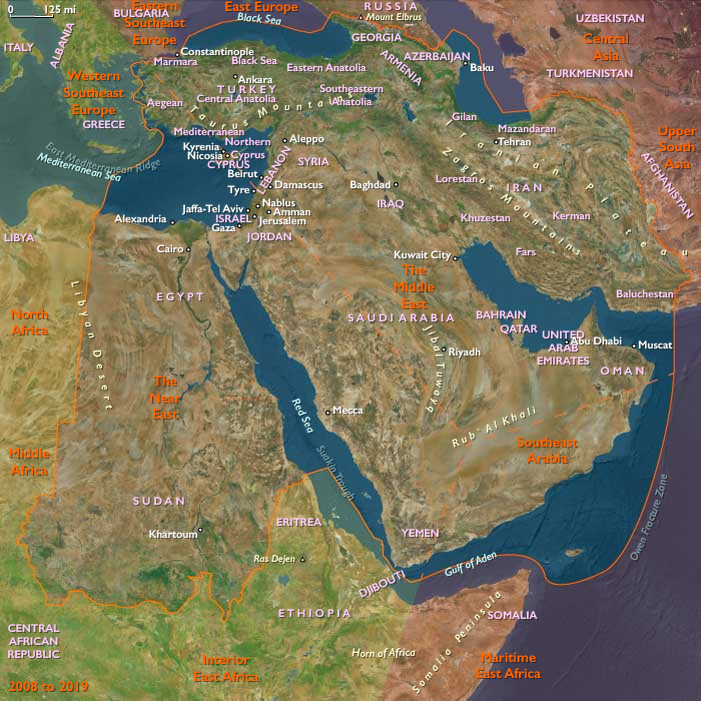
Abdullah II bin Al-Hussein (born January 30, 1962) is King of Jordan from 1999.
As a member of the Hashemite dynasty, the royal family of Jordan since 1921, Abdullah claims to be a forty-first-generation direct descendant of Muhammad.
Abdullah was born in Amman as the first child of King Hussein and his second wife, British-born Princess Muna.
As the King's eldest son, Abdullah is heir apparent until Hussein transfers the title to Abdullah's uncle, Prince Hassan, in 1965.
Abdullah begins his schooling in Amman, continuing his education abroad.
He begins his military career in 1980 as a training officer in the Jordanian Armed Forces, later assuming command of the country's Special Forces in 1994, and he becomes a major general in 1998.
In 1993 Abdullah marries Rania Al-Yassin (of Palestinian descent), and they have four children: Crown Prince Hussein, Princess Iman, Princess Salma and Prince Hashem.
A few weeks before his death in 1999, Hussein names Abdullah his heir, and Abdullah succeeds his father.
Abdullah, a constitutional monarch, liberalizes the economy when he assumes the throne, and his reforms lead to an economic boom that continues until 2008.
During the following years Jordan's economy experiences hardship as it deals with the effects of the Great Recession and spillover from the Arab Spring, including a cut in its petroleum supply and the collapse of trade with neighboring countries.
In 2011, large-scale protests demanding reform erupt in the Arab world.
Many of the protests lead to civil wars in other countries, but Abdullah responds quickly to domestic unrest by replacing the government and introducing reforms to the constitution and laws governing public freedoms and elections.
Proportional representation is introduced to the Jordanian parliament in the 2016 general election, a move that he says will eventually lead to establishing parliamentary governments.
The reforms take place amid unprecedented challenges stemming from regional instability, including an influx of forurteen hundred thousand Syrian refugees into the natural resources-lacking country and the emergence of the Islamic State of Iraq and the Levant (ISIL).
Abdullah is popular locally and internationally for maintaining Jordanian stability, and is known for promoting interfaith dialogue and a moderate understanding of Islam.
The third-longest-serving Arab leader, he is regarded by the Royal Islamic Strategic Studies Centre as the most influential Muslim in the world in 2016.
Abdullah is custodian of the Muslim and Christian sacred sites in Jerusalem, a position held by his dynasty since 1924.