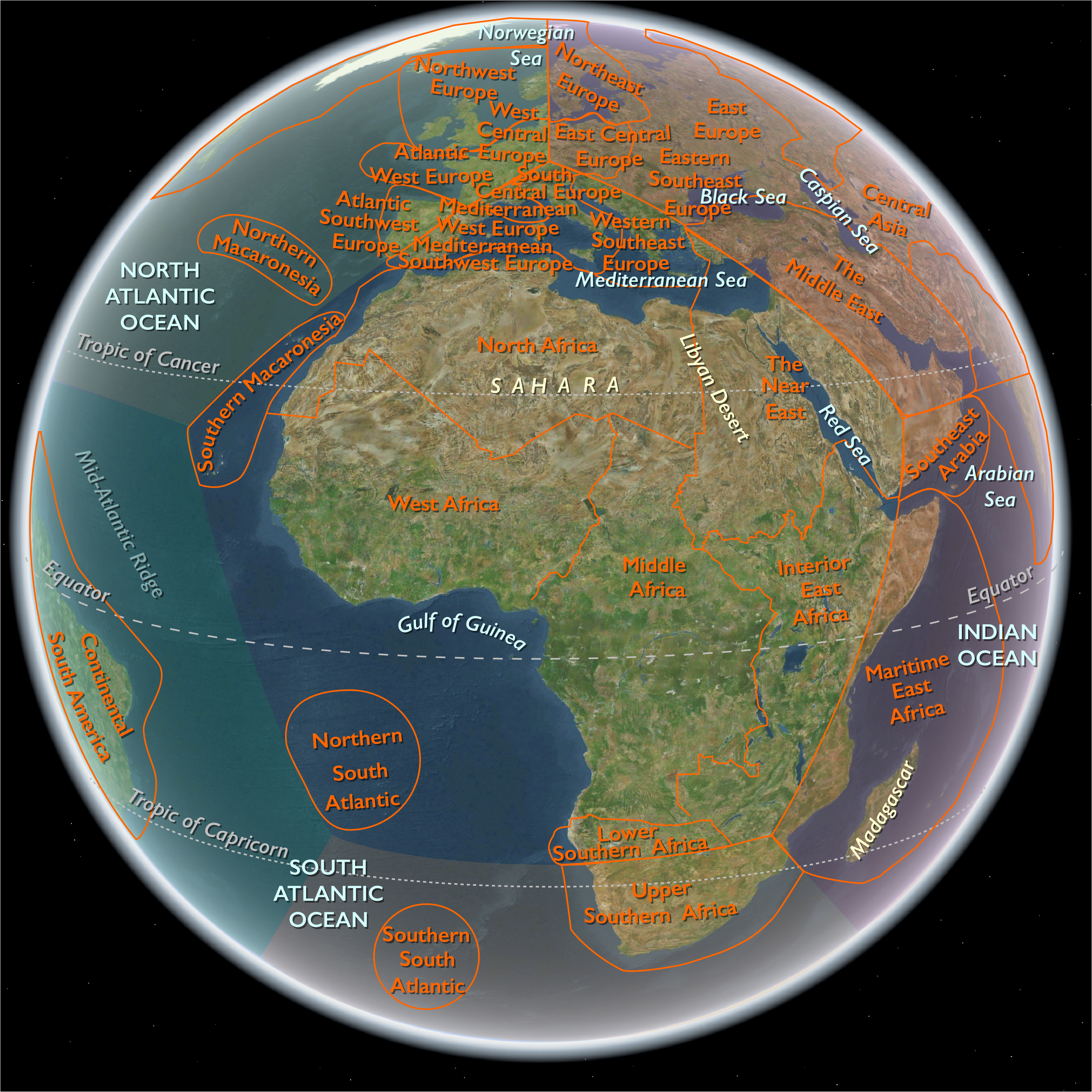
North Africa (808–819 CE)
Aghlabid Prosperity, Idrisid Consolidation, and Vibrant Berber Autonomy
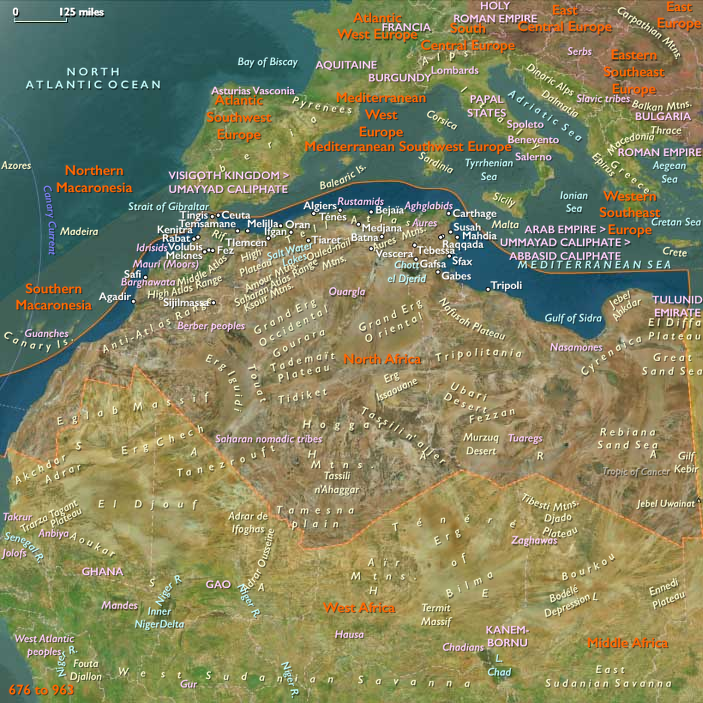
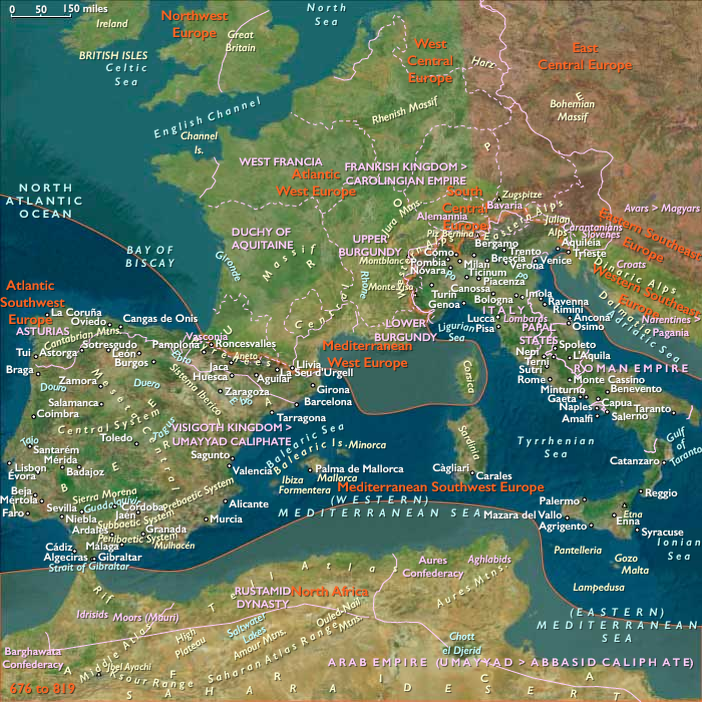
Between 808 and 819 CE, North Africa experiences sustained political stability and economic prosperity under the rule of influential local dynasties, particularly the Arab-led Aghlabids in Ifriqiya and the Idrisids in Morocco, while Berber states maintain vibrant autonomy in the central Maghreb.
In Ifriqiya, the Aghlabid Dynasty, founded by Ibrahim ibn al-Aghlab in 800 CE, reaches significant prosperity and political stability. Kairouan (Al Qayrawan), the capital, thrives as an urban center of commerce, learning, and cultural exchange, rivaling major cities throughout the broader Islamic world. The Aghlabid rulers, notably Abdallah ibn Ibrahim (812–817 CE) and Ziyadat Allah I (817–838 CE), oversee extensive public works projects, dramatically expanding agricultural production through restored Roman-era irrigation systems. This fosters considerable regional wealth, making Ifriqiya a prosperous, semi-autonomous polity nominally loyal to the Abbasid Caliph in Baghdad.
To the west, the Idrisid Dynasty in Morocco further consolidates its political authority under Idris II, who continues his reign until 828 CE. After establishing the city of Fez (Fès) as his capital, Idris II significantly expands urban infrastructure, attracting scholars, merchants, and artisans. Under his governance, Fez becomes a leading intellectual and commercial hub, firmly embedding the Idrisid state as the dominant political force in western North Africa.
The central Maghreb remains firmly under the influence of the Rustamid Dynasty, based in Tahert (modern Tiaret). Governed by elective Ibadi Kharijite principles emphasizing justice, scholarship, and religious tolerance, the Rustamids continue to attract scholars, traders, and diverse religious groups from across North Africa and the Islamic world. The Rustamid imamate remains a pivotal node in regional commerce and intellectual exchange, a counterpoint to centralized Abbasid authority, highlighting indigenous Berber independence and regional cultural distinctiveness.
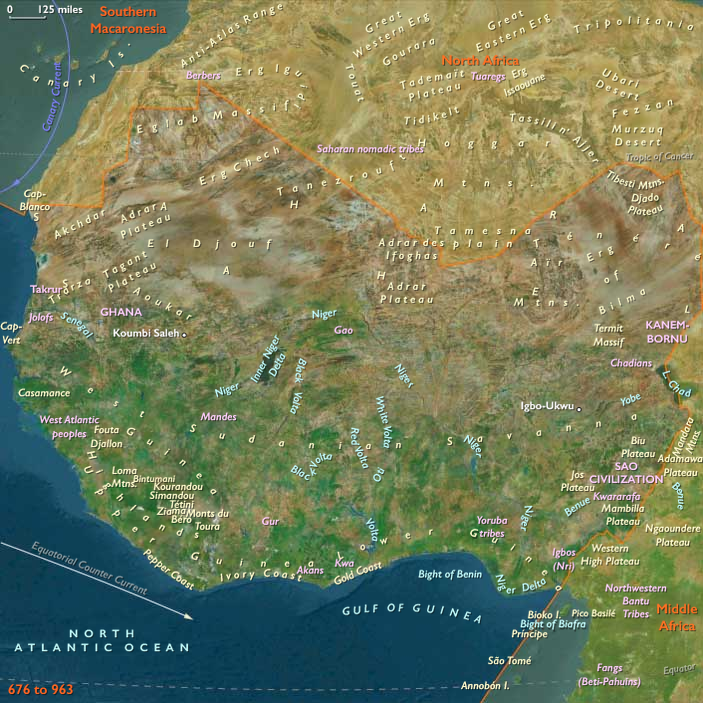
The coastal Barghawata confederation retains its distinctive identity, blending indigenous Berber traditions with Islamic practices along the Moroccan Atlantic coastline. Additionally, the oasis city of Sijilmasa, situated along vital trans-Saharan trade routes managed by influential Tuareg tribes, continues as a robust and prosperous economic center. Its wealth and influence underscore the importance of Saharan commerce, maintaining essential economic connections between sub-Saharan Africa and the Mediterranean world.
By the conclusion of 819 CE, North Africa stands as a region defined by substantial political autonomy, economic prosperity, and cultural diversity. The era concludes with the Aghlabid, Idrisid, and Rustamid states solidly established as influential regional powers. Together, they form a dynamic political mosaic characterized by decentralized governance, vibrant economic interconnectivity, and enduring cultural distinctiveness, setting the stage for continued historical evolution throughout subsequent centuries.