
Many feudal daimyōs remain bitterly resentful …
Years: 1863 - 1863
June
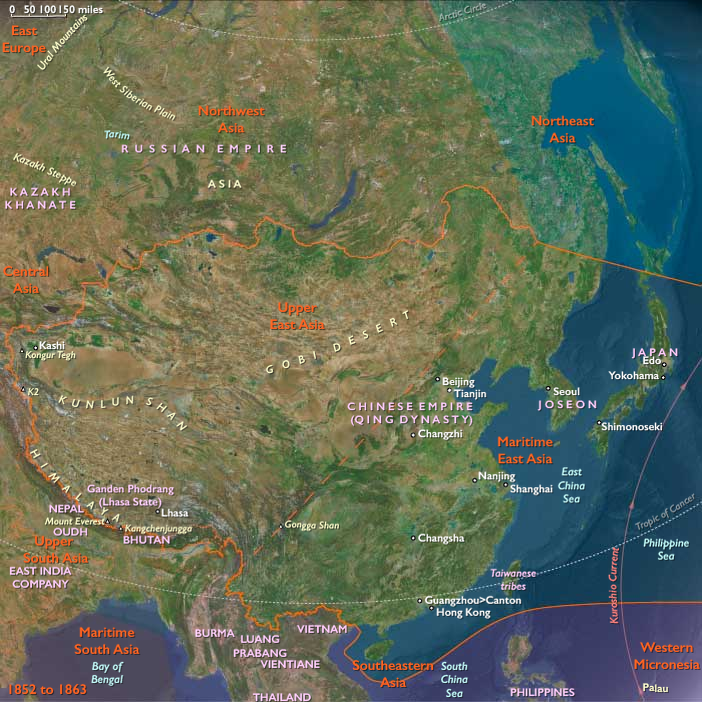
Many feudal daimyōs remain bitterly resentful of the shogunate's open-door policy to foreign trade despite efforts of appeasement by the Tokugawa shogunate to establish an atmosphere of peaceful solidarity.
Belligerent opposition to European and American influence had erupted into open conflict when the Emperor Kōmei, breaking with centuries of imperial tradition, began to take an active role in matters of state and issued on March 11 and April 11, 1863 his "Order to expel barbarians" (Jōi jikkō no chokumei).
The Chōshū clan, under the daimyō Mōri Takachika, begin to take action to expel all foreigners after the deadline of the 10th day of the 5th month, by the traditional Japanese calendar.
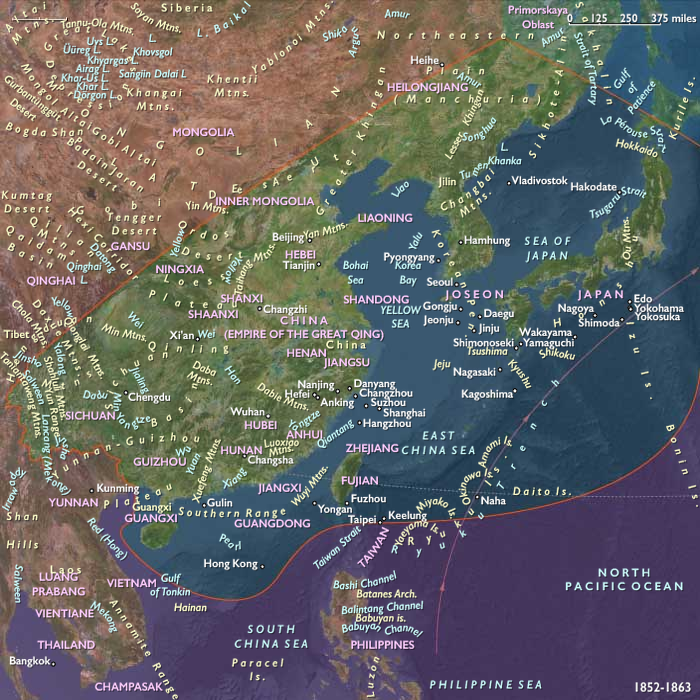
Openly defying the shogunate, Takachika had ordered his forces to fire without warning on all foreign ships traversing Shimonoseki Strait.
This strategic but treacherous six hundred-meter waterway separates the islands of Honshū and Kyūshū and provides a passage connecting the Inland Sea with the Sea of Japan.
Even before tensions escalate in Shimonoseki Strait, foreign diplomats and military experts, notably U.S. Foreign Minister to Japan Robert Pruyn and U.S. Navy Captain David McDougal are aware of the precarious state of affairs in Japan.
McDougal writes a letter to the Secretary of the Navy, Gideon Welles, dated June 12, 1863, stating, "General opinion is that the government of Japan is on the eve of revolution, the principal object of which is the expulsion of foreigners."
Belligerent opposition to European and American influence had erupted into open conflict when the Emperor Kōmei, breaking with centuries of imperial tradition, began to take an active role in matters of state and issued on March 11 and April 11, 1863 his "Order to expel barbarians" (Jōi jikkō no chokumei).
The Chōshū clan, under the daimyō Mōri Takachika, begin to take action to expel all foreigners after the deadline of the 10th day of the 5th month, by the traditional Japanese calendar.
Openly defying the shogunate, Takachika had ordered his forces to fire without warning on all foreign ships traversing Shimonoseki Strait.
This strategic but treacherous six hundred-meter waterway separates the islands of Honshū and Kyūshū and provides a passage connecting the Inland Sea with the Sea of Japan.
Even before tensions escalate in Shimonoseki Strait, foreign diplomats and military experts, notably U.S. Foreign Minister to Japan Robert Pruyn and U.S. Navy Captain David McDougal are aware of the precarious state of affairs in Japan.
McDougal writes a letter to the Secretary of the Navy, Gideon Welles, dated June 12, 1863, stating, "General opinion is that the government of Japan is on the eve of revolution, the principal object of which is the expulsion of foreigners."
Locations
People
Groups
Topics
Subjects
Regions
Subregions
Related Events
Showing 10 events out of 14479 total
Years: 1863 - 1863
June
Locations
People
Groups
Topics
Subjects
Regions
Subregions