
Zhu Di’s usurpation of the throne is …
Years: 1406 - 1406
Zhu Di’s usurpation of the throne is now sometimes called the "Second Founding" of the Ming.
The Yongle emperor has spent most of his early years suppressing rumors, stopping bandits, and healing the wounds of a land scarred by rebellion.
Followed traditional rituals closely and remaining superstitious, Yongle has not overindulged in the luxuries of palace life.
He has used Buddhism and Buddhist festivals to overcome some of the backwardness of the Chinese frontier and to help calm civil unrest.
He has stopped the warring between the various Chinese tribes and reorganized the provinces to best provide peace within China.
The emperor has had many of the best scholars chosen as candidates and taken great care in choosing them, even creating terms by which he has hired people.
Concerned about the degeneration of Buddhism in China, Yongle invites Deshin Shekpa, the fifth Gyalwa Karmapa, head of the Kagyu school of Tibetan Buddhism, to visit China—apparently after having a vision of Avalokitesvara.
Locations
People
Groups
Commodoties
Subjects
Regions
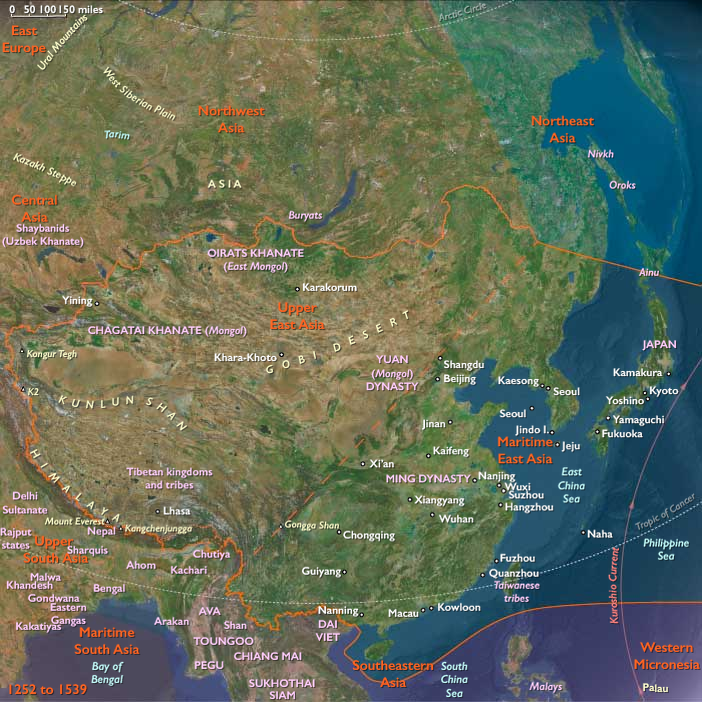
Subregions
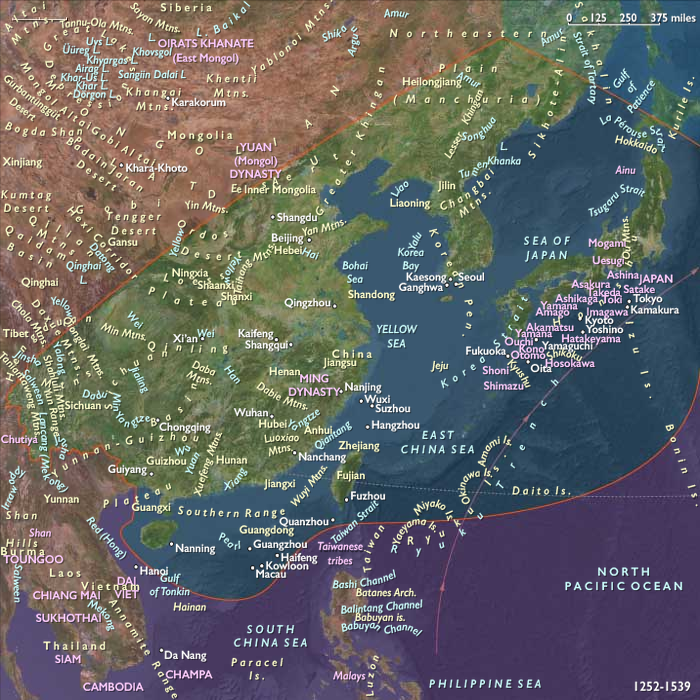
Related Events
Showing 10 events out of 42546 total
Years: 1406 - 1406
Locations
People
Groups
Commodoties
Subjects
Regions
Subregions