
Zhang Zeduan, a native of Dongwu (present …
Years: 1145 - 1145
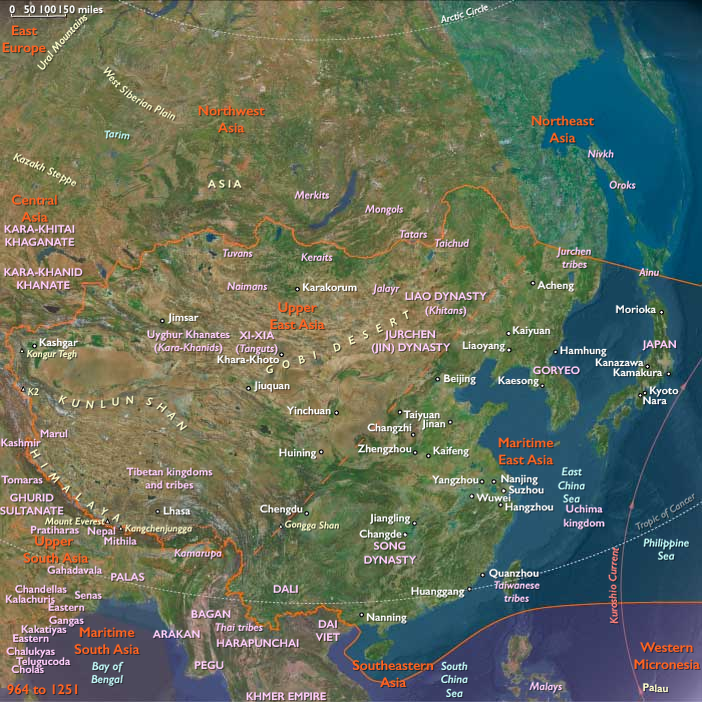
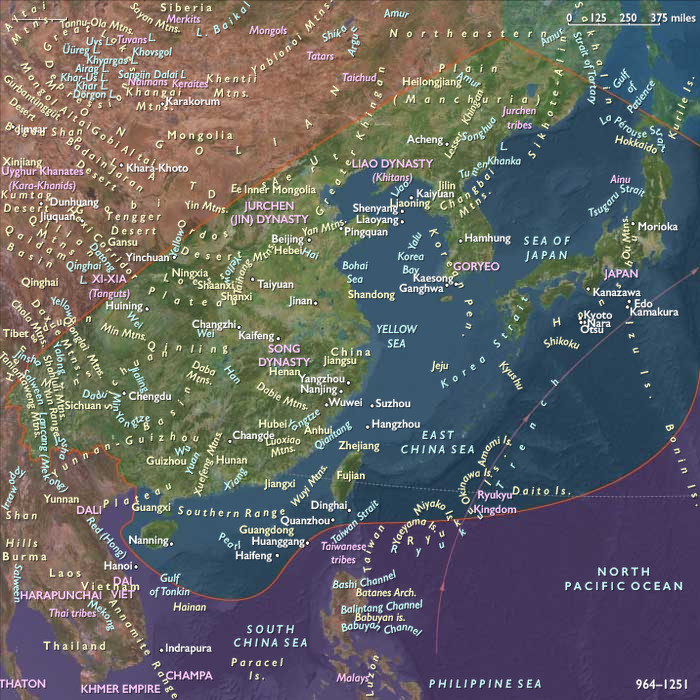
Zhang Zeduan, a native of Dongwu (present Zhucheng, Shandong), had been a court painter of the Northern Song Dynasty, and in the aftermath of that dynasty's fall, his paintings often convey criticisms of the social circumstances of the time.
Zhang’s most famous painting is Along the River During the Qingming Festival, a wide handscroll which depicts life in a city.
It reveals much about life in China during the eleventh and twelfth centuries.
Its myriad depictions of different people interacting with one another reveals the nuances of class structure and the many hardships of urban life as well.
It also displays accurate depictions of technological practices found in Song China.
For example, it depicts one river ship lowering its bipod mast before passing under the prominent bridge of the painting.
It shows ships in two major types, yet all of which have slung rudders for steering; the painting depicts freighters with narrow sterns or passenger boats and smaller craft with broad sterns, sailing upriver or docked along the banks while loading and unloading goods.
Large stern sweeps and bow sweeps can be seen on at least three of the river ships, worked by up to eight men each.
It also shows how personal gardens had begun to take root in China—in addition to the immense walled garden on the far left of the scroll, for example, one sees several private gardens with their man-made mountains and rockery (for example, the small private garden close to the city gate, squeezed between a chemist's shop and a large building selling furniture, consisting of a small pond surrounded by trees and bamboo).
The original painting is celebrated as the most famed work of art from the Song Dynasty, and will be a pride of the personal imperial collections of emperors for centuries.
Due to its high artistic reputation, it will inspire several works of art that revive and update the style of the original.
This painting will be made famous throughout China, as an emperor of the Yuan Dynasty (1279-1368) will feel compelled to write a poem in praise of the artwork.
A popular remake of the painting will be made in the eighteenth century, during the Qing Dynasty.
Locations
People
Groups
Topics
Subjects
Regions
Subregions
Related Events
Showing 10 events out of 48850 total
Years: 1145 - 1145
Locations
People
Groups
Topics
Subjects
Regions
Subregions