
Zeno finally makes peace with King Genseric …
Years: 476 - 476
November
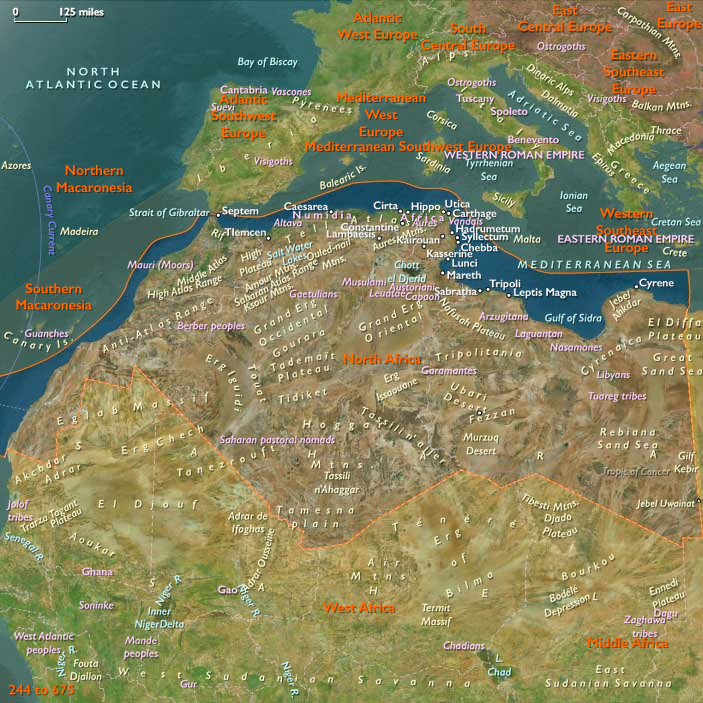
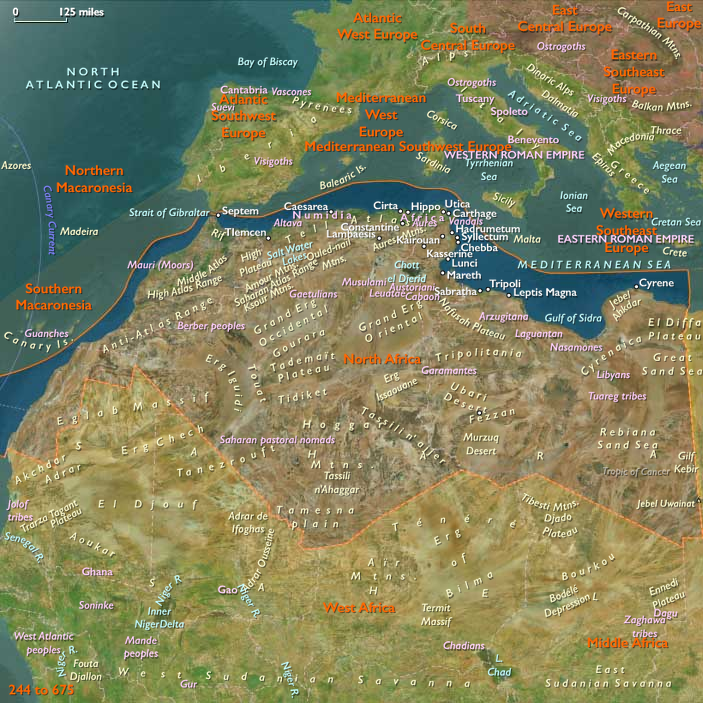
Zeno finally makes peace with King Genseric and his Vandals in 476, and officially recognizes the full extent of the Vandal Kingdom, including all of western Africa, the Balearic Islands, Corsica, Sardinia and Sicily.
Locations
People
Groups
- Sicilia (Roman province)
- Roman Empire, Western (Ravenna)
- Vandals and the Alans, Kingdom of the
- Sicily, Germanic
- Roman Empire, Eastern: Leonid dynasty
Topics
- Late Antiquity
- Migration Period
- Fall of the Western Roman Empire
- Vandal Raids on the Roman Empire
- Migration Period Pessimum
- Rome, Fall of
Commodoties
Subjects
Regions
Subregions
Related Events
Showing 10 events out of 58515 total
Years: 476 - 476
November
Locations
People
Groups
- Sicilia (Roman province)
- Roman Empire, Western (Ravenna)
- Vandals and the Alans, Kingdom of the
- Sicily, Germanic
- Roman Empire, Eastern: Leonid dynasty
Topics
- Late Antiquity
- Migration Period
- Fall of the Western Roman Empire
- Vandal Raids on the Roman Empire
- Migration Period Pessimum
- Rome, Fall of
Commodoties
Subjects
Regions
Subregions