
Filters:
The Struggle for Zeeland and the Union …
Years: 1300 - 1300
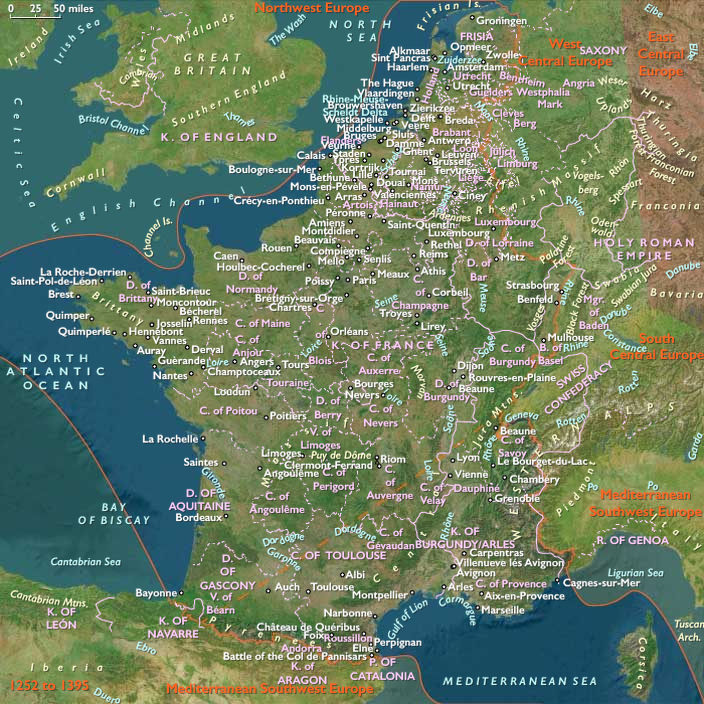
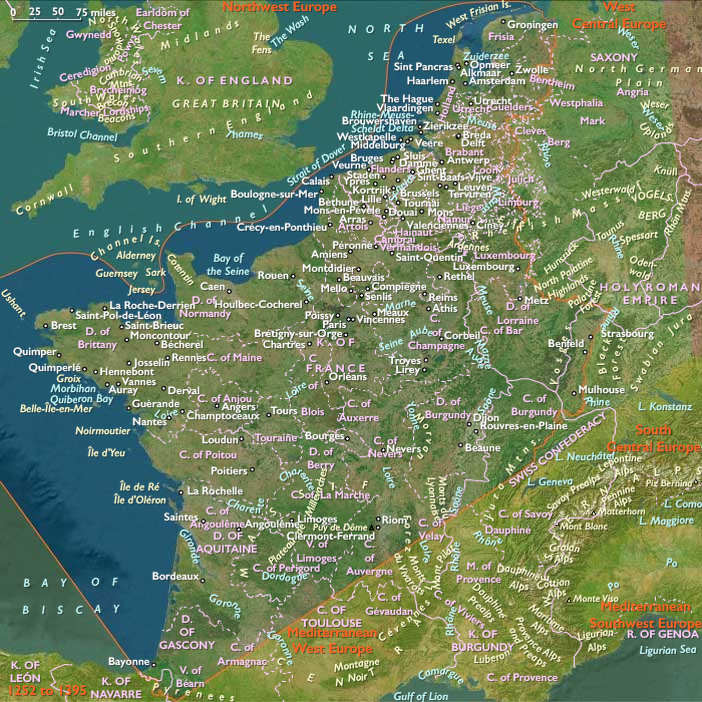
The Struggle for Zeeland and the Union of Holland and Hainaut (1296–1299)
For much of the 13th century, Zeeland remained a contested territory between the Counts of Holland and Flanders, as both sought to control its valuable trade routes and strategic coastal position.
Floris V and the Franco-Flemish Conflict in Zeeland
- Count Floris V of Holland engaged in a prolonged conflict against Flanders to assert his claim over Zeeland.
- Seeking support against Flanders, Floris aligned himself with France, as the Capetian kings sought to undermine Flanders' growing power.
- However, Floris was assassinated in 1296 in a conspiracy involving disgruntled nobles and English agents, leaving his twelve-year-old son, John I of Holland, as his successor.
The Death of John I and the Union of Holland and Hainaut
- John I of Holland ruled for only three years, dying in 1299 without an heir.
- With all his siblings having died young, the nearest heirs to Holland were his cousins from Hainaut, the sons of his great-aunt, Adelaide of Holland.
- From 1299 onward, the County of Holland entered a personal union with Hainaut, as the Avesnes family took over Holland’s rule.
John II of Hainaut and the Ongoing Avesnes-Dampierre Rivalry
- John II of Hainaut, who had ruled since 1280, inherited Holland, continuing the long-standing conflict between the House of Avesnes (Hainaut-Holland) and the House of Dampierre (Flanders).
- His primary rival remained Count Guy of Flanders, with whom he contested control over imperial Flanders(Flemish lands within the Holy Roman Empire).
- The conflict was part of the broader Franco-Flemish wars, as France backed the Avesnes faction against the independent-minded Dampierres.
Impact and Legacy
- The union of Holland and Hainaut strengthened Avesnes influence in the Low Countries, but tensions with Flanders persisted.
- Zeeland remained a disputed frontier, with both sides seeking imperial and French support to advance their claims.
- The union lasted until Hainaut ceased to be an independent county, shaping Holland’s future role in the geopolitics of the region.
The 1299 shift in Holland’s leadership reflected the broader feudal struggles in the Low Countries, as dynastic unions and territorial disputes played a decisive role in the political landscape of late medieval Europe.
Locations
People
Groups
Topics
Commodoties
Subjects
Regions
Subregions
Years: 1300 - 1300
Locations
People
Groups
Topics
Commodoties
Subjects
Regions
Subregions