
Yongle's tolerance of Chinese ideas that do …
Years: 1407 - 1407
Yongle's tolerance of Chinese ideas that do not agree with his own philosophies is well-known.
Although he favors Confucianism, he treats Daoism, Confucianism, and Buddhism equally.
Strict Confucianists consider him hypocritical, but his even-handed approach helps him win the support of the people and unify China.
His love for Chinese culture is counterbalanced by a sincere hatred for Mongolian culture, which he considers decadent.
Forbidding the use of popular Mongolian names, habits, language, and clothing, the Yongle emperor goes to great lengths to eradicate Mongolian culture from China.
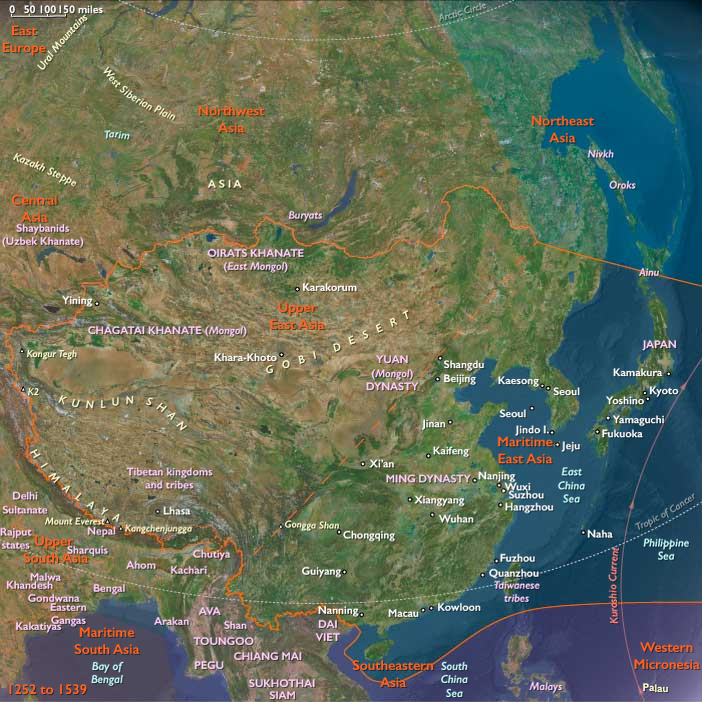
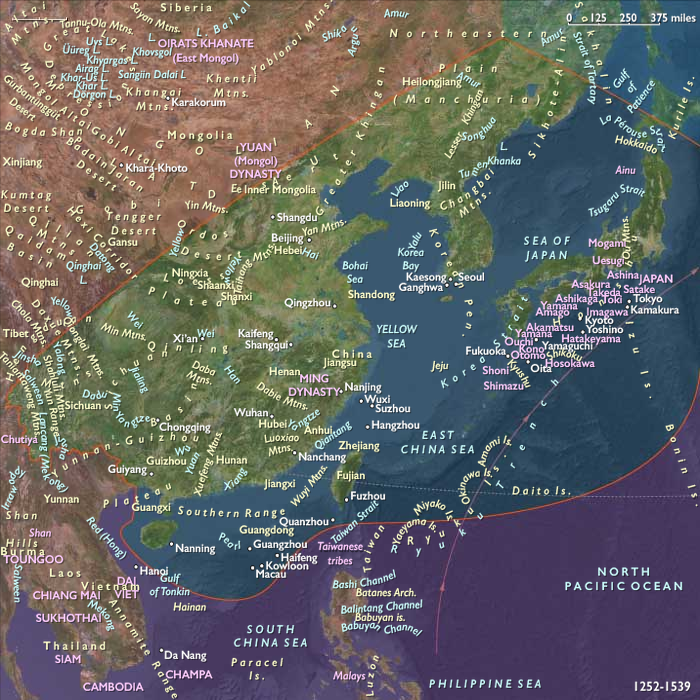
After several invitations by Yongle since 1403, the fifth Karmapa of the Karma Kagyu sect of Tibetan Buddhism, the lama Deshin Shekpa, finally visits the Ming Dynasty capital at Nanjing.
In his twenty-two day visit, he thrills the Ming court with alleged miracles that are recorded in a gigantic scroll translated into five different languages.
In a show of mystical prowess, Deshin Shekpa adds legitimacy to a questionable succession to the throne by Yongle, who had killed his nephew the Jianwen Emperor in the culmination of a civil war.
For his services to the Ming court, including his handling of the ceremonial rites of Yongle's deceased parents, Deshin Shekpa is awarded with the title Great Treasure Prince of Dharma.
Locations
People
Groups
Subjects
Regions
Subregions
Related Events
Showing 10 events out of 42521 total
Years: 1407 - 1407
Locations
People
Groups
Subjects
Regions
Subregions