
Yazid has spoken out against the "immorality" …
Years: 744 - 744
Yazid has spoken out against the "immorality" of his cousin, Caliph al-Walid, which includes discrimination on behalf of the Banu Qays Arabs against Yemenis and non-Arab Muslims.
Yazid receives further support from the Qadariya and Murji'iya (believers in human free will).
Yazid slips into Damascus and deposes Walid in a coup in spring 744, following this up with a disbursement of funds from the treasury.
His army tracks down and kills al-Walid II.
The Arabs of the region around Homs, still loyal to Walid, rise up and march on Damascus with the intention of installing as caliph a descendant of the Sufyanid branch of the Umayyad clan, Abu Muhammad al-Sufyani, but Sulayman is released from prison and defeats them.
Yazid III has received a certain reputation for piety, and may have been sympathetic to the Qadariyya.
After a mere six months into his reign, he falls ill of a brain tumor and dies on October 3 or 4, 744.
Yazid had named his brother Ibrahim as his successor.
The powerful and ambitious governor of northern Mesopotamia (Jazira), Marwan ibn Muhammad, the grandson of Marwan I, had decided to oppose Yazid III, and even though he had later given allegiance to Yazid, on the early death of that caliph, Marwan had continued his own ambitions.
Ibrahim only rules for a short time in 744 before he abdicates, and goes into hiding out of fear of his political opponents.
Initially, Marwan does not claim the caliphate for himself, but proclaims his intention to restore the throne to the two imprisoned sons of Walid II.
Marwan's advance is met south of Baalbek by Sulayman with the Dhakwāniyya, his personal army, 5,000 or more strong, maintained from his own funds and estates but recruited mostly from the mawālī (non-Arab Muslims).
In the ensuing battle, Marwan is victorious.
Sulayman retreats to Damascus, where he orders the execution of Walid II's sons, and then flees, together with Ibrahim, to Palmyra.
Marwan, supported mostly by the Qasi of the Jazira and northern Syria, leads an army from the northern frontier and enters Damascus in December 744, where he is proclaimed caliph.
Soon, Ibrahim and Sulayman come before Marwan and surrender themselves.
Ibrahim, having requested and been granted Marwan's assurance of personal safety, travels with Marwan to former Caliph Hisham's residence at Rusafah in Syria.
Marwan immediately moves the capital north to …
Locations
People
- Hisham ibn Abd al-Malik
- Ibrahim ibn Al-Walid
- Marwan ibn Muhammad ibn Marwan or Marwan II
- Sulayman ibn Hisham
- Walid ibn Yazid
- Yazid III
- Zayd ibn Ali
- as-Saffah
Groups
- Arab people
- Persian people
- Banū Hāshim (Arabic tribe)
- Quraysh (Arabic tribe)
- Islam
- Muslims, Sunni
- Muslims, Kharijite
- Umayyad Caliphate (Damascus)
- Muslims, Shi'a
Topics
Commodoties
Subjects
Regions
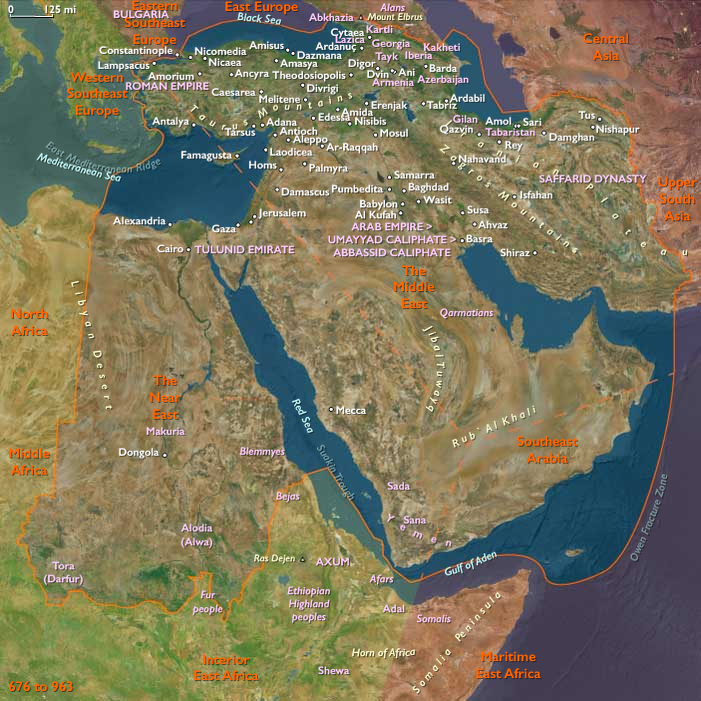
Subregions
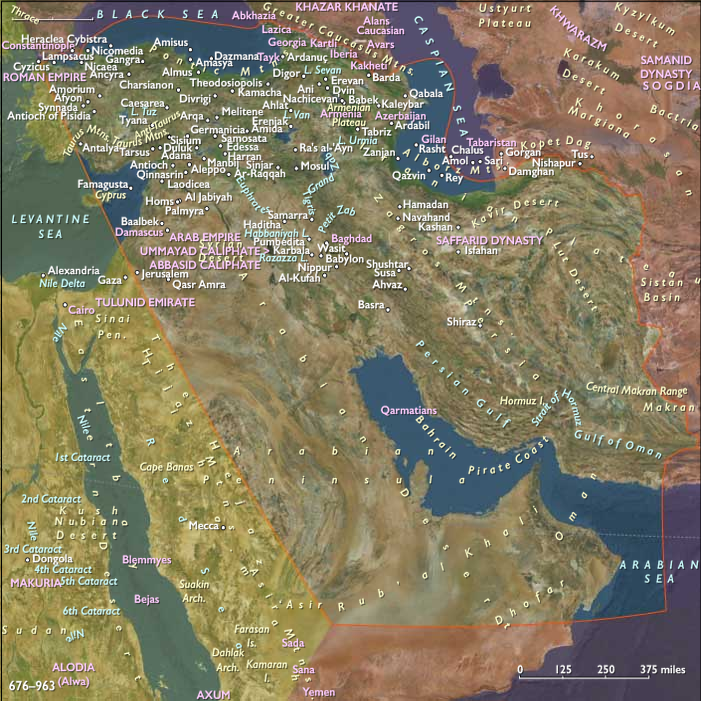
Years: 744 - 744
Locations
People
- Hisham ibn Abd al-Malik
- Ibrahim ibn Al-Walid
- Marwan ibn Muhammad ibn Marwan or Marwan II
- Sulayman ibn Hisham
- Walid ibn Yazid
- Yazid III
- Zayd ibn Ali
- as-Saffah
Groups
- Arab people
- Persian people
- Banū Hāshim (Arabic tribe)
- Quraysh (Arabic tribe)
- Islam
- Muslims, Sunni
- Muslims, Kharijite
- Umayyad Caliphate (Damascus)
- Muslims, Shi'a
Topics
Commodoties
Subjects
Regions
Subregions