The Bulgar tribes consolidate under Khan Kurt, …
Years: 628 - 639
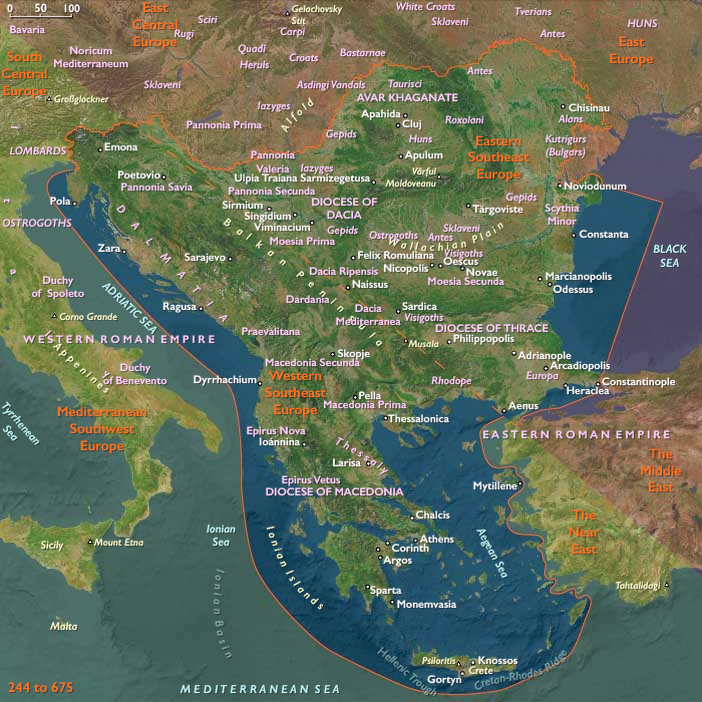
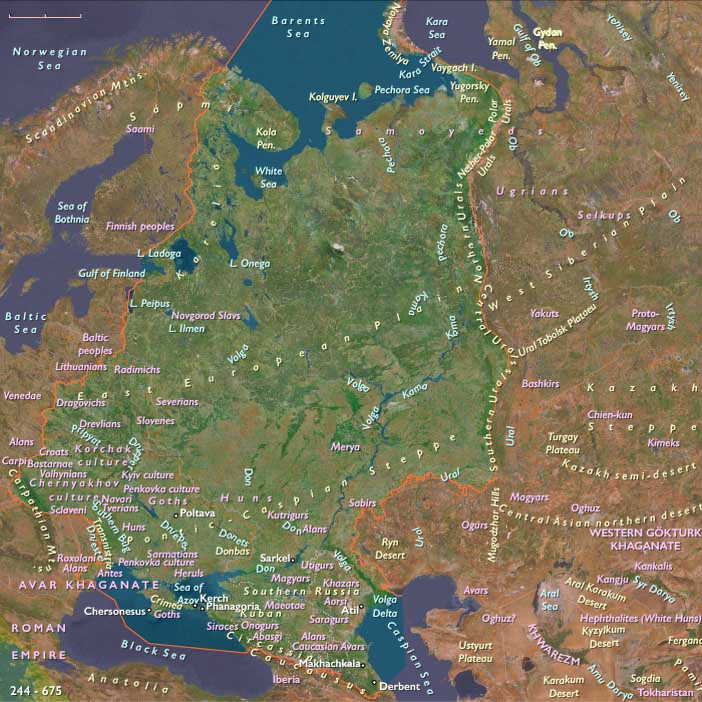
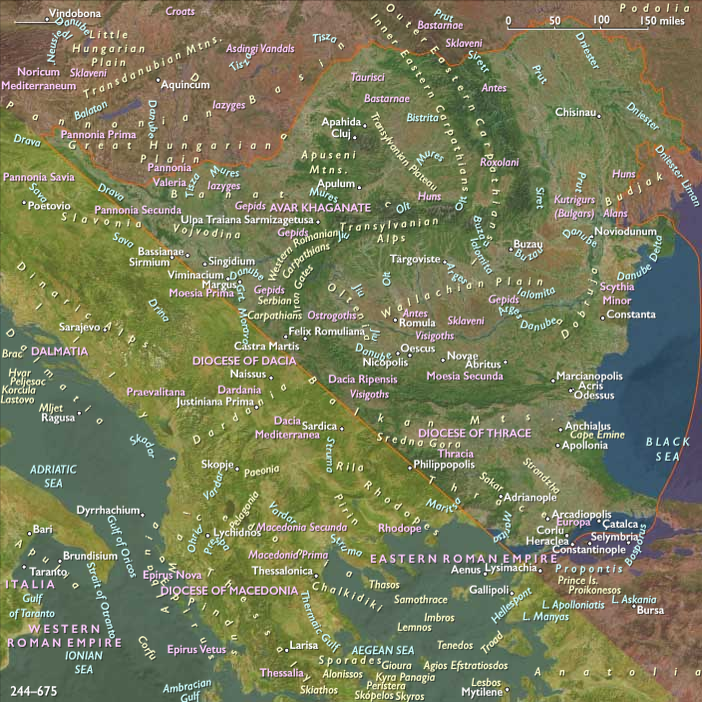
The Bulgar tribes consolidate under Khan Kurt, or Kubrat, after the defeat of the Avars by Heraclius.
People
Groups
Topics
Subjects
Regions
Subregions
Related Events
Filter results
Showing 4 events out of 4 total
The Regency Struggle and the Afonsine Ordinances (1433–1446)
Following the death of King João I of Portugal in 1433, the crown passed to his eldest son, Duarte I, whose brief five-year reign (1433–1438) was cut short by the plague. His death left the kingdom in political uncertainty, as his heir, Afonso V, was only six years old.
Duarte I’s Reforms and the Afonsine Ordinances
- Before his death, Duarte had convened a Cortes to begin the compilation of Portuguese royal law.
- This legal work would not be completed until the reign of Afonso V, when it was published as the Afonsine Ordinances (Ordenações Afonsinas).
- Duarte also declared that the land grants given by his father João I must be confirmed at the start of each reign, ensuring royal authority over noble holdings.
The Struggle for the Regency (1438–1446)
Upon Duarte’s death in 1438, his widow, Queen Eleanor of Aragon, assumed the regency, but she faced strong opposition from the nobility and the populace, who refused to accept a woman as sole ruler.
The Rival Factions
-
Infante Pedro, Duke of Coimbra (Duarte’s brother)
- Popular in Lisbon and supported by the merchants and middle class.
- A skilled administrator and advocate for strong royal authority over the nobility.
- Sought to strengthen his influence by marrying his daughter Isabel to the young King Afonso V.
-
Afonso, Duke of Bragança (João I’s eldest illegitimate son)
- Leader of the old nobility, including those who had gained extensive land grants under João I.
- Opposed Pedro’s regency, as he feared it would curb noble privileges.
- Attempted to secure power by marrying his own daughter to Afonso V.
Pedro’s Victory and Regency (1439–1448)
- The Lisbon populace strongly favored Infante Pedro, and he was officially recognized as regent after convening the Cortes of Évora in 1439.
- To secure his position, he arranged for his daughter, Isabel of Coimbra, to marry Afonso V once the young king reached his majority.
- When Afonso V turned 14 in 1446, he upheld the marriage agreement and requested Pedro to continue governing.
Aftermath and Future Conflicts
- Although Pedro remained in power, tensions with Afonso, Duke of Bragança, did not subside.
- When Afonso V fully assumed power in 1448, Bragança’s faction maneuvered to have Pedro removed.
- This power struggle would ultimately lead to the Battle of Alfarrobeira in 1449, where Pedro was killed, marking the triumph of the nobility over royal centralization.
The Afonsine Ordinances, the Lisbon merchants’ support for Pedro, and the ducal rivalry between Pedro and Bragança all shaped the political structure of Portugal for decades, reinforcing tensions between royal authority and aristocratic power.
The Battle of Alfarrobeira (1449): The Fall of Infante Pedro and the Rise of the House of Bragança
Following Afonso V’s assumption of full power in 1448, the Duke of Bragança successfully turned the young king against his uncle, Infante Pedro, Duke of Coimbra, claiming that Pedro was plotting to seize the throne. This manipulation led to Pedro’s dismissal from the regency and his exile to his estates.
Pedro’s Attempt to Regain Power
- As rumors of a plot against him spread, Pedro decided to resist rather than submit.
- He marched on Lisbon, where he enjoyed strong support from the merchants and populace.
- Afonso V, under the influence of the House of Bragança, declared Pedro a traitor and gathered an army to confront him.
The Battle of Alfarrobeira (May 24, 1449)
- Pedro’s army met the royalist forces, led by Afonso V and the Duke of Bragança, near Alfarrobeira, north of Lisbon.
- The battle was swift and decisive—Pedro was killed on the field, and his forces were crushed.
- The defeat eliminated the greatest advocate for strong royal authority, leaving Afonso V heavily influenced by the Bragança family.
Consequences of Pedro’s Defeat
-
The Rise of the House of Bragança
- The House of Bragança emerged as the dominant noble house in Portugal, vastly increasing its land, wealth, and political influence.
- The Braganças became "a state within a state", controlling vast territories and challenging the power of the monarchy.
-
Afonso V Becomes a Puppet of the Nobility
- Without Pedro’s guidance, the pliable Afonso V fell under the control of the nobility, particularly the Braganças.
- His reign was characterized by military adventures in Morocco and Castile, often influenced by aristocratic ambitions.
-
Weakening of Royal Centralization
- Pedro’s defeat marked a victory for the aristocracy over royal authority.
- The monarchy remained dependent on noble factions until later kings, such as John II (r. 1481–1495), took steps to curb noble power.
Legacy: The Path to Future Conflict
- The Battle of Alfarrobeira (1449) ensured the dominance of the House of Bragança, but it also set the stage for future confrontations between the Crown and the nobility.
- By the time John II ascended the throne in 1481, he saw the Braganças as a direct threat to the monarchy and took drastic measures to reduce their influence, culminating in the execution of the 3rd Duke of Bragança in 1483.
Thus, the Battle of Alfarrobeira was a turning point in Portuguese history, reinforcing aristocratic power at the expense of the Crown, but also laying the groundwork for future monarchical reforms and conflicts.
The Death of King Edward and the Regency Struggle (1438–1448)
King Edward of Portugal (Duarte I, r. 1433–1438), a scholarly and deeply moral ruler, earned the title "the philosopher-king" and authored O Leal Conselheiro ("The Loyal Counselor"), a reflection on ethics and governance. His reign, however, was overshadowed by the disastrous 1437 Tangier expedition, which led to the capture of his youngest brother, Prince Fernando ("the Holy Prince").
Grief-stricken and weakened by the plague, Edward died in Tomar on September 9, 1438, before his brother Henry the Navigator could return from North Africa. His six-year-old son, Afonso V, became king—the third consecutive ruler from the House of Avis, also known as the Joanina (Johannine) dynasty.
The Regency Crisis: Pedro vs. Leonor (1438–1439)
Since Afonso V was only six, a regent was needed, and two rival factions emerged:
-
Infante Pedro, Duke of Coimbra
- Second son of King John I, experienced in governance.
- Supported by the Portuguese nobility and urban elites.
- Advocated royal centralization and continued overseas expansion.
-
Queen Mother Leonor of Aragon
- Opposed Pedro’s regency, fearing he would sideline her influence.
- Sought to govern herself or install Henry the Navigator as regent.
- Deeply unpopular in Lisbon, where the people distrusted foreign influence.
Henry the Navigator’s Neutral Role
- Henry had no desire to rule and sought to avoid the family conflict.
- He attempted to mediate peace between Pedro and Leonor, but failed.
- Instead, he supported Pedro, recognizing his governing abilities.
Resolution of the Crisis (1439)
- The Lisbon populace opposed Leonor, favoring Pedro as regent.
- The Cortes of 1439 formally appointed Pedro as Regent of Portugal.
- Queen Leonor, facing overwhelming opposition, left the country, easing tensions.
Pedro’s Regency (1439–1448)
- As regent, Pedro focused on:
- Strengthening royal authority over the aristocracy.
- Protecting Portuguese maritime expansion.
- Educating young Afonso V, preparing him for kingship.
However, his regency would ultimately lead to conflict with the nobility, particularly with the House of Bragança, culminating in the Battle of Alfarrobeira (1449).
Thus, the death of Edward in 1438 led to a tense power struggle, but also allowed Prince Henry the Navigator to return to Sagres and focus on exploration, shaping Portugal’s future maritime dominance.

Afonso, Count of Barcelos and the First Duke of Bragança: Founder of a Dynasty
Afonso, Count of Barcelos (later 1st Duke of Bragança) was a key figure in 15th-century Portugal, playing a central role in aristocratic politics and establishing the House of Bragança, which would become Portugal’s most powerful noble family.
Birth and Early Life
- Born in Veiros, Estremoz, Alentejo, Afonso was a natural son of King John I of Portugal and Inês Pires Esteves.
- Despite his illegitimacy, Afonso was raised in the royal court and became an influential noble.
- He married Beatriz Pereira de Alvim, daughter of Nuno Álvares Pereira, Portugal’s greatest military leader and its wealthiest landowner, greatly increasing his wealth and status.
Military and Political Career
- Afonso was present at the 1415 conquest of Ceuta, a pivotal event in Portugal’s overseas expansion.
- As a cultivated and well-traveled noble, he gained considerable influence at court.
- When his half-brother, King Edward I (Duarte), died in 1438, a political struggle emerged over the regency of the young Afonso V:
- The Queen Mother, Eleonor of Aragon, was initially chosen as regent, but she was deeply unpopular due to her Aragonese origins.
- The Portuguese Cortes, convened by Afonso’s half-brother John, Lord of Reguengos de Monsaraz, selected Infante Peter, Duke of Coimbra, as regent, a choice favored by the burghers and lower nobility.
- However, Afonso and his aristocratic allies preferred Eleonor, fearing that Peter’s reformist policies would curtail noble privileges.
The Struggle for Power and the Creation of the Duchy of Bragança
- Afonso maneuvered to gain influence over Afonso V, competing with Peter of Coimbra for the young king’s favor.
- In 1443, in a gesture of reconciliation, Peter granted Afonso the title of Duke of Bragança, making him the first duke in Portugal.
- This new duchy, along with the Duchy of Coimbra (Peter’s) and the Duchy of Viseu (Henry’s), became one of Portugal’s first three noble duchies.
The Rise of the House of Bragança
- The House of Bragança quickly became the most powerful noble family in Portugal, accumulating immense landholdings and wealth.
- Over time, the Braganças became so powerful that they often rivaled the monarchy itself.
- In 1640, the 8th Duke of Bragança, João IV, led the Portuguese Restoration War against Spain and became King of Portugal, establishing the Bragança dynasty, which ruled Portugal until 1910.
Legacy
- Afonso’s strategic marriage and political maneuvering made the House of Bragança the most influential aristocratic family in Portugal.
- His descendants would challenge kings, amass vast fortunes, and eventually ascend to the throne.
- His creation as Duke of Bragança in 1443 shaped Portuguese politics for centuries, reinforcing the balance of power between monarchy and nobility.
Thus, Afonso’s legacy as the founder of the House of Bragança ensured that his lineage would play a dominant role in Portuguese history, ultimately ruling the nation for nearly three centuries.