
Written records found at Anyang confirmed its …
Years: 1053BCE - 910BCE
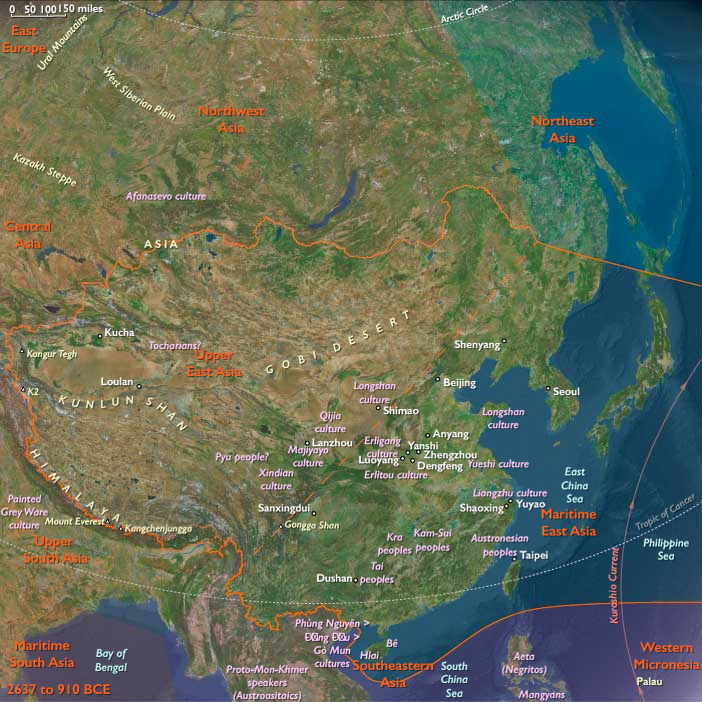
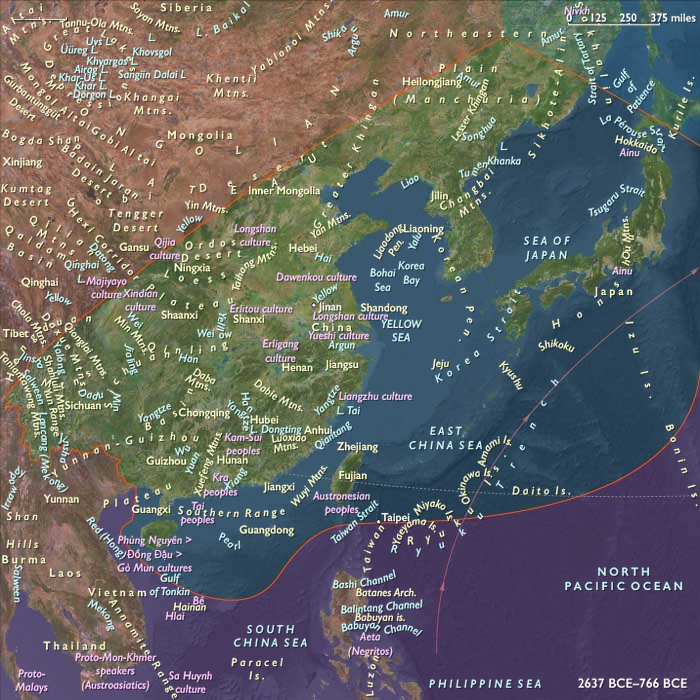
Written records found at Anyang confirmed its existence but Western scholars are often hesitant to associate settlements contemporaneous with the Anyang settlement with the Shang dynasty.
For example, archaeological findings at Sanxingdui, a mysterious civilization in southern China, which was in the kingdom of Shu during the period of the Shang Dynasty, suggest a technologically advanced civilization culturally unlike Anyang.
The evidence is inconclusive in proving how far the Shang realm extended from Anyang.
The leading hypothesis is that Anyang, ruled by the same Shang in the official history, coexisted and traded with numerous other culturally diverse settlements in the area that is now referred to as China proper.
The Sanxingdui culture has a well developed bronze casting culture that permits the manufacture of the world's oldest life-size standing human statue (two hundred and sixty centimeters high, one hundred and eighty kilograms), and a bronze tree with birds, flowers, and ornaments (three hundred and ninety-six centimeters), which some have identified as renderings of the fusang tree of Chinese mythology.
Dozens of large bronze masks and heads (at least six with gold foil masks originally attached) represent angular human features, exaggerated almond-shaped eyes, some with protruding pupils, and large upper ears.
The discovery at Sanxingdui, as well as other discoveries such as the Xingan tombs in Jiangxi, challenges the traditional narrative of Chinese civilization spreading from the central plain of the Yellow River.
The Sanxingdui culture ends, possibly either as a result of natural disasters (evidence of massive flooding will be found in the early twenty-first century), or invasion by a different culture.
Locations
Groups
Topics
Subjects
Regions
Subregions
Years: 1053BCE - 910BCE
Locations
Groups
Topics
Subjects
Regions
Subregions