
Work begins in 1578 on the Pont …
Years: 1578 - 1578
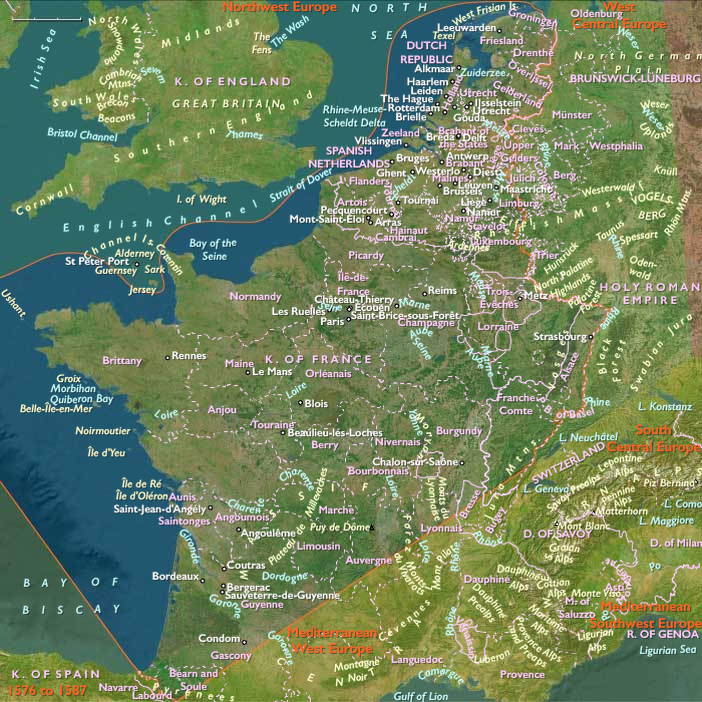
Work begins in 1578 on the Pont Neuf across the Seine River via the Île de la Cité in Paris, designed by Baptiste Du Cerceau and Pierre des Illes, who may have made use of an earlier design by Guillaume Marchand.
Pierre Lescot, one of the great French architects of the mid-sixteenth century, has contributed a decorative style that has provided the foundation for the classical tradition of French architecture.
Lescot, who comes from a wealthy family of lawyers, had in his youth studied mathematics, architecture, and painting.
There is no evidence that he visited Italy, although much of his design has been classical; it appears that he had acquired his knowledge of architecture from illustrated books and from Roman ruins in France.
Lescot's most important contribution to architecture has been his rebuilding of the Louvre, which he had begun in 1546 as a commission from Francis I.
The style and design of Lescot's work on the Louvre reflect a revolution in French architecture marked by the influence of classical elements.
His work on the facade has combined traditional French elements and classical features to create a unique style of French classicism.
Lescot's other work includes the Hôtel Carnavalet (1545), which still survives in part; a screen at Saint-Germain-l'Auxerrois (1554); the Fontaine des Innocents (1547–49); and the château of Vallery.
Unfortunately, none of these works has survived intact.
Lescot dies in Paris in 1578.
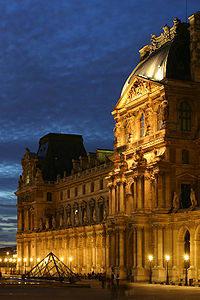
The Louvre palace (Richelieu wing) (Photo by Gloumouth1, 2005)
Locations
People
Groups
Topics
Subjects
Regions

Subregions
Related Events
Showing 10 events out of 35063 total
Years: 1578 - 1578
The Louvre palace (Richelieu wing) (Photo by Gloumouth1, 2005)
Locations
People
Groups
Topics
Subjects
Regions
Subregions