
Wladyslaw I Herman, shortly after his ascension, …
Years: 1089 - 1089
Wladyslaw I Herman, shortly after his ascension, had been forced by the barons to give up the de facto reins of government to Count Palatine Sieciech.
This turn of events was likely due to the fact that Herman owed the throne to the barons, the most powerful of whom is Sieciech.
In 1089, Wladyslaw I Herman marries Judith of Swabia, who is renamed Sophia in order to distinguish herself from Wladyslaw I's first wife.
Judith of Swabia is a daughter of Emperor Henry III and widow of Solomon of Hungary.
Through this marriage, Boleslaw gains three or four half-sisters, and as a consequence he remains the only legitimate son and heir.
In all likelihood, it is this situation that precipitates the young prince Mieszko’s demise in 1089.
It is believed that Judith of Swabia was actively aiding Sieciech in his schemes to take over the country and that she was a mistress of the Count Palatine; the death of Mieszko Boleslawowic under mysterious circumstances is, in all probability, caused by orders of the Count Palatine and Judith.
In the same year, Wladyslaw I Herman’s first-born son Zbigniew had been sent out of the country to a monastery in Quedlinburg, Saxony.
This suggests that Wladyslaw I Herman intended to be rid of Zbigniew by making him a monk, and therefore depriving him of any chance of succession.
With the help of Sieciech, Judith convinces her husband to postpone the return of Zbigniew, who seems to have been a strong candidate to the succession despite his illegitimacy.
This eliminates two pretenders to the Polish throne, securing young Boleslaw’s inheritance as well as diminishing the growing opposition to Wladyslaw I Herman among the nobility.
Locations
People
- Boleslaw III Wrymouth
- Jaromír
- Judith of Swabia
- Ladislaus I of Hungary
- Mieszko Bolesławowic
- Sieciech
- Vratislaus II of Bohemia
- Wladyslaw I Herman
Groups
- Hungarian people
- Slavs, West
- Benedictines, or Order of St. Benedict
- Kievan Rus', or Kiev, Great Principality of
- Poles (West Slavs)
- Hungary, Kingdom of
- Poland of the first Piasts, Kingdom of
- Christians, Roman Catholic
- Bohemia, Duchy of
Commodoties
Subjects
Regions
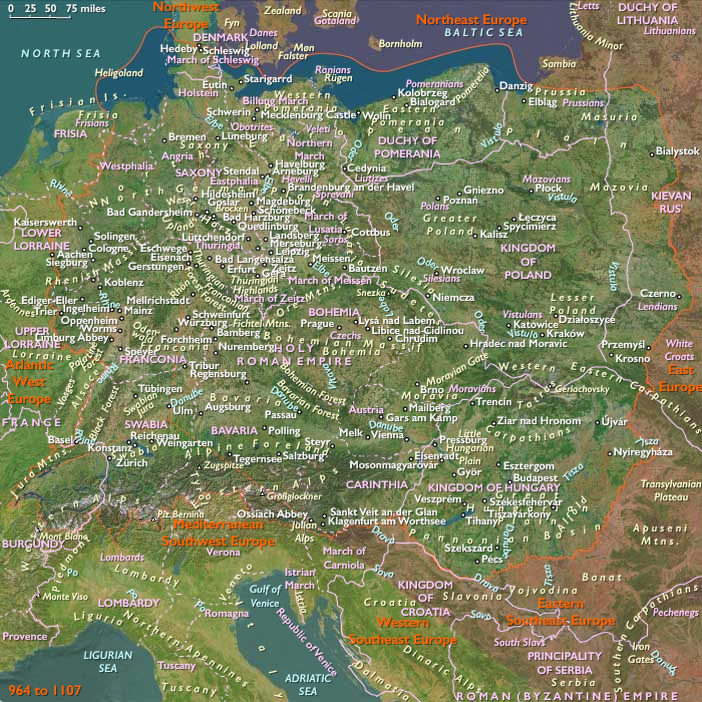
Subregions
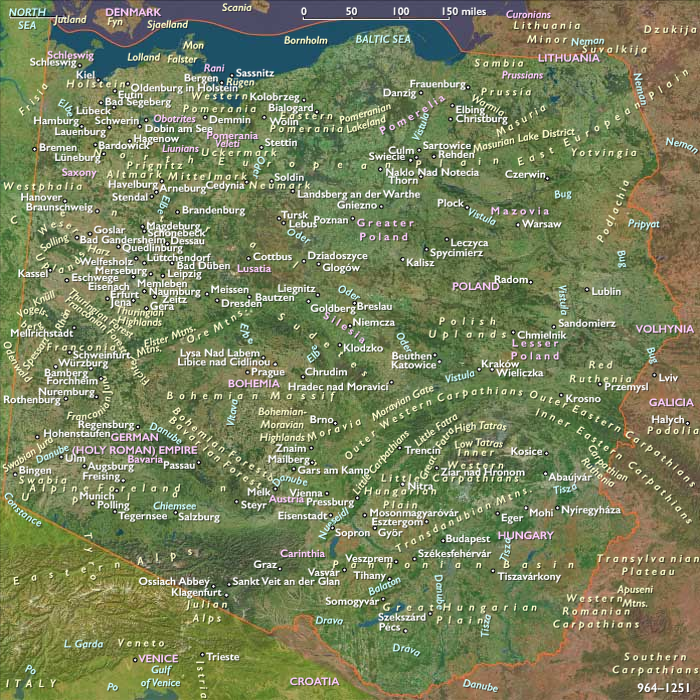
Years: 1089 - 1089
Locations
People
- Boleslaw III Wrymouth
- Jaromír
- Judith of Swabia
- Ladislaus I of Hungary
- Mieszko Bolesławowic
- Sieciech
- Vratislaus II of Bohemia
- Wladyslaw I Herman
Groups
- Hungarian people
- Slavs, West
- Benedictines, or Order of St. Benedict
- Kievan Rus', or Kiev, Great Principality of
- Poles (West Slavs)
- Hungary, Kingdom of
- Poland of the first Piasts, Kingdom of
- Christians, Roman Catholic
- Bohemia, Duchy of
Commodoties
Subjects
Regions
Subregions