
Wladyslaw Herman, as the second son, was …
Years: 1080 - 1080
Wladyslaw Herman, as the second son, was not destined for the Polish throne.
However, due to the flight from Poland of his older brother Boleslaw II the Bold in 1079, he had been elevated to the rank of Duke of Poland.
Opinions vary on whether Wladyslaw played an active role in the plot to depose his brother or whether he was handed the authority simply because he was the most proper person, being the next in line in the absence of the king and his son Mieszko Boleslawowic.
In order to improve the relations between Poland and Bohemia, Wladyslaw marries Judith, the daughter of the Duke (and first King from 1085) Vratislaus II, in 1080.
After this, the foreign policy of the Duke will gravitate strongly towards appeasement of the Holy Roman Empire.
Locations
People
- Boleslaw II the Generous
- Henry IV, Holy Roman Emperor
- Ladislaus I of Hungary
- Pope Gregory VII
- Vladimir II Monomakh
- Vratislaus II of Bohemia
- Wladyslaw I Herman
Groups
- Saxons
- Germans
- Hungarian people
- Slavs, East
- Slavs, West
- Saxony, Duchy of
- Rus' people
- Bohemia, Duchy of
- Kievan Rus', or Kiev, Great Principality of
- German, or Ottonian (Roman) Empire
- Hungary, Kingdom of
- Poland of the first Piasts, Kingdom of
Topics
Commodoties
Subjects
Regions
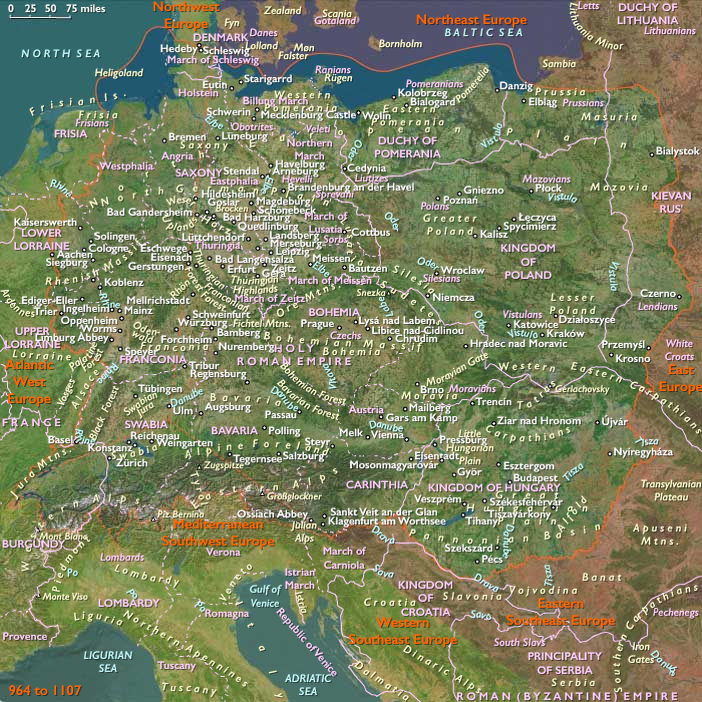
Subregions
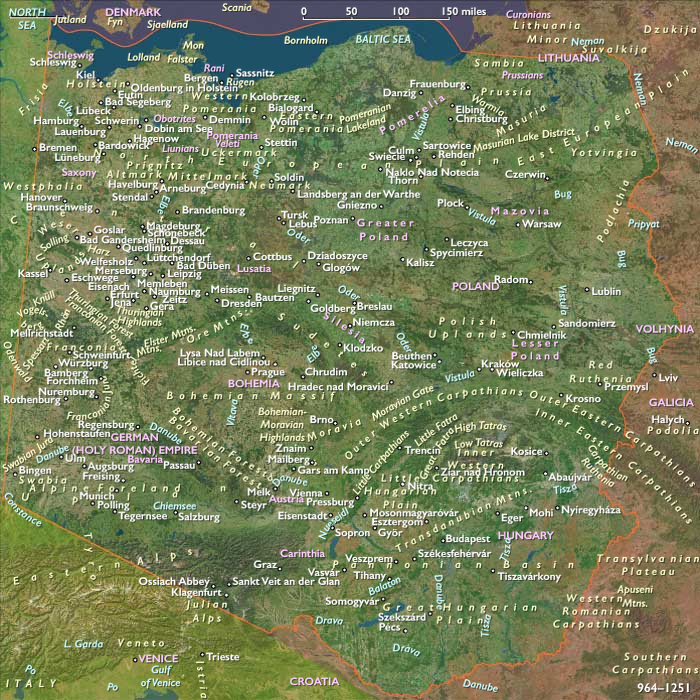
Related Events
Showing 10 events out of 50559 total
Years: 1080 - 1080
Locations
People
- Boleslaw II the Generous
- Henry IV, Holy Roman Emperor
- Ladislaus I of Hungary
- Pope Gregory VII
- Vladimir II Monomakh
- Vratislaus II of Bohemia
- Wladyslaw I Herman
Groups
- Saxons
- Germans
- Hungarian people
- Slavs, East
- Slavs, West
- Saxony, Duchy of
- Rus' people
- Bohemia, Duchy of
- Kievan Rus', or Kiev, Great Principality of
- German, or Ottonian (Roman) Empire
- Hungary, Kingdom of
- Poland of the first Piasts, Kingdom of
Topics
Commodoties
Subjects
Regions
Subregions