
Cranial capacity had again doubled within the …
Years: 609165BCE - 360334BCE
Cranial capacity had again doubled within the Homo genus by six hundred thousand years ago, from H. habilis to an archaic Homo species called Homo heidelbergensis, the second human wave to be pumped from Africa into the Middle East and Western Europe.
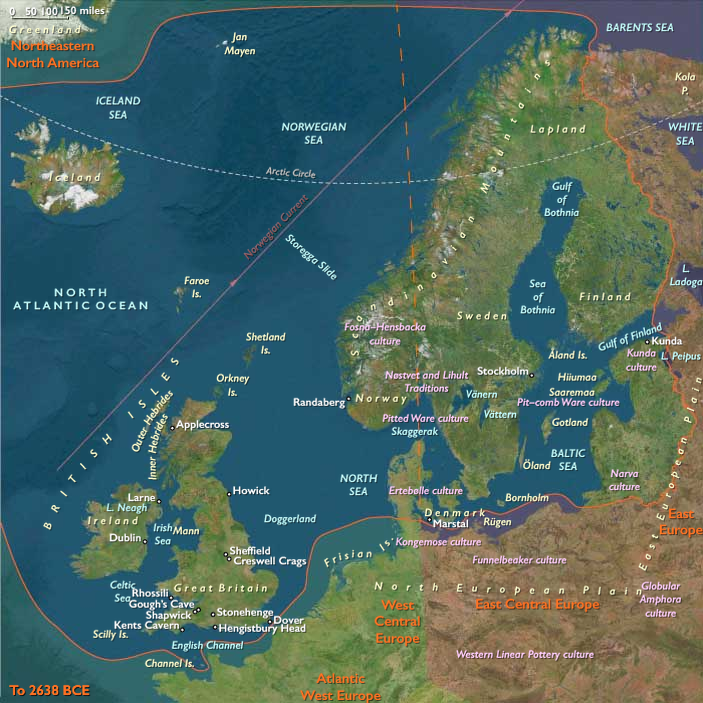
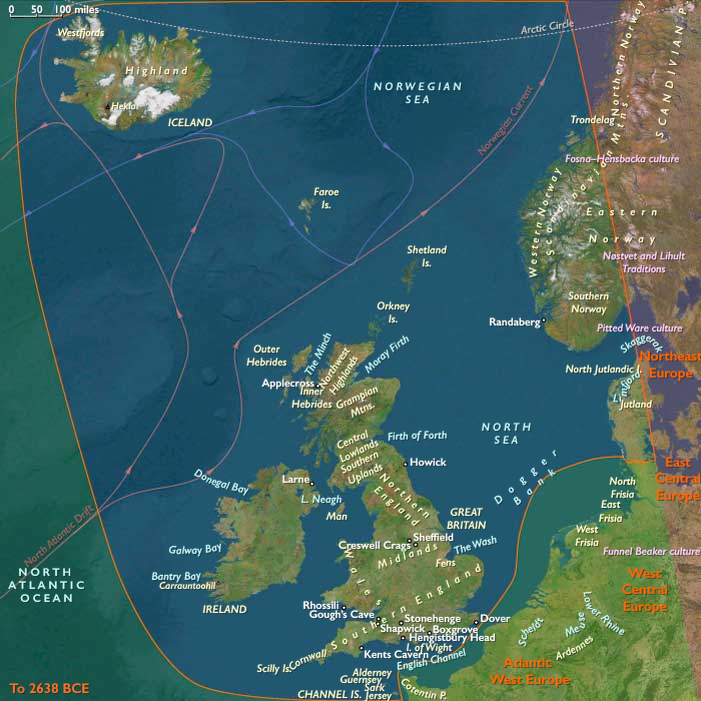
Sites such as Boxgrove in Sussex illustrate the later arrival in the archaeological record of heidelbergensis around five hundred thousand years ago.
The cranial capacity of H. heidelbergensis overlaps with the range found in modern humans; these early peoples make Acheulean flint tools (hand axes) and hunt the large native mammals of the period.
They are thought to have driven elephants, rhinoceroses, and hippopotamuses over the tops of cliffs or into bogs to kill them more easily.
Up until the 1970s, these kill sites, often at waterholes where animals would gather to drink, were interpreted as being where Acheulean tool users killed game, butchered their carcasses, and then discarded the tools they had used.
Since the advent of zooarchaeology, which has placed greater emphasis on studying animal bones from archaeological sites, this view has changed.
Many of the animals at these kill sites have been found to have been killed by other predator animals, so it is likely that humans of the period supplemented hunting with scavenging from already dead animals.
The extreme cold of the Anglian Stage, from four hundred and seventy-eight thousand to four hundred and twenty-four thousand years ago, is likely to have driven humans out of Britain altogether and the region will apparently be unoccupied until the ice recedes during the Hoxnian Stage.
Locations
Groups
Topics
Commodoties
Subjects
Regions
Subregions
Years: 609165BCE - 360334BCE
Locations
Groups
Topics
Commodoties
Subjects
Regions
Subregions