
The Catholic reconquest of Germany had resumed …
Years: 1629 - 1629
The Catholic reconquest of Germany had resumed in the 1620s with the destruction of Protestantism in Bohemia and the Palatinate.
With Holy Roman Emperor Ferdinand II’s Edict of Restitution in 1629, its basis seems complete.
These same years have seen, in central Europe at least, the worst of all witch-persecutions, the climax of the European craze.
Many of the witch-trials of the 1620s have multiplied with the Catholic reconquest.
In some areas, the lord or bishop is the instigator, in others the Jesuits.
Sometimes local witch-committees are set up to further the work.
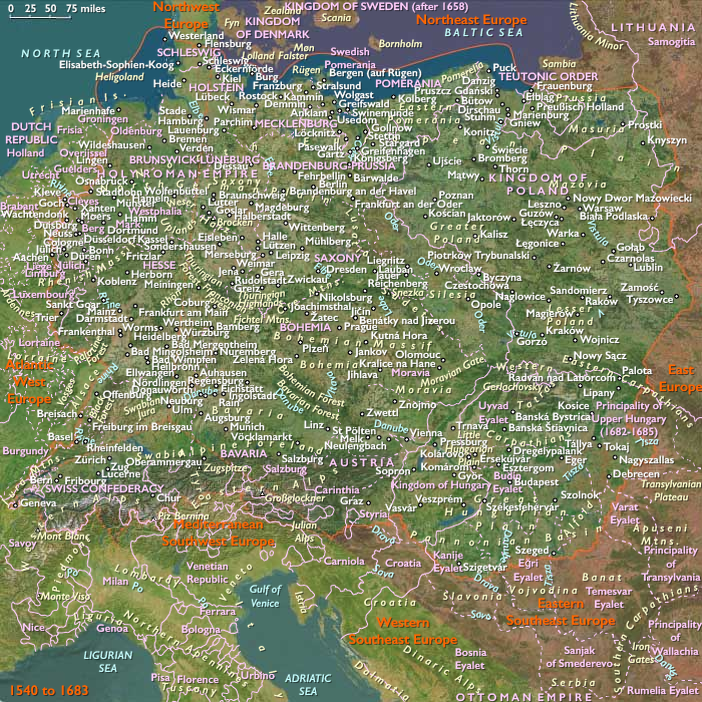
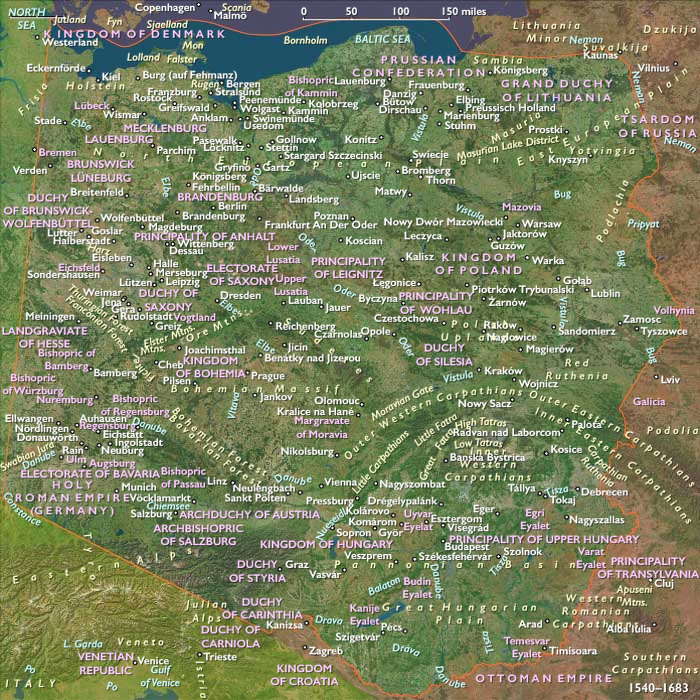
The first persecutions for witchcraft in Würzburg had started in 1616-1617 in the territory around the city with the consent of Julius Echter von Mespelbrunn, Prince bishop of Würzburg, and, following an isolated witch trial in 1625, gives way to the great hysteria beginning in 1626.
As so often with the mass trials of sorcery, the victims soon count people from all society; also nobles, councilmen and mayors.
This is during a witch hysteria that causes a series of witch trials in South Germany, such as in Mainz, Bamberg, ...
Locations
People
Groups
- Eichstätt, Prince-Bishopric of
- Mainz, Electoral Archbishopric of
- Bamberg, Prince-Bishopric of
- Christians, Roman Catholic
- Würzburg, Bishopric of
- Trier, Electoral Archbishop of
- Cologne, Electorate of
- Protestantism
- Jesuits, or Order of the Society of Jesus
- Franche-Comté (province of the Spanish Empire)
- Catholic League, the (German)
- Habsburg Monarchy, or Empire
- Baden-Baden, Margravate of
Topics
- Witch trials in the Early Modern period
- Protestant Reformation
- Counter-Reformation (also Catholic Reformation or Catholic Revival)
- Fulda witch trial
Subjects
Regions
Subregions
Related Events
Showing 10 events out of 32689 total
Years: 1629 - 1629
Locations
People
Groups
- Eichstätt, Prince-Bishopric of
- Mainz, Electoral Archbishopric of
- Bamberg, Prince-Bishopric of
- Christians, Roman Catholic
- Würzburg, Bishopric of
- Trier, Electoral Archbishop of
- Cologne, Electorate of
- Protestantism
- Jesuits, or Order of the Society of Jesus
- Franche-Comté (province of the Spanish Empire)
- Catholic League, the (German)
- Habsburg Monarchy, or Empire
- Baden-Baden, Margravate of
Topics
- Witch trials in the Early Modern period
- Protestant Reformation
- Counter-Reformation (also Catholic Reformation or Catholic Revival)
- Fulda witch trial
Subjects
Regions
Subregions