
With the death of the childless Landgrave …
Years: 1247 - 1247
February
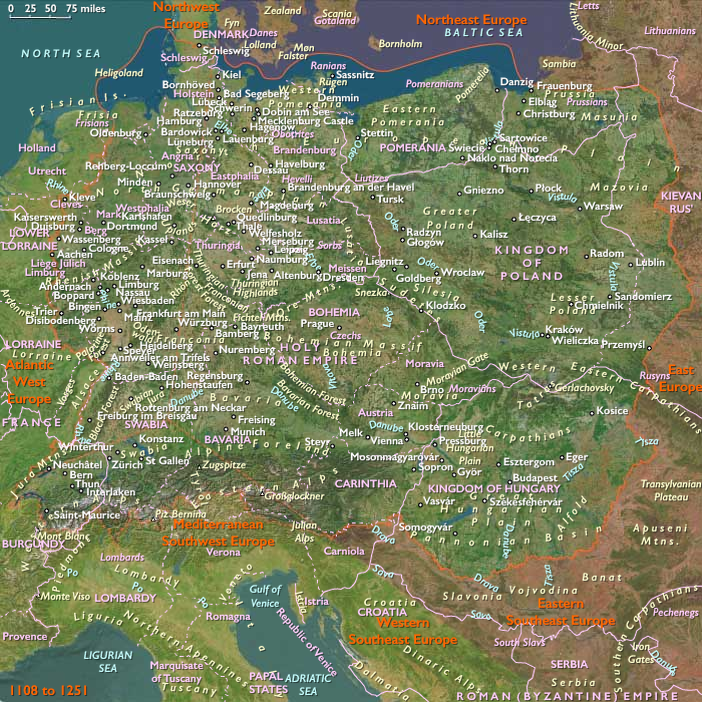
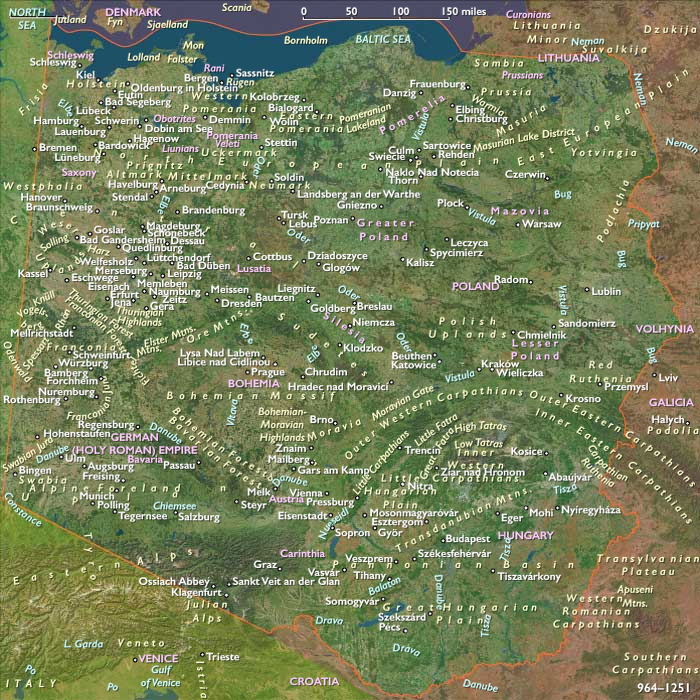
With the death of the childless Landgrave Henry Raspe in 1247, the Ludowingian line of Thuringian landgraves becomes extinct in the male line.
His property includes only large parts of Thuringia; also, the Countship of Hesse had come into Ludowingian possession through the female line.
In 1122, before his acquisition of the title of Landgrave, Count Louis I of Thuringia had married Hedwig of Gudensberg, the female heir of the Hessian countly family of the Gisonen.
The Gisonen, whose lands were initially mainly in the upper Lahn area, had previously come into the significant inheritance of Count Werner in Lower Hesse.
Then, through the marriage of Giso IV with Kunigunde of Bilstein, they had also acquired widespread property and vogtship rights from the Counts of Bilstein.
Claims on the Ludowingians' inheritance are made by Henry Raspe's niece and his nephew.
Sophie of Thuringia, married to Henry II, Duke of Brabant and Lothier, is the daughter of Henry Raspe's brother Louis IV and she claims the territories on behalf of her son Henry.
(Sophie's sister Gertrude is abbess of the imperial convent of Altenberg in Wetzlar and thus excluded from the succession.)
Henry III, Margrave of Meissen, is the son of Henry Raspe's sister Jutta.
Another competitor is the Archbishop of Mainz, who can claim Hesse is a fiefdom of the Archbishopric and now, after the extinction of the Ludowingians, demands its return.
The war will last seventeen years.
Locations
People
Groups
- Germans
- Mainz, Electoral Archbishopric of
- Holy Roman Empire
- Meissen, March of
- Thuringia, Landgraviate of
- Brabant, Duchy of
Topics
Commodoties
Subjects
Regions
Subregions
Related Events
Showing 10 events out of 46708 total
Years: 1247 - 1247
February
Locations
People
Groups
- Germans
- Mainz, Electoral Archbishopric of
- Holy Roman Empire
- Meissen, March of
- Thuringia, Landgraviate of
- Brabant, Duchy of
Topics
Commodoties
Subjects
Regions
Subregions