
Pope Stephen III, having largely dealt with …
Years: 769 - 769
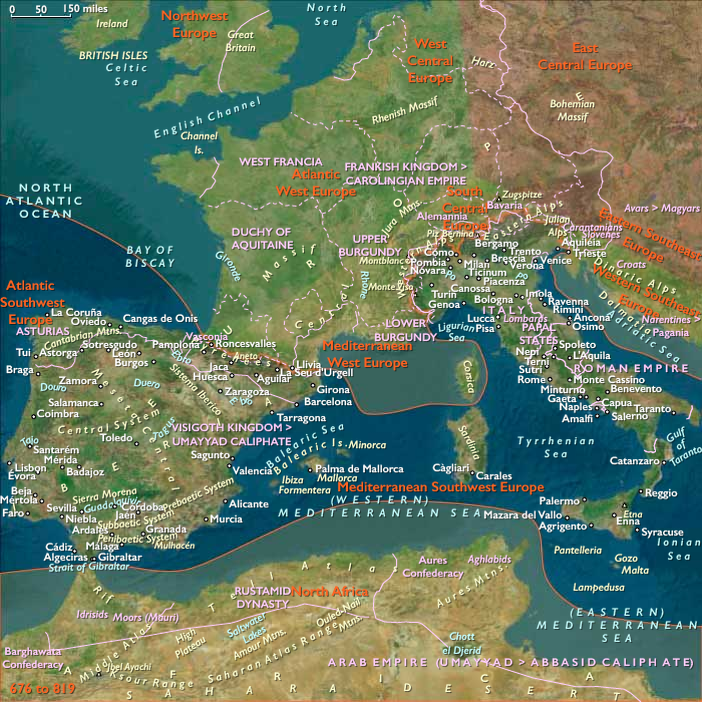
Pope Stephen III, having largely dealt with Constantine’s supporters, had written to the Frankish king, Pepin the Short, notifying him of his election, and asking for a number of bishops to participate in a council he was seeking to hold to discuss the recent confusion.
As Pepin has died, it is Charlemagne and Carloman I who agree to send twelve bishops to participate in the Lateran Council, opened by Stephen in April 769, of which a major topic for discussion is the elevation of Constantine.
The blind Constantine is brought before the council, where they question his elevation to the Apostolic See when he was still a layman.
Constantine responds that he had been forced to take on the role, as the Roman people had been looking for someone to fix the problems left behind by Pope Paul.
He then confesses to the charges, and throws himself on the mercy of the synod.
On the following day however, he retracts his confession, arguing that his actions had not been any different to other papal elections in the past.
He states: ”I have done nothing, my brethren, which cannot be excused by recent examples.
Sergius, a layman like myself, has been consecrated metropolitan of Ravenna; the layman Stephen has even been ordained Bishop of Naples...” Infuriated by his arguments, the synod orders Constantine to be beaten and his tongue torn out, before he is excommunicated from the Church.
Constantine’s acts and rulings are then publicly burnt before the entire synod.
He is returned to his monastery, after which nothing further is heard of him.
The council also sets about establishing strict rules for papal elections, thereby restricting the involvement of the nobility in subsequent elections.
Finally, the rulings of the Council of Hieria are rejected, and the practice of devotion to icons is confirmed.
Locations
People
- Antipope Constantine II
- Antipope Philip
- Carloman I
- Charlemagne
- Constantine V
- Desiderius
- Pepin the Short
- Pope Stephen III
- Stephen II of Naples
Groups
- Christianity, Chalcedonian
- Rome, Duchy of
- Lombards (Italy), Kingdom of the
- Naples, Duchy of
- Roman Empire, Eastern: Isaurian dynasty
- Francia (Carolingians)
- Papal States (Republic of St. Peter)
Topics
Commodoties
Subjects
- Commerce
- Symbols
- Labor and Service
- Conflict
- Mayhem
- Faith
- Government
- Custom and Law
- Technology
- Movements
- Christology
Regions
Subregions
Years: 769 - 769
Locations
People
- Antipope Constantine II
- Antipope Philip
- Carloman I
- Charlemagne
- Constantine V
- Desiderius
- Pepin the Short
- Pope Stephen III
- Stephen II of Naples
Groups
- Christianity, Chalcedonian
- Rome, Duchy of
- Lombards (Italy), Kingdom of the
- Naples, Duchy of
- Roman Empire, Eastern: Isaurian dynasty
- Francia (Carolingians)
- Papal States (Republic of St. Peter)
Topics
Commodoties
Subjects
- Commerce
- Symbols
- Labor and Service
- Conflict
- Mayhem
- Faith
- Government
- Custom and Law
- Technology
- Movements
- Christology
Regions
Subregions