
The Funeral of William the Conqueror and …
Years: 1087 - 1087
September
The Funeral of William the Conqueror and the Immediate Succession Crisis (1087)
The funeral of William the Conqueror in Caen was marked by embarrassment, legal disputes, and an unsettling final moment, foreshadowing the chaos that followed his death. Even as his body was laid to rest, his three surviving sons—Robert Curthose, William Rufus, and Henry—were already embroiled in conflict over the division of his empire.
William’s Funeral at Abbaye-aux-Hommes
- William was buried at the Church of Saint-Étienne (Abbaye-aux-Hommes) in Caen, fulfilling his wish to be interred in his great monastic foundation.
- The bishops and abbots of Normandy, as well as his youngest son Henry, attended the funeral.
The Land Dispute
- A citizen of Caen interrupted the ceremony, claiming that the land on which the church stood had been stolen from his family.
- Upon investigation, the claim was found to be true, and the man was compensated before the burial could continue.
The Corpse Incident
- When the body was lowered into the tomb, it was too large for the space.
- The attendants forcibly pushed the bloated corpse into the tomb, causing it to burst open, releasing a horrendous stench throughout the church.
- This grisly spectacle disturbed the mourners, adding an ominous tone to the funeral.
Immediate Consequences: War Between Robert and William Rufus
Robert’s Claim to Both England and Normandy
- Robert Curthose, the eldest son, returned to Normandy, expecting to inherit both the duchy and the kingdom, as his father had once promised.
- However, William Rufus had already crossed the Channel and seized the throne of England, being crowned William II soon after.
- Robert was furious, as he believed he had been cheated out of his inheritance.
Rebellion Against William Rufus (1088)
- Many of England’s leading nobles rebelled against William Rufus, supporting Robert’s claim to the throne.
- Robert began planning an invasion of England, seeking to dethrone William Rufus and claim his "rightful inheritance."
Henry’s Position in the Conflict
- Henry, the youngest brother, remained in Normandy, taking a role within Robert’s court.
- His motivations were unclear—he may have wanted to avoid siding openly with William Rufus, or he may have feared that Robert would confiscate his money if he left for England.
- Meanwhile, William Rufus confiscated Henry’s English estates, leaving Henry temporarily landless.
Significance and Long-Term Consequences
- The division of Normandy and England between Robert and William Rufus led to years of war and instability.
- Henry’s position as a landless noble forced him to carefully navigate the conflict, eventually exploiting divisions between his brothers to his advantage.
- The events following William’s funeral set the stage for nearly two decades of warfare, culminating in Henry seizing both England and Normandy by 1106.
The chaotic funeral of William the Conqueror was a fitting metaphor for the disorder that followed his death, as his sons plunged into civil war, each seeking dominance over the vast empire he had built.
Locations
People
- Alan IV
- Constance of Normandy
- Elias I
- Henry I of England
- Hugh V
- Lanfranc
- Odo
- Philip I of France
- Robert Curthose
- Robert I, Count of Flanders
- William II of England
- William the Conqueror
Groups
- Breton people
- Anglo-Saxons
- Maine, County of
- Flanders, County of
- Anjou, County of
- Normandy, Duchy of
- Brittanny, Duchy of
- Normans
- France, (Capetian) Kingdom of
Commodoties
Subjects
Regions
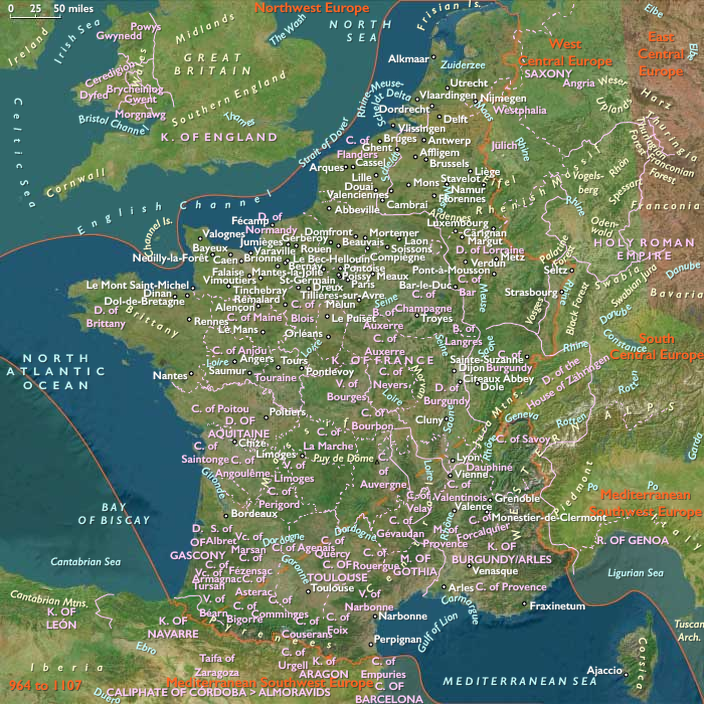
Subregions
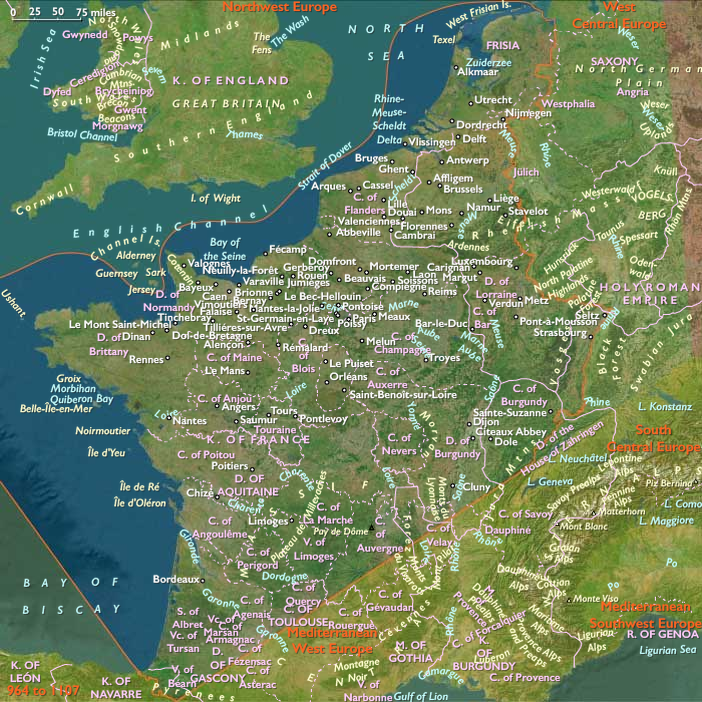
Related Events
Showing 10 events out of 50402 total
Years: 1087 - 1087
September
Locations
People
- Alan IV
- Constance of Normandy
- Elias I
- Henry I of England
- Hugh V
- Lanfranc
- Odo
- Philip I of France
- Robert Curthose
- Robert I, Count of Flanders
- William II of England
- William the Conqueror
Groups
- Breton people
- Anglo-Saxons
- Maine, County of
- Flanders, County of
- Anjou, County of
- Normandy, Duchy of
- Brittanny, Duchy of
- Normans
- France, (Capetian) Kingdom of
Commodoties
Subjects
Regions
Subregions