
William's forces, after landing, build a wooden …
Years: 1066 - 1066
October
William's forces, after landing, build a wooden castle at Hastings, from which they raid the surrounding area.
More fortifications are erected at Pevensey.
The exact numbers and composition of William's force are unknown.
A contemporary document claims that William had seven hundred and seventy-six ships, but this may be an inflated figure.
Figures given by contemporary writers are highly exaggerated, varying from fourteen thousand to one hundred and fifty thousand.
Modern historians have offered a range of estimates for the size of William's forces: seven thousand to eight thousand men, one thousand to two thousand of them cavalry; ten thousand to twelve thousand men; ten thousand men, three thousand of them cavalry; or seventy-five hundred men.
The army consists of cavalry, infantry, and archers or crossbowmen, with about equal numbers of cavalry and archers and the foot soldiers equal in number to the other two types combined.
Later lists of companions of William the Conqueror are extant, but most are padded with extra names; only about thirty-five named individuals can be reliably identified as having been with William at Hastings.
The main armor used is chain mail hauberks, usually knee-length, with slits to allow riding, some with sleeves to the elbows.
Some hauberks may have been made of scales attached to a tunic, with the scales made of metal, horn or hardened leather.
Headgear is usually a conical metal helmet with a band of metal extending down to protect the nose.
Horsemen and infantry carry shields.
The infantryman's shield is usually round and made of wood, with reinforcement of metal.
Horsemen have changed to a kite-shaped shield and are usually armed with a lance.
The couched lance, carried tucked against the body under the right arm, is a relatively new refinement and is probably not used at Hastings; the terrain is unfavorable for long cavalry charges.
Both the infantry and cavalry usually fight with a straight sword, long and double-edged.
The infantry can also use javelins and long spears.
Some of the cavalry may have used a mace instead of the sword.
Archers would have used a self bow or a crossbow, and most would not have had armor.
Locations
People
- Edith of Wessex
- Edward the Confessor
- Harald Hardrada
- Harold Godwinson
- Pope Alexander II
- Tostig Godwinson
- William the Conqueror
Groups
- Anglo-Saxons
- Welsh people
- Danes (Scandinavians)
- Normandy, Duchy of
- Normans
- Norway, independent Kingdom of
- England, (Anglo-Saxon) Kingdom of
- England, (Norman) Kingdom of
Topics
Commodoties
Subjects
- Commerce
- Watercraft
- Engineering
- Labor and Service
- Conflict
- Faith
- Government
- Custom and Law
- Technology
Regions
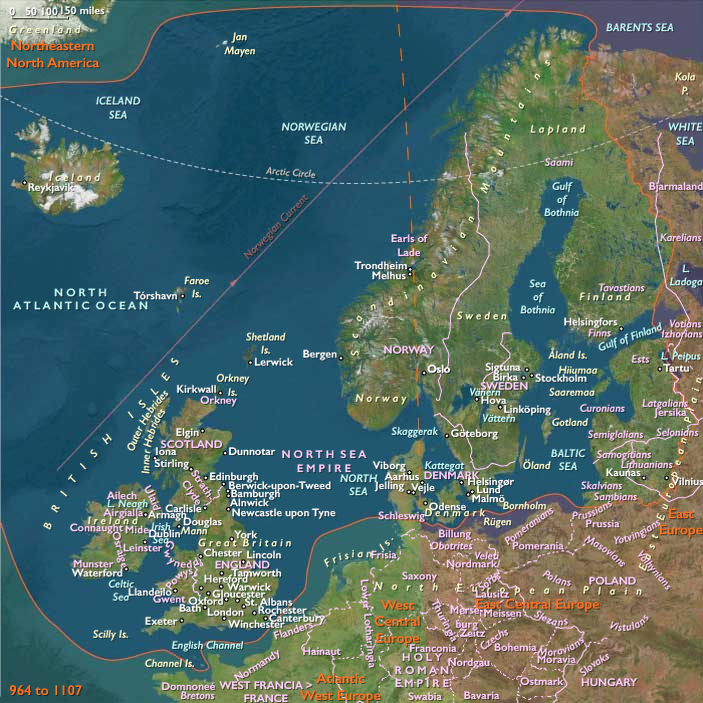
Subregions
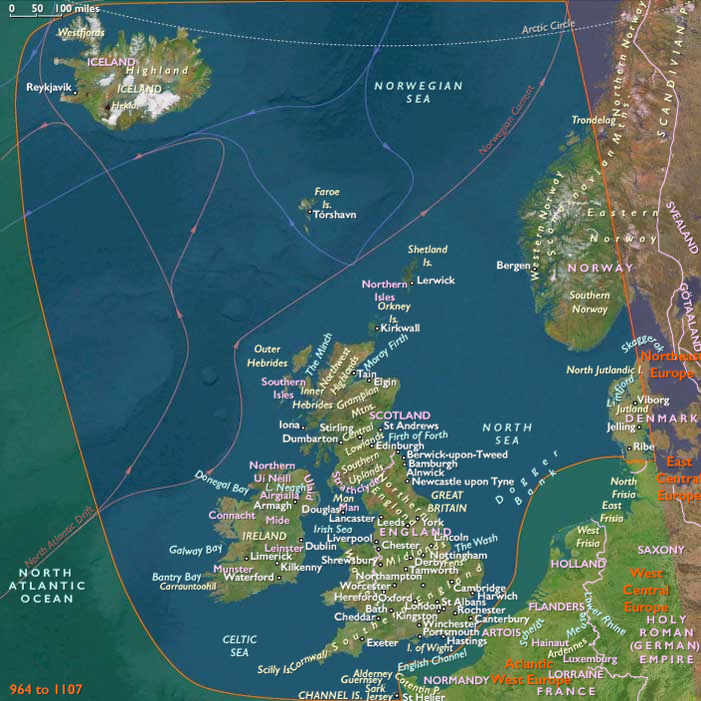
Related Events
Showing 10 events out of 50908 total
Years: 1066 - 1066
October
Locations
People
- Edith of Wessex
- Edward the Confessor
- Harald Hardrada
- Harold Godwinson
- Pope Alexander II
- Tostig Godwinson
- William the Conqueror
Groups
- Anglo-Saxons
- Welsh people
- Danes (Scandinavians)
- Normandy, Duchy of
- Normans
- Norway, independent Kingdom of
- England, (Anglo-Saxon) Kingdom of
- England, (Norman) Kingdom of
Topics
Commodoties
Subjects
- Commerce
- Watercraft
- Engineering
- Labor and Service
- Conflict
- Faith
- Government
- Custom and Law
- Technology
Regions
Subregions