
Filters:
The Struggle for Aquitaine: Ebalus, King Rudolph, …
Years: 932 - 932
The Struggle for Aquitaine: Ebalus, King Rudolph, and the Power Shift in the South (927–932)
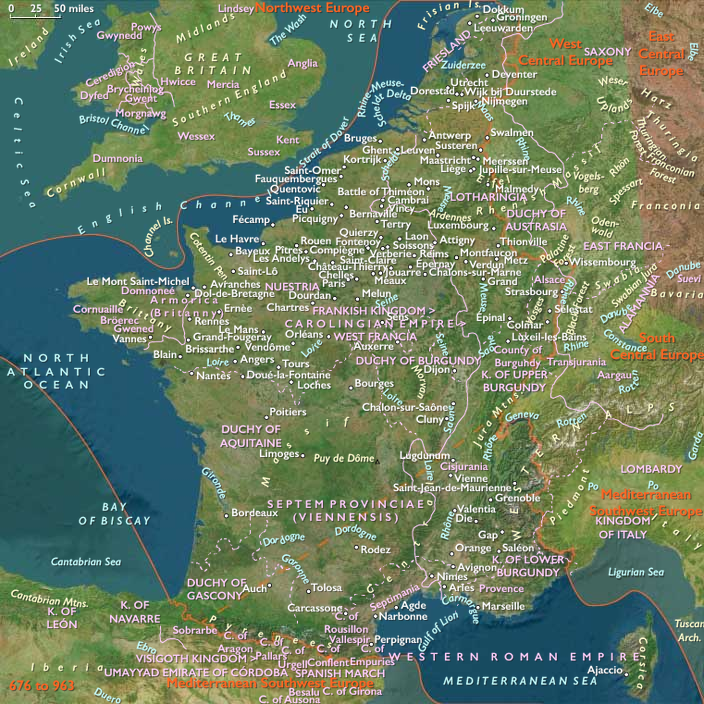
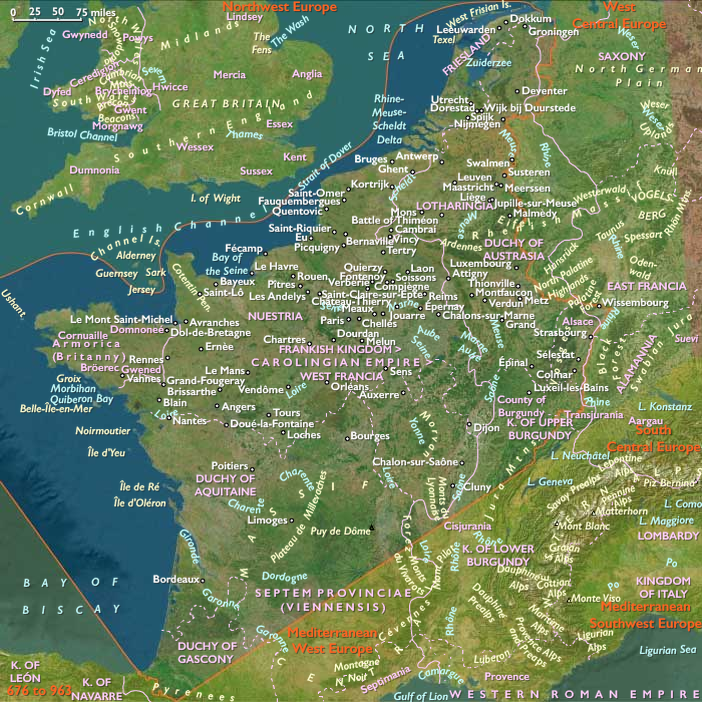
After the death of Duke Acfred of Aquitaine in 927, his chosen heir, Ebalus (or Ebles Manzer), an illegitimate son of Ranulf II of Aquitaine, assumes control over the Duchy of Aquitaine, the Counties of Berry, Auvergne, and Velay. However, his hold on power is soon challenged by King Rudolph of West Francia, who seeks to curb Ebalus’ influence in the south.
Ebalus Becomes Duke of Aquitaine (928)
- Acfred of Aquitaine dies in 927, leaving his titles to Ebalus, whom William the Pious had protected.
- In 928, Ebalus formally assumes power, taking control of:
- Duchy of Aquitaine
- County of Auvergne
- County of Berry
- County of Velay
King Rudolph’s Efforts to Diminish Ebalus’ Power (929–932)
1. Loss of Berry (929)
- In 929, King Rudolph of Burgundy, seeing Ebalus as too powerful, begins to limit his authority by removing Berry from his control.
- This move signals the king’s intent to weaken the Ramnulfid dynasty (the ruling family of Poitou and Aquitaine) and assert royal influence in the south.
2. Transfer of Aquitaine and Auvergne to Raymond Pons of Toulouse (932)
- In 932, Rudolph strips Ebalus of his ducal title and grants it instead to Raymond Pons, Count of Toulouse.
- Raymond Pons travels north, accompanied by:
- His brother Ermengol of Rouergue.
- Sancho IV, Duke of Gascony.
- They perform homage to King Rudolph, solidifying their royal allegiance and shifting the balance of power against Ebalus.
3. La Marche Becomes an Independent County
- To further weaken Ebalus, Rudolph creates the County of La Marche, removing it from Ebalus' vassal, the Lord of Charroux, and making it an independent entity.
Unexpected Outcome: Strengthening the Ramnulfid Dynasty
- Despite these land transfers, Rudolph’s strategy does not yield the expected results.
- Rather than eliminating Ebalus, Rudolph soon finds himself cooperating with him in fighting against Viking incursions.
- This military alliance reinforces the Ramnulfid position, ensuring that Ebalus remains a significant force in Aquitaine.
- The struggle for supremacy between the Ramnulfids and the House of Rouergue (Raymond Pons’ family) continues for decades, reflecting the fragmented political landscape of southern France.
Conclusion: The Fragile Balance of Power in Aquitaine
The events of 929–932 demonstrate the continued decline of royal authority in West Francia, as King Rudolph fails to impose lasting control over the south. Though he transfers titles away from Ebalus, the reality of feudal power ensures that the Ramnulfid dynasty remains a dominant force, highlighting the limits of royal influence in an increasingly decentralized kingdom.
Locations
People
- Ebalus
- Ermengol of Rouergue
- Raymond Pons
- Rudolph of France
- Sancho IV Garcés of Gascony
- William III, Duke of Aquitaine
Groups
- Toulouse, County of
- Aquitaine, (Carolingian) Kingdom of
- Vikings
- Francia Occidentalis (West Francia, or France), Kingdom of
- Gascony, Duchy of
- Normandy, Duchy of
Topics
Commodoties
Subjects
Regions
Subregions
Years: 932 - 932
Locations
People
- Ebalus
- Ermengol of Rouergue
- Raymond Pons
- Rudolph of France
- Sancho IV Garcés of Gascony
- William III, Duke of Aquitaine
Groups
- Toulouse, County of
- Aquitaine, (Carolingian) Kingdom of
- Vikings
- Francia Occidentalis (West Francia, or France), Kingdom of
- Gascony, Duchy of
- Normandy, Duchy of
Topics
Commodoties
Subjects
Regions
Subregions