
William Longsword Faces a Norman Rebellion (c. …
Years: 933 - 933
William Longsword Faces a Norman Rebellion (c. 927–933)
After succeeding his father Rollo as ruler of Normandy in 927, William Longsword quickly faces resistance from within his own ranks. Many of his Norse followers, particularly the more traditionalist Viking leaders, believe he has become too Gallicized and too lenient in his rule. This early rebellion, led by Riouf of Évreux, threatens William’s authority in the duchy.
The Norman Rebellion: A Reaction to William’s Frankish Influence
- William Longsword continues his father’s policies, adopting Frankish customs, language, and governance, which alienates some of the Viking nobility.
- Many Normans still view themselves as independent Norse warriors, resisting full assimilation into the Frankish feudal system.
- Riouf of Évreux leads a faction of discontented Norman nobles in rebellion against William’s rule, attempting to challenge his leadership.
William Secures His Heir: The Birth of Richard I (933)
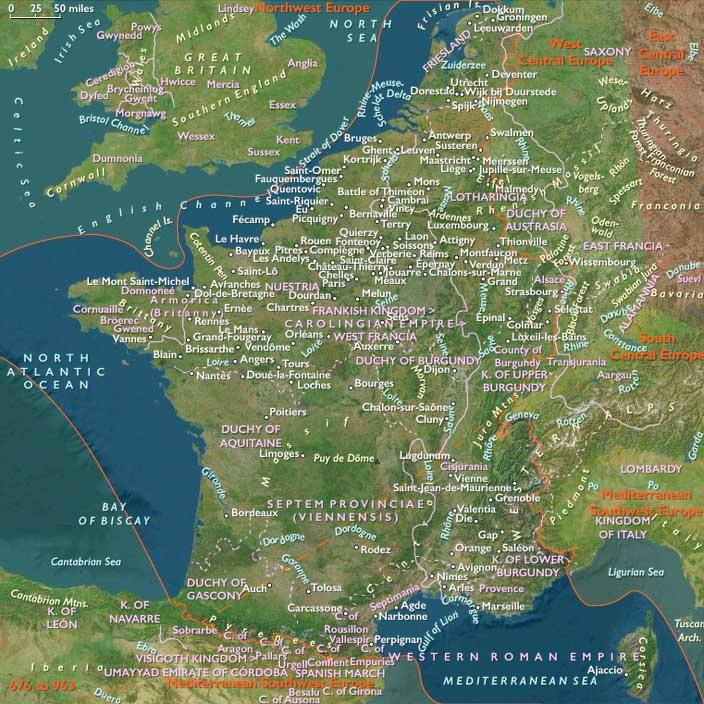
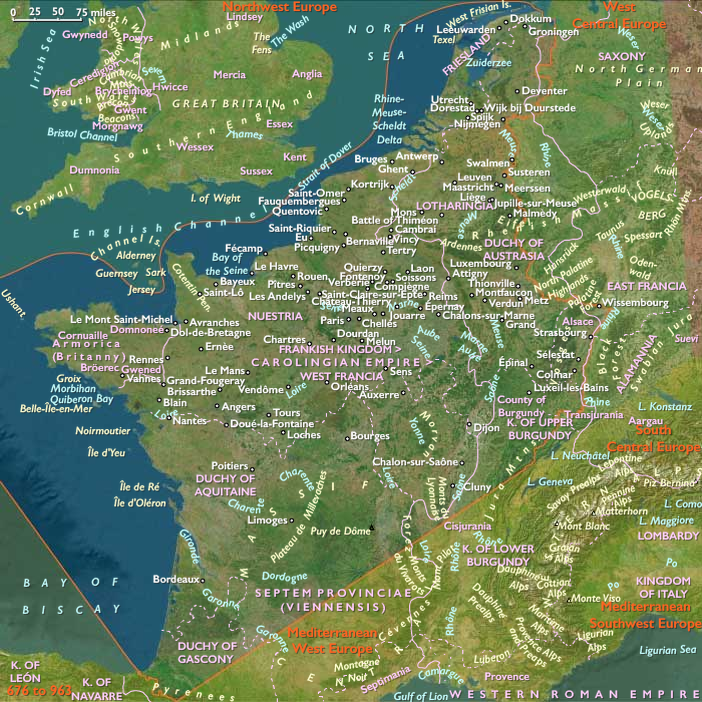
- During the rebellion, William sends his pregnant wife, Sprota, to Fécamp, a safer location away from the conflict.
- Their son, Richard I, is born in 933 at Fécamp, ensuring the continuation of the dynasty founded by Rollo.
- Sprota, a Breton noblewoman, plays a crucial role in Norman politics as the mother of William’s successor.
Outcome of the Rebellion and William’s Rule
- William ultimately crushes the rebellion, securing his rule over Normandy.
- However, the uprising demonstrates the fragile balance of power in early Norman society, where Viking traditions still clashed with Frankish influences.
- William’s success ensures that Normandy continues to integrate into the West Frankish kingdom, but it also shows that his rule is not uncontested.
Conclusion: A Turning Point in Norman Identity
The rebellion against William Longsword (927–933) highlights the ongoing cultural transformation in Normandy, as Norse rulers gradually adopt Frankish customs. Though he defeats the insurgents, the tensions between Norman warriors and feudalized Frankish-Norman aristocrats will continue to shape the region’s political landscape for generations. Meanwhile, the birth of Richard I in 933 ensures that the dynasty of Rollo remains intact, setting the stage for the continued rise of Norman power in medieval Europe.
Locations
People
Groups
- Breton people
- Vikings
- Francia Occidentalis (West Francia, or France), Kingdom of
- Normandy, Duchy of
- England, (Anglo-Saxon) Kingdom of
Topics
Commodoties
Subjects
Regions
Subregions
Years: 933 - 933
Locations
People
Groups
- Breton people
- Vikings
- Francia Occidentalis (West Francia, or France), Kingdom of
- Normandy, Duchy of
- England, (Anglo-Saxon) Kingdom of
Topics
Commodoties
Subjects
Regions
Subregions