
William Longsword Recognizes King Rudolph and Gains …
Years: 933 - 933
William Longsword Recognizes King Rudolph and Gains Breton Territories (933)
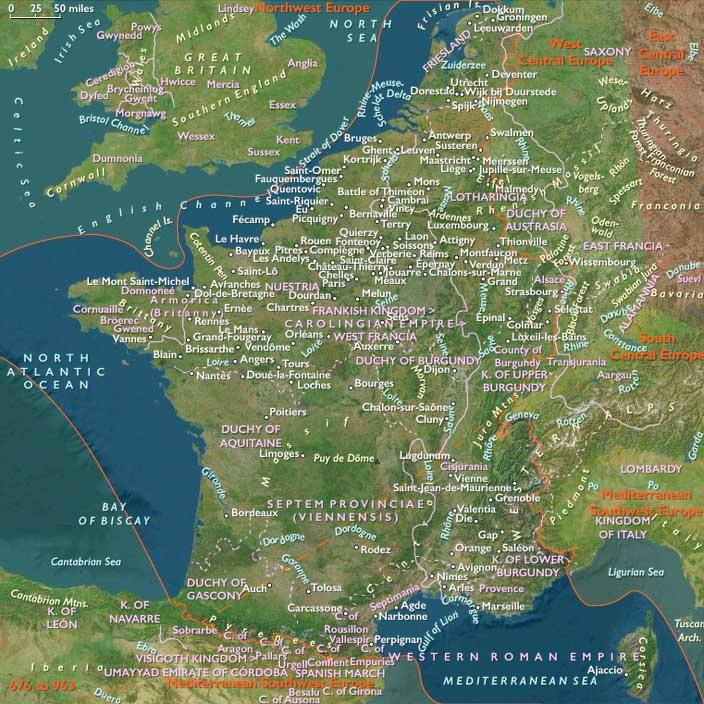
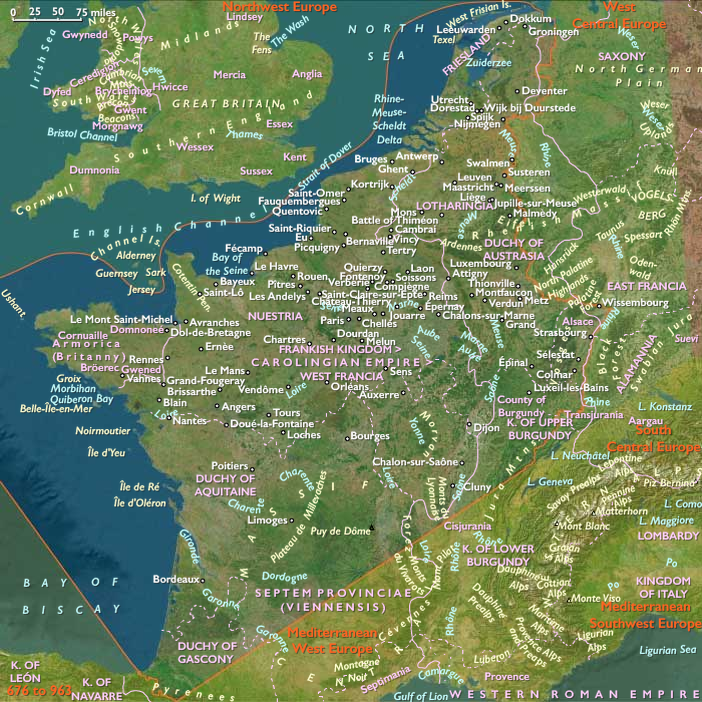
In 933, William Longsword, the ruler of Normandy, formally recognizes King Rudolph (Raoul) of West Francia, who is struggling to assert his authority in northern France. In return, Rudolph grants William lordship over much of the Breton lands, significantly expanding Norman control beyond the Seine Valley.
Rudolph’s Need for Norman Support
- By 933, King Rudolph of Burgundy (Raoul) is still contesting his rule against the Carolingian claimant, Charles the Simple, and dealing with internal noble resistance.
- Northern France remains unstable, with regional lords like Herbert II of Vermandois, Hugh the Great, and Arnulf of Flanders holding considerable autonomy.
- Rudolph seeks William Longsword’s allegiance as the Duke of Normandy to help secure his northern frontier, particularly against Viking and noble threats.
The Expansion of Normandy: Avranches and the Cotentin
- In exchange for William’s recognition of his kingship, Rudolph grants him lordship over key Breton lands:
- Avranches → A strategic coastal town that helps secure Norman access to the Channel.
- Cotentin Peninsula → A highly fortified region with Viking settlements, making it a natural extension of Normandy.
- These territories had previously been part of Brittany, but with Breton power weakened by Viking invasions, they are transferred to Norman control.
Significance of the 933 Agreement
-
Normandy Expands Westward
- The incorporation of Avranches and Cotentin doubles the size of Norman-controlled lands, further establishing the duchy as a dominant power in northern France.
-
Weakened Breton Independence
- Brittany, already devastated by Viking raids and the loss of Nantes to Norse control, is now further dismembered, making a Breton resurgence unlikely for decades.
-
Rudolph Strengthens His Hold Over Northern France
- By securing William Longsword’s loyalty, Rudolph gains a powerful northern ally to counter both Carolingian loyalists and the rebellious Frankish nobility.
Conclusion: The Rise of Norman Influence in the West
The 933 recognition of King Rudolph by William Longsword is a turning point in the consolidation of Norman power in France. With control over parts of Brittany, the Normans now expand beyond their original grant in the Seine Valley, reinforcing their military and political dominance in northern Francia. This expansion westward lays the foundation for Normandy’s growing strength, which will later culminate in its role in the Norman Conquest of England in 1066.
Locations
People
Groups
- Breton people
- Vikings
- Francia Occidentalis (West Francia, or France), Kingdom of
- Normandy, Duchy of
- England, (Anglo-Saxon) Kingdom of
Topics
Commodoties
Subjects
Regions
Subregions
Years: 933 - 933
Locations
People
Groups
- Breton people
- Vikings
- Francia Occidentalis (West Francia, or France), Kingdom of
- Normandy, Duchy of
- England, (Anglo-Saxon) Kingdom of
Topics
Commodoties
Subjects
Regions
Subregions