
William I’s Expedition to Maine and the …
Years: 1081 - 1081
William I’s Expedition to Maine and the Papal Mediation (1081–1082)
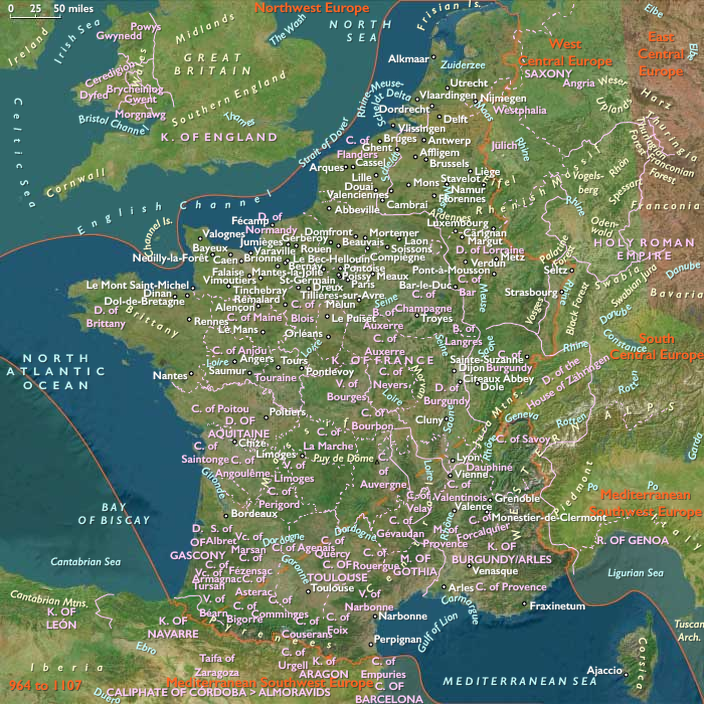
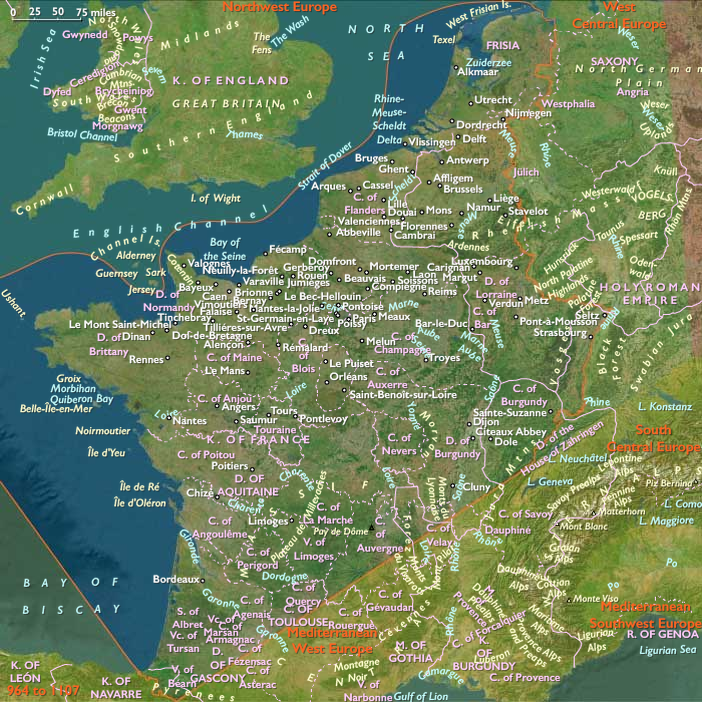
By the end of 1081, William I (the Conqueror) returned to the continent to deal with disturbances in Maine, a region that had long been a contested territory between Normandy and Anjou. Although William launched an expedition into Maine, the conflict did not end in a decisive Norman victory but was instead settled through papal mediation.
Background: Unrest in Maine
- Maine had been under Norman control since William’s conquest of the county in 1063–1064, but Norman rule had never been secure, as local nobles resented foreign dominance.
- By 1081, unrest had resurfaced, possibly fueled by anti-Norman factions supported by Anjou or Capetian France.
- William, still balancing his rule over both England and Normandy, returned to the continent to stabilize Maine.
William’s Expedition and the Role of the Papacy
- William led a military campaign into Maine, but rather than crushing the rebellion outright, the situation was settled diplomatically.
- A papal legate intervened, arranging a negotiated settlement between the Normans and the local factions.
- This mediation suggests that William preferred a political solution rather than a prolonged military occupation, especially as his resources were stretched between England and Normandy.
Consequences of the Settlement
- The Normans maintained a presence in Maine, but the region remained unstable, continuing to be a point of conflict in later years.
- The involvement of a papal legate demonstrates the growing role of the Church in European diplomacy, as the papacy increasingly acted as a mediator in secular disputes.
- William’s decision to negotiate rather than impose military rule reflected his pragmatic approach to governance, recognizing that a prolonged campaign in Maine could weaken his position elsewhere.
Significance
- William’s return to the continent in 1081 highlighted the challenges of ruling both England and Normandy, as unrest in Maine demanded his presence.
- The settlement mediated by the papacy showcased the diplomatic complexity of medieval politics, where military conquest did not always guarantee long-term stability.
- This period of relative peace in Maine allowed William to redirect his attention to other political and military concerns, particularly his relations with the French crown and internal issues in Normandy and England.
Though William’s expedition into Maine did not end in a decisive military conquest, the negotiated settlement in 1081–1082 ensured a temporary Norman hold on the county, securing William’s continental interests without overextending his resources.
Locations
People
Groups
Subjects
Regions
Subregions
Related Events
Showing 10 events out of 50533 total
Years: 1081 - 1081
Locations
People
Groups
Subjects
Regions
Subregions