
William the Conqueror’s Final Campaign and Decline …
Years: 1087 - 1087
July
William the Conqueror’s Final Campaign and Decline (1086–1087)
By late 1086, William the Conqueror had left England and returned to Normandy, where he continued his continental policies, including alliances against King Philip I of France. One of his final diplomatic moves was marrying his daughter, Constance, to Alan Fergant, Count of Brittany, strengthening ties between Normandy and Brittany. Meanwhile, his rebellious son, Robert Curthose, had been wandering Europe, allying with King Philipand stirring unrest, leading to William’s final military campaign in the French Vexin in 1087.
Robert Curthose’s Wanderings and Alliance with Philip I
- After Matilda’s death in 1083, Robert, who had frequently quarreled with his father, left court and traveled throughout France, Germany, and Flanders.
- He sought the hand of Matilda of Tuscany, one of the greatest heiresses of the age, but his suit was unsuccessful.
- During his time as a wandering knight, Robert fathered several illegitimate children and gained experience in military and political affairs.
- By 1087, Robert had returned north and, still allied with Philip I, began stirring up trouble for William in Norman borderlands.
William’s Response: The Campaign Against the French Vexin (July 1087)
- With Robert acting as a destabilizing force and King Philip I continuing to challenge Norman authority, William launched an expedition into the Vexin in July 1087.
- William’s forces laid waste to the region, culminating in the seizure of Mantes, a key strategic town.
- However, during the capture of Mantes, William either fell ill or suffered an injury, reportedly struck in the abdomen by the pommel of his saddle.
Consequences and the Beginning of William’s Final Days
- William’s illness or injury at Mantes marked the beginning of his final decline.
- The wounds and exhaustion from the campaign left William severely weakened, forcing him to withdraw from active command.
- His condition rapidly deteriorated, leading to his death in September 1087.
Legacy of William’s Final Actions
- The marriage of Constance to Alan Fergant reinforced Normandy’s alliance with Brittany, creating a counterbalance against France.
- Robert’s continued defiance and alliance with Philip I foreshadowed the ongoing Capetian-Norman struggles, which would last for generations.
- William’s final campaign in the French Vexin demonstrated his unyielding military ambition, even in his last years, but ultimately led to his death and the division of his realm.
The campaign against the French Vexin in 1087 was William’s last military action, and his fall at Mantes set the stage for his death and the struggles between his sons over his vast empire.
Locations
People
- Alan IV
- Constance of Normandy
- Elias I
- Henry I of England
- Hugh V
- Matilda of Tuscany
- Philip I of France
- Robert Curthose
- Robert I, Count of Flanders
- William II of England
- William the Conqueror
Groups
- Breton people
- Anglo-Saxons
- Maine, County of
- Tuscany, Margravate of
- Flanders, County of
- Anjou, County of
- Normandy, Duchy of
- Brittanny, Duchy of
- Normans
- France, (Capetian) Kingdom of
Commodoties
Subjects
Regions
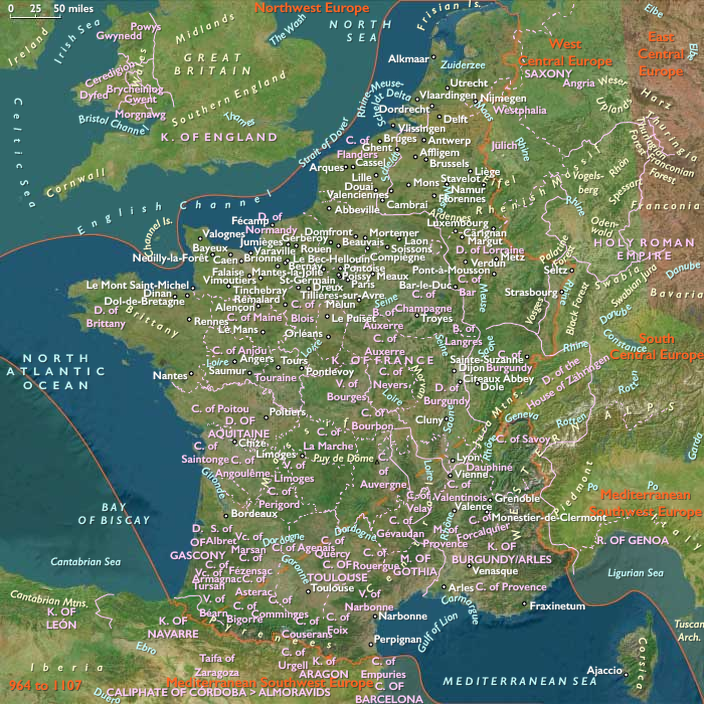
Subregions
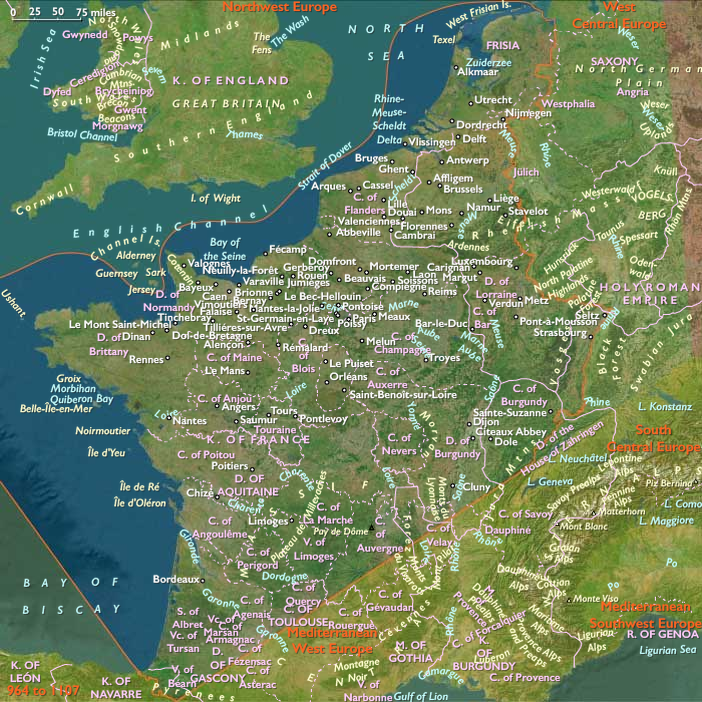
Related Events
Showing 10 events out of 50402 total
Years: 1087 - 1087
July
Locations
People
- Alan IV
- Constance of Normandy
- Elias I
- Henry I of England
- Hugh V
- Matilda of Tuscany
- Philip I of France
- Robert Curthose
- Robert I, Count of Flanders
- William II of England
- William the Conqueror
Groups
- Breton people
- Anglo-Saxons
- Maine, County of
- Tuscany, Margravate of
- Flanders, County of
- Anjou, County of
- Normandy, Duchy of
- Brittanny, Duchy of
- Normans
- France, (Capetian) Kingdom of
Commodoties
Subjects
Regions
Subregions