
Filters:
The Battle of Cassel (February 2, 1071) …
Years: 1071 - 1071
February
The Battle of Cassel (February 2, 1071) and the Flemish Succession War
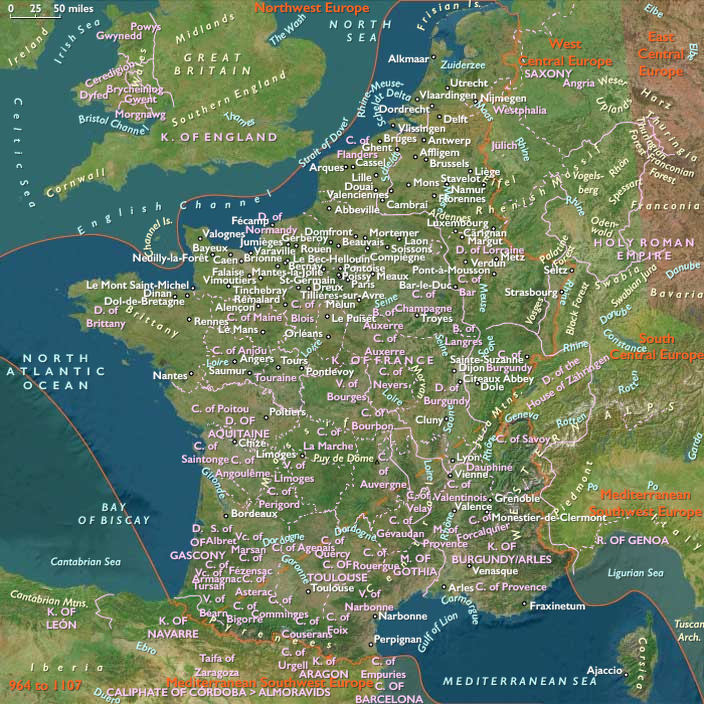
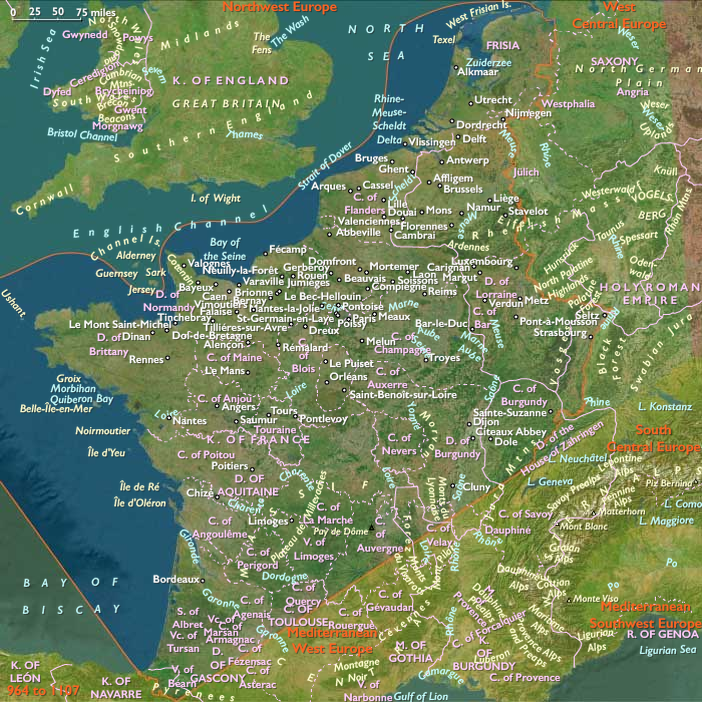
The Battle of Cassel on February 2, 1071, was the decisive confrontation in the Flemish succession war, where Robert the Frisian emerged victorious over Countess Richilde of Hainaut and her allies, including King Philip I of France and Norman forces led by William FitzOsbern. The battle reshaped the political landscape of Flanders and northern France, weakening Norman and Capetian influence on the continent.
The Course of the Battle
- William FitzOsbern, Earl of Hereford, a close ally of King William I of England, fought on behalf of Richilde and her son Baldwin II of Hainaut, as part of a pro-Capetian and Norman coalition.
- During the battle, FitzOsbern was killed in action, ending his ambitions of marrying Countess Richilde and securing a foothold in Flanders.
- Robert the Frisian’s forces ultimately triumphed, but Robert himself was briefly captured.
- Meanwhile, Richilde was also taken prisoner, leading to a temporary halt in the fighting while both captives were exchanged for one another.
- The battle resumed, culminating in a major victory for Robert.
The Death of Arnulf III and the Fate of Gerbod the Fleming
- Arnulf III of Flanders, Richilde’s son and rightful heir, was killed during the battle, reportedly by Gerbod the Fleming, the first Earl of Chester.
- Gerbod, though a Flemish noble, fought for Robert, suggesting that he had either switched sides or acted independently.
- The killing of Arnulf III—possibly an accident—shocked the Flemish nobility, as Gerbod had effectively slain his own liege lord.
Consequences of the Battle
- With Arnulf dead, Robert the Frisian claimed the Countship of Flanders, solidifying his rule over the county.
- Richilde and Baldwin II fled back to Hainaut, where they continued to resist Robert, though with diminished power.
- King William I of England lost an important continental ally, as Robert was hostile to Norman influence in Flanders and northern France.
- The battle shifted the balance of power, weakening Norman expansion in Flanders while strengthening Robert’s independent rule.
Gerbod the Fleming’s Fate: A Life of Penance
- After killing Arnulf III, Gerbod reportedly fled to Rome, seeking papal forgiveness for the sin of killing his rightful lord.
- Pope Gregory VII granted Gerbod absolution but ordered him to enter monastic life, sending him to Hugh, Abbot of Cluny.
- Gerbod became a monk at Cluny, where he lived out his days in religious devotion.
- English and Norman chroniclers (Orderic Vitalis and the Hyde Chronicle) mistakenly recorded that Gerbod had been captured and imprisoned, unaware of his self-imposed exile and monastic life.
Legacy of the Battle of Cassel
- Flanders emerged as a dominant power under Robert the Frisian, marking the decline of Capetian and Norman influence in the region.
- The death of Arnulf III and the exile of Gerbod reinforced the final shift in Flemish leadership, ending Richilde’s hopes of restoring her son to power.
- The battle marked one of the last major setbacks for King William I’s continental ambitions, as Robert’s hostility toward Normandy made further expansion difficult.
The Battle of Cassel in 1071 had far-reaching consequences for Flanders, Normandy, and England, shaping the power struggles of northern France for years to come.
Locations
People
- Anne of Kiev
- Henry I of France
- Hugh d'Avranches
- Hugh of Cluny
- Matilda of Flanders
- Philip I of France
- Pope Gregory VII
- William the Conqueror
Groups
- Flanders, County of
- France, (Capetian) Kingdom of
- Christians, Roman Catholic
- England, (Norman) Kingdom of
Topics
Subjects
Regions
Subregions
Related Events
Showing 1 events out of 1 total
Years: 1071 - 1071
February
Locations
People
- Anne of Kiev
- Henry I of France
- Hugh d'Avranches
- Hugh of Cluny
- Matilda of Flanders
- Philip I of France
- Pope Gregory VII
- William the Conqueror
Groups
- Flanders, County of
- France, (Capetian) Kingdom of
- Christians, Roman Catholic
- England, (Norman) Kingdom of
Topics
Subjects
Regions
Subregions