
Yet there are evident constraints to growth. …
Years: 1864 - 1875
Yet there are evident constraints to growth.
Economically, South Africa is little different from what it had been when the British first arrived.
The Cape produces wine, wheat, and wool, none of them particularly profitable items on the world market in the 1860s, especially because of competition from American, Argentine, and Australian farmers.
Natal's sugar keeps the colony going, but it is not an expanding industry.
In the interior, the Voortrekkers engage in the same economic activities as their African neighbors—pastoralism, limited cultivation of grain crops, and hunting—and whereas these provide a living for the people involved, they are not the basis on which an expanding economy can be built.
Perhaps the best indicator of the limited attractions of South Africa's economy is the fact that fewer Europeans emigrate here than to the United States, Canada, Australia, or even New Zealand.
Groups
- Sotho (Basotho or Basuto) people
- Zulu people
- Xhosa people
- Afrikaners
- Boers
- Britain (United Kingdom of Great Britain and Ireland)
- Cape Colony, British
- Zululand
- Zulu, Kingdom of the
- Sotho kingdom
- South African Republic (the Transvaal)
- Natal Colony, British
- Orange Free State, Republic of the (Boer Republic)
Topics
Commodoties
Subjects
Regions
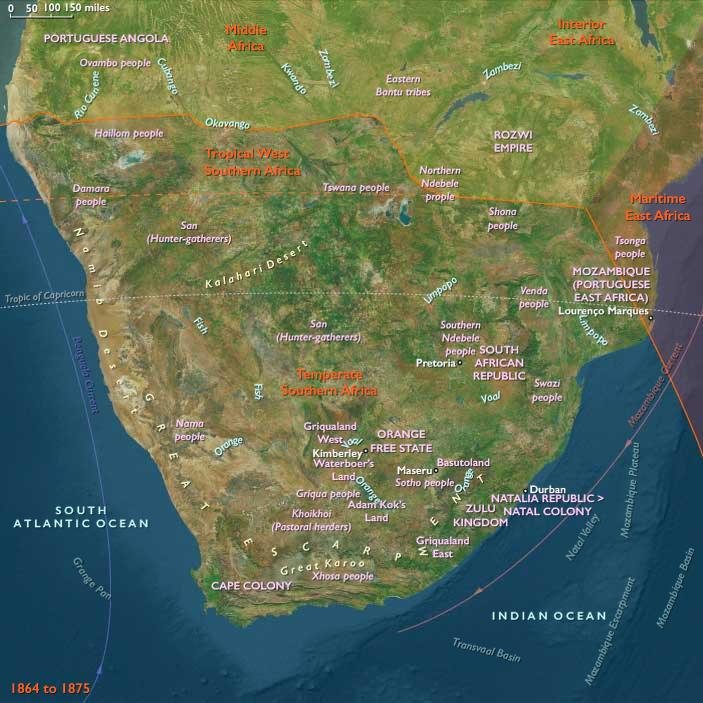
Subregions
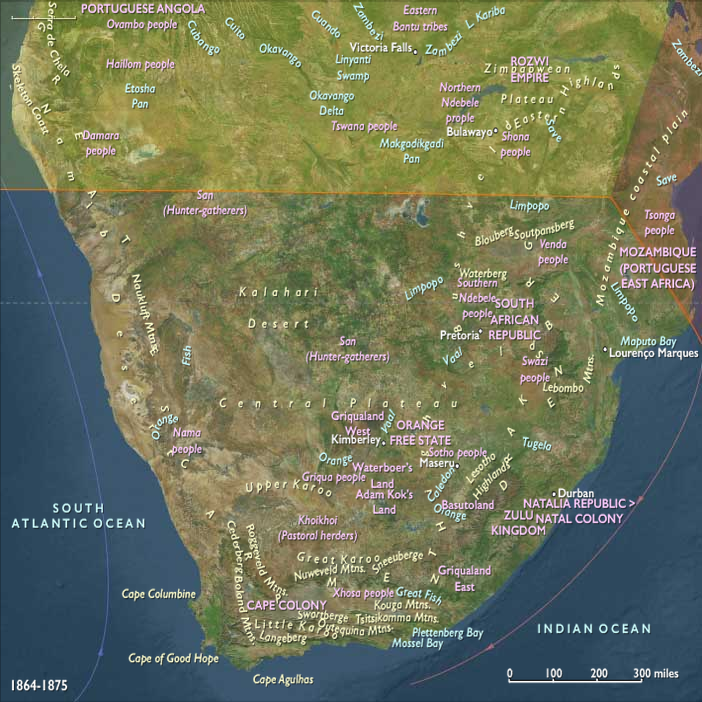
Years: 1864 - 1875
Groups
- Sotho (Basotho or Basuto) people
- Zulu people
- Xhosa people
- Afrikaners
- Boers
- Britain (United Kingdom of Great Britain and Ireland)
- Cape Colony, British
- Zululand
- Zulu, Kingdom of the
- Sotho kingdom
- South African Republic (the Transvaal)
- Natal Colony, British
- Orange Free State, Republic of the (Boer Republic)
Topics
Commodoties
Subjects
Regions
Subregions