
There had been a good measure of …
Years: 393 - 393
There had been a good measure of debate in the Early Church over the New Testament canon, but the major writings had been accepted by almost all Christians by the middle of the second century.
Athanasius, Bishop of Alexandria, in his Easter letter of 367, had given a list of exactly the same books as what would become the New Testament canon, and he had used the word "canonized" (kanonizomena) in regards to them.
Pope Damasus's Council of Rome in 382, if the Decretum Gelasianum is correctly associated with it, had issued a biblical canon identical to that mentioned above, or if not the list is at least a sixth century compilation.
Likewise, Damasus's commissioning of the Latin Vulgate edition of the Bible, c. 383, was instrumental in the fixation of the canon in the West.
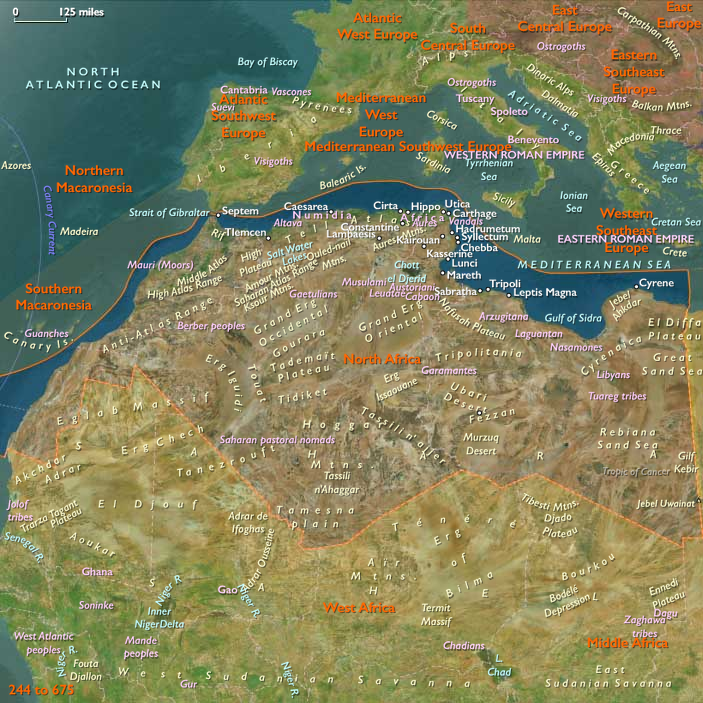
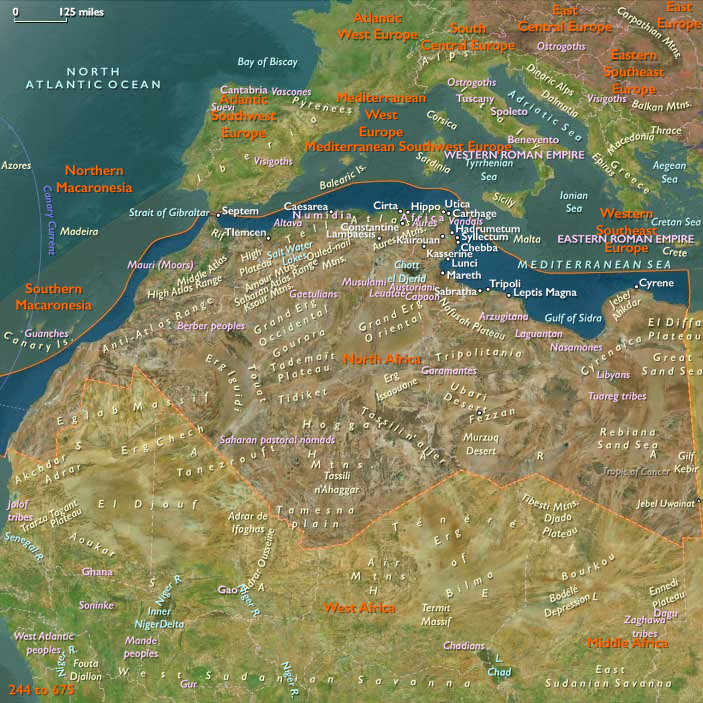
The African Synod of Hippo in 393 approves the New Testament as it stands today, together with the Septuagint books, a decision that will be repeated by Councils of Carthage in 397 and 419.
These councils are under the authority of Augustine, who regards the canon as already closed.
Locations
People
Groups
- Egypt (Roman province)
- Africa, Diocese of (Roman imperial diocese)
- Christianity, Nicene
- Roman Empire: Theodosian dynasty (Constantinople)
Topics
Subjects
Regions
Subregions
Related Events
Showing 3 events out of 3 total
Years: 393 - 393
Locations
People
Groups
- Egypt (Roman province)
- Africa, Diocese of (Roman imperial diocese)
- Christianity, Nicene
- Roman Empire: Theodosian dynasty (Constantinople)
Topics
Subjects
Regions
Subregions