
The Chinese Tang dynasty (618-907) institutes a …
Years: 676 - 819
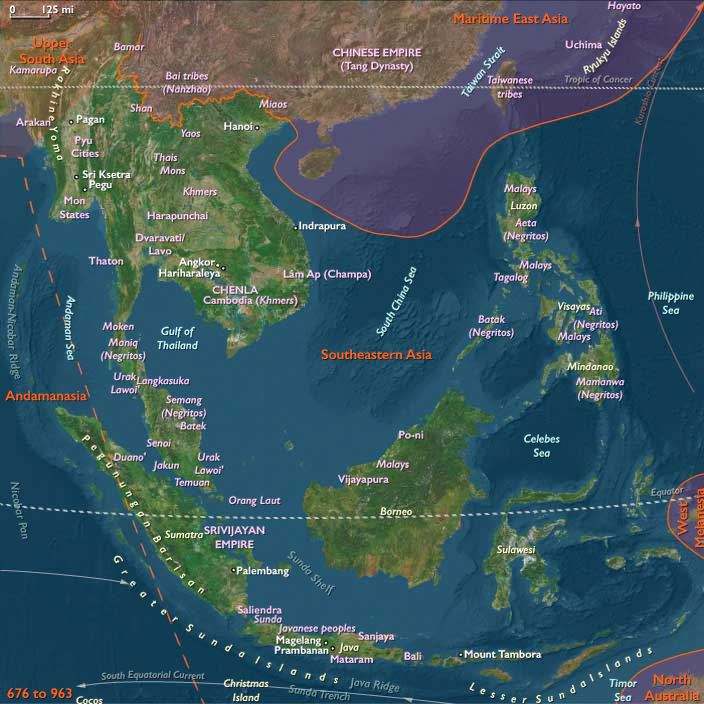
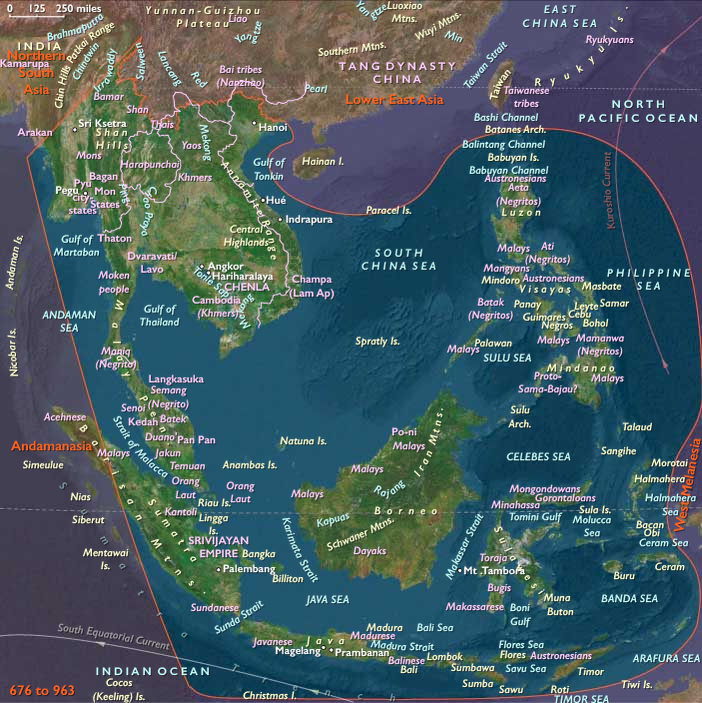
The Chinese Tang dynasty (618-907) institutes a series of administrative reforms culminating in 679 in the reorganization of Vietnamese territory as the Protectorate of Annam (or Pacified South), a name later used by the French to refer to central Vietnam.
The Tang dynastic period is a time of heavy Chinese influence, particularly in Giao Chau Province (in 203 the district of Giao Chi, had been elevated to provincial status and was renamed Giao Chau), which includes the densely populated Red River plain.
The children of ambitious, aristocratic families acquire a classical Confucian education, as increased emphasis is placed on the Chinese examination system for training local administrators.
As a result, literary terms dating from the Tang dynasty constitute the largest category of Chinese loan words in modern Vietnamese.
Despite the stress placed on Chinese literature and learning, Vietnamese, enriched with Chinese literary terms, remains the language of the people, while Chinese is used primarily as an administrative language by a small elite.
During the Tang era, Giao Chau Province also becomes the center of a popular style of Buddhism based on spirit cults, which will evolve as the dominant religion of Vietnam after the tenth century.
Buddhism, along with an expanding sea trade, links Vietnam more closely with South and Southeast Asia as Buddhist pilgrims travel to India, Sumatra, and Java aboard merchant vessels laden with silk, cotton, paper, ivory, pearls, and incense.
Locations
Groups
- Vietnamese people
- Buddhism
- Confucianists
- Chinese (Han) people
- Ly Dynasty, Early (Van Xuan)
- Chinese Empire, Tang Dynasty
- Annam, Chinese province of
Commodoties
Subjects
Regions
Subregions
Years: 676 - 819
Locations
Groups
- Vietnamese people
- Buddhism
- Confucianists
- Chinese (Han) people
- Ly Dynasty, Early (Van Xuan)
- Chinese Empire, Tang Dynasty
- Annam, Chinese province of
Commodoties
Subjects
Regions
Subregions